Order: Passeriformes, Family: Sturnidae
European Starling
Sturnus vulgaris
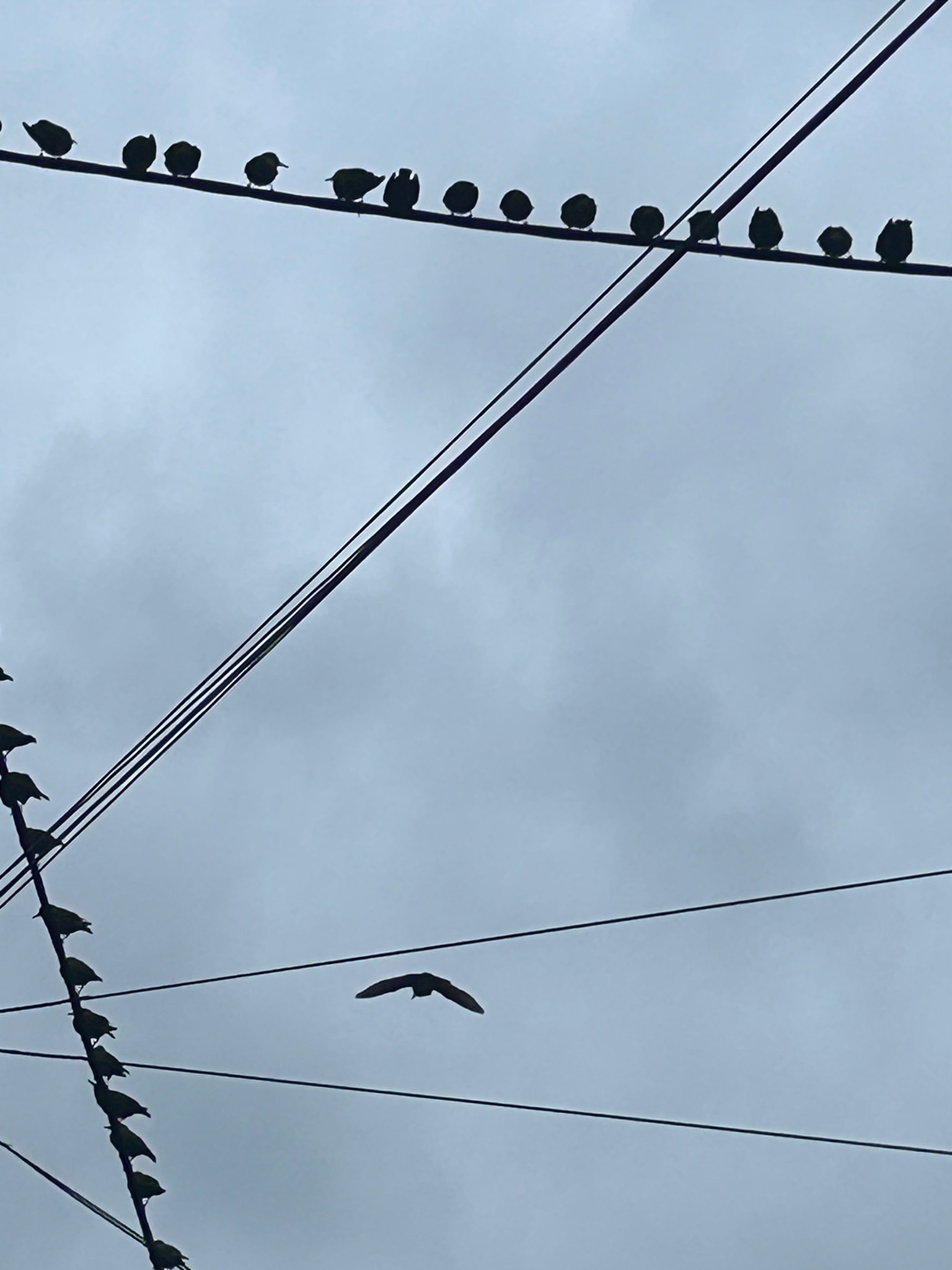
A medium-sized passerine with a stout body, short tail, and pointy bill. Highly social and often gathers in massive, swirling flocks known as murmurations.
Explore European Starling in the encyclopedia →Identify your own birds.
Get a report just like this from any photo or call, free.
Plumage & appearance
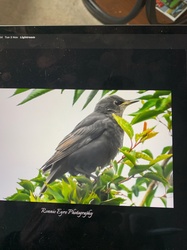
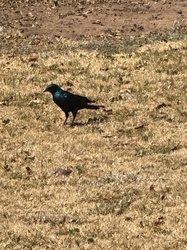
Adults in breeding plumage are glossy black with iridescent green and purple sheen and yellow bills. Non-breeding adults and juveniles are duller, brown, and heavily speckled with white spots, featuring dark bills.
Key field marks
Stocky build, short squared-off tail, triangular wings in flight, and a long, sharp bill (yellow in summer, dark in winter).
Size & weight
Length: 19-23 cm, Wingspan: 31-44 cm, Weight: 58-101 g
Voice — call & song
A varied and complex song consisting of whistles, squeaks, and rattles, often incorporating remarkable mimicry of other bird species and mechanical sounds.
Diet & foraging
Omnivorous; feeds heavily on insects, spiders, seeds, grains, fruit, and nectar. Forages by probing into turf or ground with its bill.
Habitat
Found in open country, agricultural lands, urban areas, suburban neighborhoods, and parklands.
Migration & movement
Partial migrant; northern populations are strongly migratory, while southern and western populations are mostly sedentary.
Nesting & breeding
Nests in cavities such as tree hollows, birdhouses, and crevices in buildings. Constructs a messy cup nest of twigs and grass. Clutch size is typically 4-6 pale blue eggs, raised over a 12-day incubation period by both parents.
Similar species
Brown-headed Cowbird or Brewer's Blackbird, but can be distinguished by the starling's shorter tail, speckling, yellow bill in breeding season, and distinct walking (rather than hopping) gait.
Ecological significance
Controls insect populations in agricultural and urban settings, though introduced populations can sometimes outcompete native cavity-nesting birds.
Conservation status
IUCN Least Concern, with an extremely large and stable global population trend.
Observation tips
Look up at utility wires, rooftops, and open fields, especially near dusk during autumn and winter to witness spectacular murmurations.
Interesting facts
European Starlings are famous for forming breathtaking aerial displays called murmurations, involving tens of thousands of birds moving in synchronized waves to confuse predators.
More like this