Order: Passeriformes, Family: Sturnidae
Common Myna
Acridotheres tristis
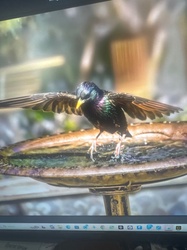
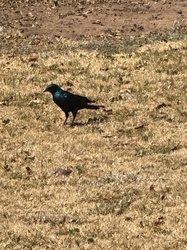
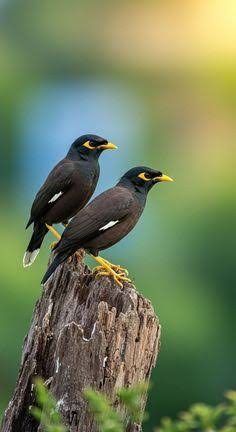
A stout, medium-sized brown bird with a black head, bright yellow facial skin, bill, and legs, and distinct white wing patches that are conspicuous in flight. Highly social, vocal, and often seen walking on the ground.
Explore Common Myna in the encyclopedia →Identify your own birds.
Get a report just like this from any photo or call, free.
Plumage & appearance
Adults have a dark brown to black head, neck, and upper breast, fading to a warm brown body. The bill, bare skin around the eyes (eyering), and legs are bright yellow. A prominent white patch is visible on the primary wing feathers and appears as a white flash in flight. Sexes are similar in appearance, and juveniles are duller and browner with a grayish face.
Key field marks
Dark brown body, black head, bright yellow bill and bare orbital skin, yellow legs, and bold white wing patches visible in flight.
Size & weight
Length: 23–26 cm (9–10 in); Wingspan: approximately 37–43 cm (15–17 in); Weight: 82–143 g.
Voice — call & song
A wide variety of calls including harsh squawks, chattering, whistles, and clicks. Often mimics other bird calls and mechanical sounds.
Diet & foraging
Omnivorous; feeds on insects, spiders, fruit, grains, nectar, human refuse, and small vertebrates. Forages primarily on the ground by walking.
Habitat
Open woodland, cultivation, and heavily human-modified environments such as cities, towns, and agricultural lands.
Migration & movement
Resident; generally non-migratory, though some populations may make local seasonal movements.
Nesting & breeding
Nests in natural tree cavities, holes in buildings, nest boxes, and old woodpecker holes. Lacks a complex nest structure, often using a loose collection of twigs, leaves, roots, and trash. Clutch size is typically 4 to 6 pale blue eggs.
Similar species
Jungle Myna (Acridotheres fuscus), which lacks the prominent bare yellow patch behind the eye and has different voice characteristics; Bank Myna, which has a grayish head and bluish bare skin around the eye.
Ecological significance
Acts as a seed disperser and insect predator, though introduced populations can be aggressive and compete with native cavity-nesting birds, sometimes impacting local ecosystems.
Conservation status
IUCN Least Concern with an increasing population trend; ranked among the world's 100 worst invasive species by the ISSG.
Observation tips
Easily observed in urban parks, agricultural fields, and around human habitations. They are bold and often habituated to humans, making them easy to approach and photograph.
Interesting facts
Voted by the Parliament of Canberra as the 'Common Bird of Canberra' in 1991, but later declared a pest due to its aggressive displacement of native wildlife.
More like this