Order: Passeriformes, Family: Sturnidae
Cape Glossy Starling
Lamprotornis nitens
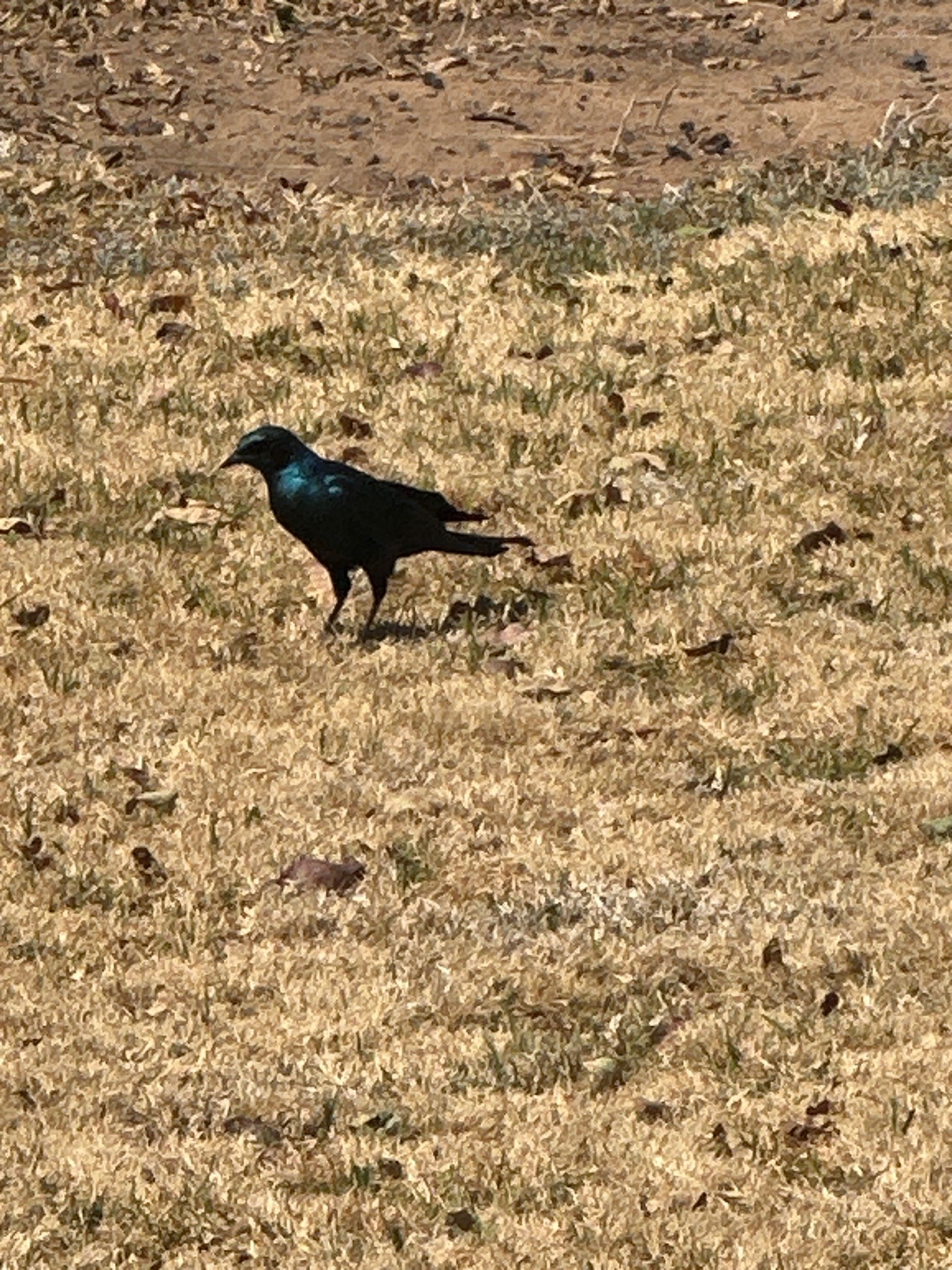
A medium-sized, highly social starling known for its striking, glossy metallic plumage that gleams brilliantly in sunlight. Often seen foraging on the ground in small flocks.
Explore Cape Glossy Starling in the encyclopedia →Identify your own birds.
Get a report just like this from any photo or call, free.
Plumage & appearance
Adults have brilliant iridescent metallic blue-green plumage on the head, upperparts, and underparts, contrasting with dark wings and a tail that catches the light with purple sheens. Juveniles are much duller, with brownish-grey underparts and less glossy upperparts.
Key field marks
Intense iridescent blue-green plumage, bright yellowish-white eyes (in adults), and a stout, slightly curved black bill.
Size & weight
Length: 25-28 cm; Weight: 80-110 g
Voice — call & song
A complex mix of musical notes, chatters, and harsh scolding calls, often mimicking other bird species.
Diet & foraging
Omnivorous, feeding on seeds, fruits, berries, nectar, and a wide variety of insects, especially grasshoppers and beetles.
Habitat
Savanna, open woodlands, thornveld, cultivated lands, and urban gardens.
Migration & movement
Resident, undertaking only local or seasonal movements in response to food availability.
Nesting & breeding
Nests in natural tree cavities, old woodpecker holes, or sometimes building crevices, lining them with softer materials. Clutch size is typically 2 to 6 greenish-blue eggs spotted with reddish-brown.
Similar species
Burchell's Starling and Greater Blue-eared Starling; distinguished primarily by geographic range, minor eye color differences, and subtle variations in head and body gloss coloration patterns.
Ecological significance
Acts as an important seed disperser and helps control agricultural and garden insect pests.
Conservation status
Least Concern, with stable and widespread populations.
Observation tips
Look for them in open woodlands, suburban gardens, and parks, often walking on lawns or perched on prominent branches. They are quite bold and can be habituated to humans near picnic sites.
Interesting facts
Like many starlings, Cape Glossy Starlings are excellent mimics and can imitate the sounds of other birds and environmental noises.
More like this