Order: Passeriformes, Family: Troglodytidae
Bewick's Wren
Thryomanes bewickii
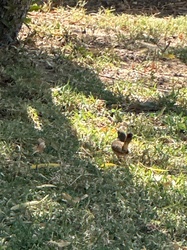
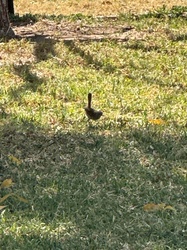
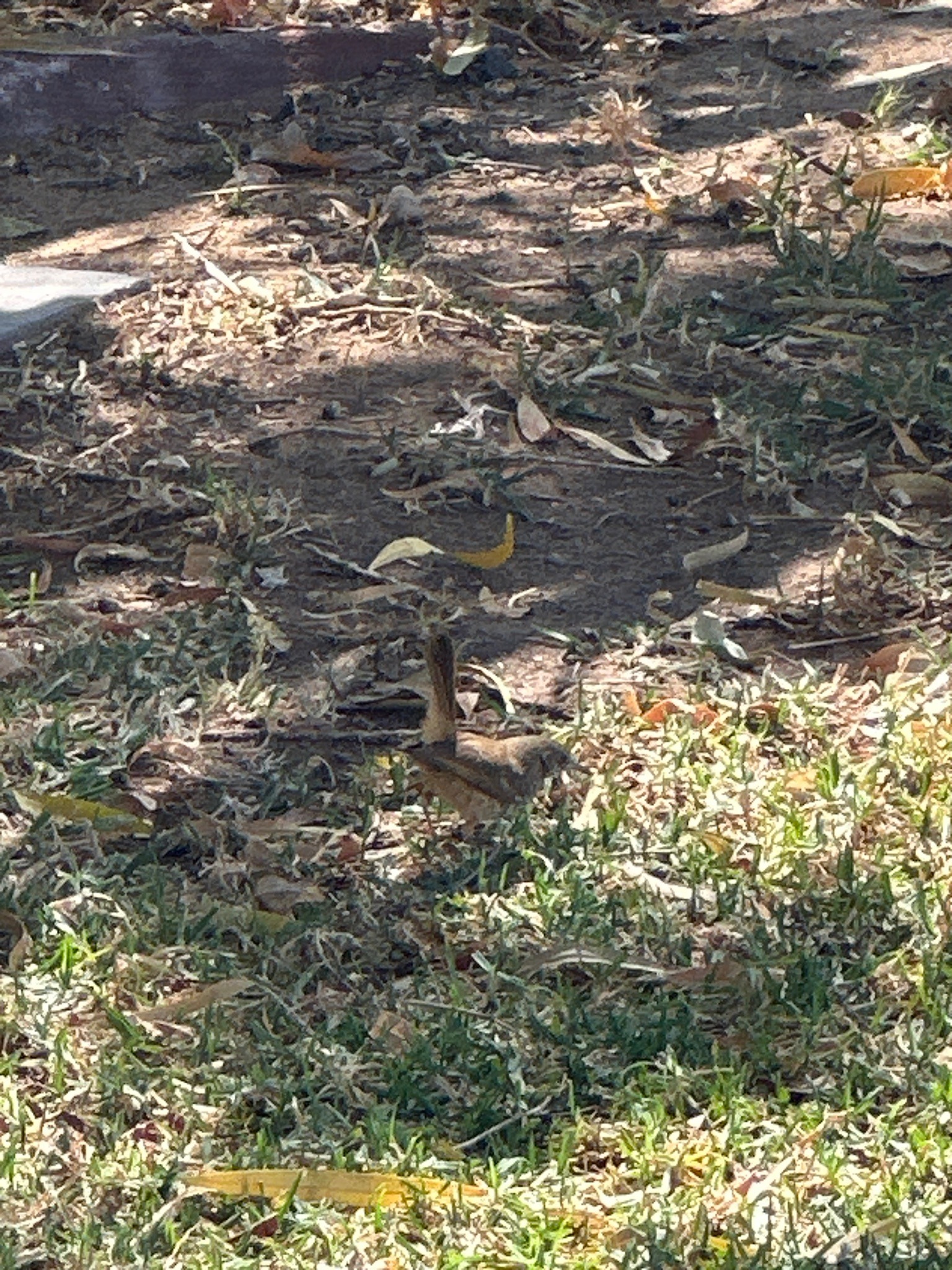
A slender, active brown wren with a long, cocked tail, distinct white eyebrow, and a slightly downcurved bill. Known for hopping energetically through dense brush and low foliage.
Explore Bewick's Wren in the encyclopedia →Identify your own birds.
Get a report just like this from any photo or call, free.
Plumage & appearance
Upperparts are warm grey-brown; underparts are whitish. Features a prominent white eyebrow (supercilium) and a long tail barred with black and tipped with white, which is frequently cocked.
Key field marks
Prominent white eyebrow stripe, long tail with white corners that is frequently cocked upright, brown back, and whitish belly.
Size & weight
Length: 13-15 cm (5.1-5.9 in), Wingspan: 18-20 cm (7.1-7.9 in), Weight: 8-12 g (0.28-0.42 oz).
Voice — call & song
Loud, complex, and musical series of trills, whistles, and chatters, often starting with a clear whistle. Calls include a harsh, scolding 'churr'.
Diet & foraging
Insects and spiders, obtained by gleaning from bark, foliage, and the ground.
Habitat
Chaparral, open woodlands, scrublands, brushy ravines, and suburban yards with dense shrubbery.
Migration & movement
Mainly permanent resident, though northernmost populations may move slightly south in severe winters.
Nesting & breeding
Builds a bulky, cup-shaped nest of twigs, grass, and rootlets in cavities, tree hollows, or artificial structures like birdhouses and mailboxes. Lays 5 to 7 white eggs with reddish-brown spots.
Similar species
House Wren lacks the distinct white eyebrow and white tail-tip corners. Carolina Wren is larger, has richer rufous underparts, and a different song pattern.
Ecological significance
Acts as an insect predator, helping to regulate populations of spiders, beetles, caterpillars, and other small arthropods in its habitat.
Conservation status
Least Concern, though eastern populations have declined significantly in recent decades due to competition with House Wrens.
Observation tips
Look and listen in brushy areas, chaparral, and suburban gardens. They are very curious and can often be coaxed into view by pishing or playing their loud calls.
Interesting facts
Named after the famous English wood engraver Thomas Bewick by his friend and naturalist John James Audubon.
More like this