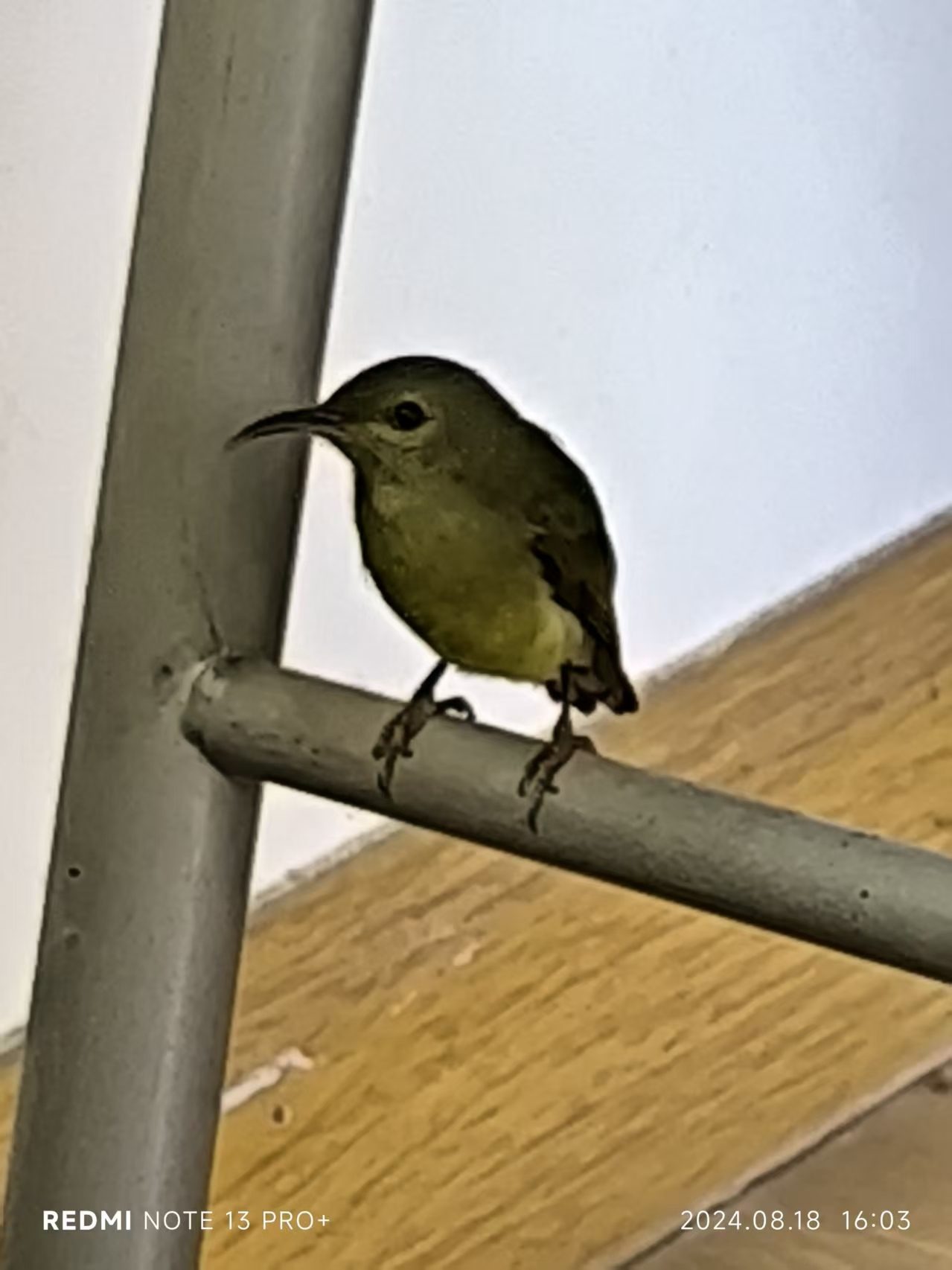
Order: Passeriformes, Family: Nectariniidae
Olive-backed Sunbird
Cinnyris jugularis
A very small, active passerine with a distinctive slender, down-curved bill adapted for nectar feeding. Frequently hops among branches and hovers briefly to feed.
Explore Olive-backed Sunbird in the encyclopedia →Identify your own birds.
Get a report just like this from any photo or call, free.
Plumage & appearance
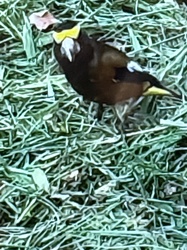
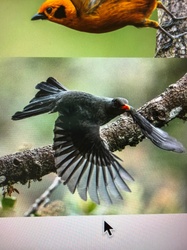
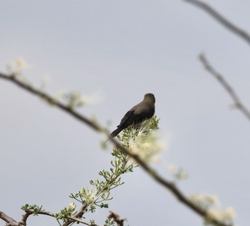
Adult males have a metallic dark blue-green head and upper chest patch, bright yellow underparts, and an olive-brown back. Females and juveniles lack the iridescent blue-green patches, having entirely olive-green upperparts and yellow underparts with a pale eyebrow stripe.
Key field marks
Small size, down-curved bill, olive-brown back, bright yellow underparts, and active, restless behavior.
Size & weight
Length: 10-12 cm, Wingspan: approx. 14-16 cm, Weight: 7-9 g
Voice — call & song
High-pitched, metallic chipping calls and a rapid, squeaky, twittering song.
Diet & foraging
Primarily nectar, supplemented with small spiders and insects, especially when feeding nestlings.
Habitat
Open country, mangroves, cultivated lands, forest edges, and urban gardens with abundant flowering plants.
Migration & movement
Non-migratory resident throughout its tropical and subtropical range.
Nesting & breeding
Constructs a pendant, purse-like hanging nest made of fine grass, leaves, and spider webs, suspended from a branch. Clutch size is typically 2 eggs, incubated by the female.
Similar species
Other sunbird species in overlapping ranges, distinguished primarily by the extent of metallic coloration on the male and the yellowish underparts of females and juveniles.
Ecological significance
Acts as an important pollinator for various flowering plants and trees within its range, playing a key role in forest and garden ecosystems.
Conservation status
Least Concern, with a stable population trend.
Observation tips
Look and listen for them in gardens, parks, and forest edges where flowering shrubs and trees are present; their active movements and sharp calls often give them away.
Interesting facts
Like hummingbirds in the Americas, sunbirds can hover in front of flowers to feed on nectar, though they usually prefer to perch when possible.
User notes
chengdu, China
More like this