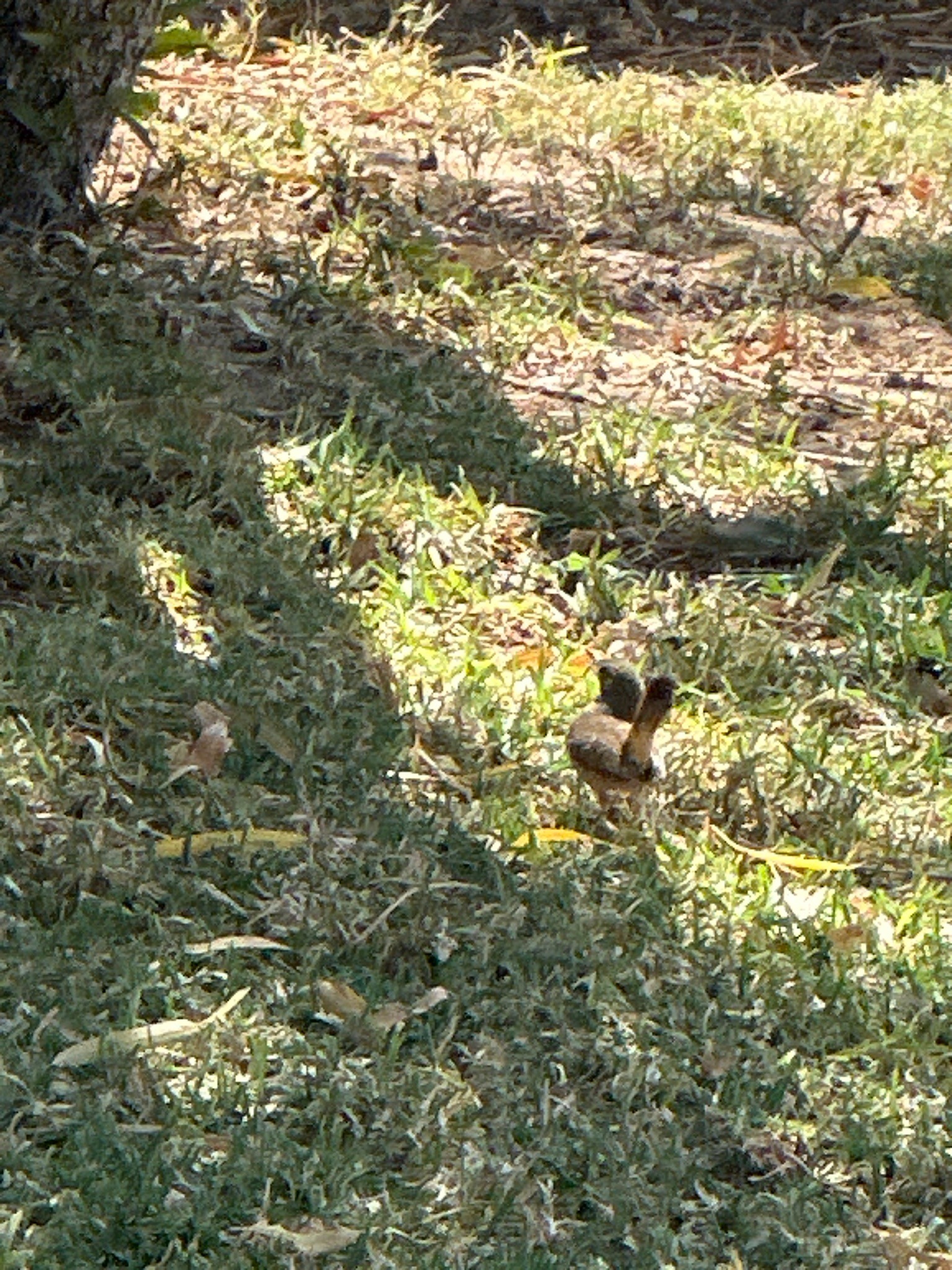
Order: Passeriformes, Family: Troglodytidae
Carolina Wren
Thryothorus ludovicianus
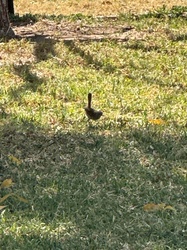
A chunky, active songbird with a long tail that is often cocked upward. Known for its loud, booming song and inquisitive nature as it hops through dense cover.
Explore Carolina Wren in the encyclopedia →Identify your own birds.
Get a report just like this from any photo or call, free.
Plumage & appearance
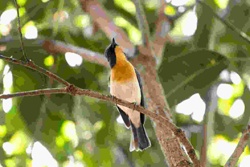
Warm reddish-brown upperparts, rich buff-orange underparts, a prominent white supercilium (eyebrow stripe) above a dark eye line, and a slightly downcurved bill. Sexes look similar, and juveniles are slightly paler with fuzzier markings.
Key field marks
Warm reddish-brown back, rich buff belly, distinct long white eyebrow stripe, long downturned bill, and frequently cocked tail.
Size & weight
Length: 12.5 to 14 cm, Wingspan: 17 to 29 cm, Weight: 18 to 22 g
Voice — call & song
Famous for a loud, rolling, three-syllable whistle usually described as 'teakettle-teakettle-teakettle'. Also gives various harsh scolding chatters.
Diet & foraging
Insects and spiders, occasionally eating small fruits, seeds, and even small tree frogs or lizards. Forages actively by probing into bark crevices and leaf litter.
Habitat
Deciduous and mixed forests, particularly with dense undergrowth, brush piles, suburban yards, wooded swamps, and overgrown ravines.
Migration & movement
Permanent resident. They generally do not migrate, though harsh northern winters can occasionally cause localized population declines.
Nesting & breeding
Builds a bulky, domed nest with a side entrance using twigs, leaves, and moss. Places it in cavities, hanging baskets, mailboxes, or tree hollows. Lays 3 to 7 white eggs with reddish spots.
Similar species
Bewick's Wren, which has a prominent white eyebrow but lacks the warm buffy underparts and has white corners on its tail.
Ecological significance
Helps control insect populations by preying on numerous invertebrates in its understory habitat, and serves as a food source for larger predators.
Conservation status
Least Concern, with stable or increasing populations.
Observation tips
Look and listen for them in brush piles, suburban gardens, and forest edges. They respond readily to pishing and are often heard before they are seen.
Interesting facts
Carolina Wrens are very susceptible to severe cold winters, which can freeze their extremities and limit their northern expansion. Despite their small size, they have remarkably loud voices that can surprise people nearby.
More like this