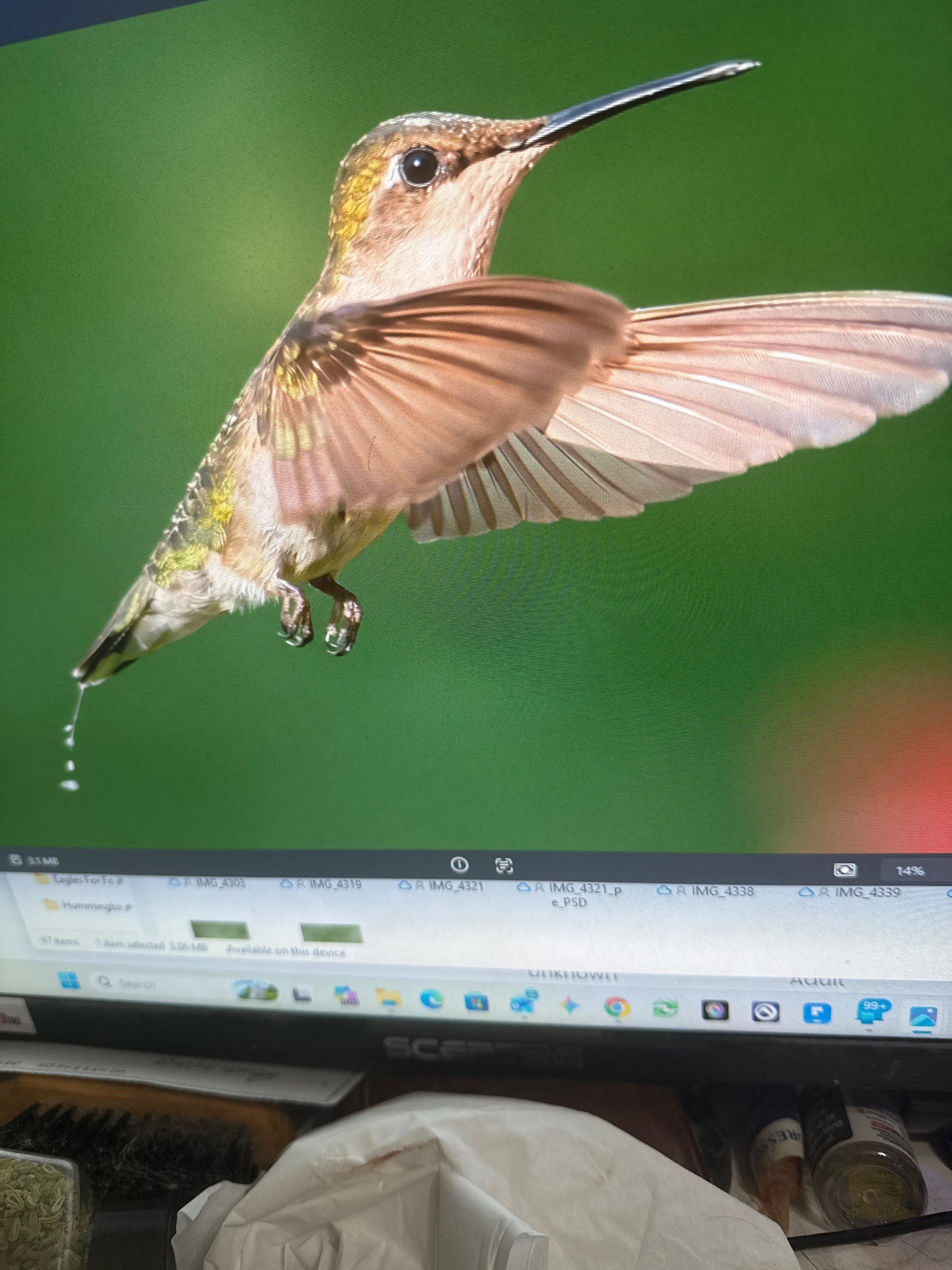
Order: Apodiformes, Family: Trochilidae
Ruby-throated Hummingbird
Archilochus colubris
A tiny, iridescent hummingbird with a straight, slender black bill, rapid wingbeats, and incredible hovering agility.
Explore Ruby-throated Hummingbird in the encyclopedia →Identify your own birds.
Get a report just like this from any photo or call, free.
Plumage & appearance
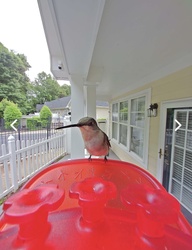
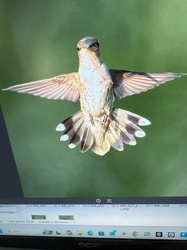
Adult males feature a brilliant iridescent ruby-red throat (gorget), a white collar, metallic green back, and grayish-white underparts. Females and immatures lack the red throat, having a white throat (sometimes lightly spotted), grayish-white underparts, and rounded tail feathers with white tips.
Key field marks
Small size, iridescent green back, straight dark bill, lack of prominent streaks, and diagnostic male ruby-red throat or female white-tipped tail feathers.
Size & weight
Length: 7-9 cm (2.8-3.5 in), Wingspan: 8-11 cm (3.1-4.3 in), Weight: 2-6 g
Voice — call & song
A series of high-pitched, rapid chipping notes that sound like a mechanical buzz or squeaky insect.
Diet & foraging
Primarily nectar from flowering plants and small insects, spiders, and tree sap caught in flight or gleaned from foliage.
Habitat
Deciduous and mixed forests, forest edges, orchards, meadows, and suburban gardens with abundant flowering plants.
Migration & movement
Migratory; undertakes an incredible non-stop flight across the Gulf of Mexico twice a year during spring and autumn migration.
Nesting & breeding
Builds a tiny cup nest made of plant fibers and spider silk, decorated with lichen on the outside, placed on a horizontal tree branch. Clutch size is typically 2 white eggs.
Similar species
Black-chinned Hummingbird (overlapping western ranges) and various female western hummingbirds which can be very difficult to distinguish in the field.
Ecological significance
Acts as an important pollinator for numerous native wildflowers and tubular plants, contributing heavily to plant reproduction in its range.
Conservation status
Least Concern, with a generally stable or increasing population trend.
Observation tips
Set up a nectar feeder or plant red, tubular flowers like bee balm and cardinal flower in your garden. Sit quietly near the feeding source for best viewing.
Interesting facts
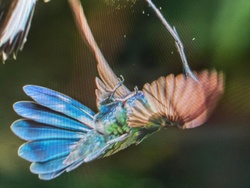
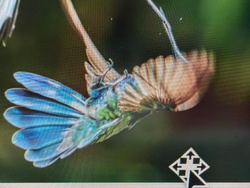
Ruby-throated hummingbirds beat their wings about 53 times per second and can fly backwards, upside down, and hover motionless in mid-air.
More like this