Order: Apodiformes, Family: Trochilidae
Ruby-throated Hummingbird
Archilochus colubris
A tiny, precision-flying bird known for its iridescent feathers and fast wingbeats. They are solitary and highly territorial near food sources.
Explore Ruby-throated Hummingbird in the encyclopedia →Identify your own birds.
Get a report just like this from any photo or call, free.
Plumage & appearance
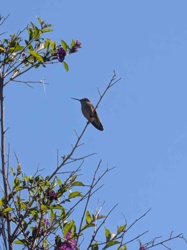
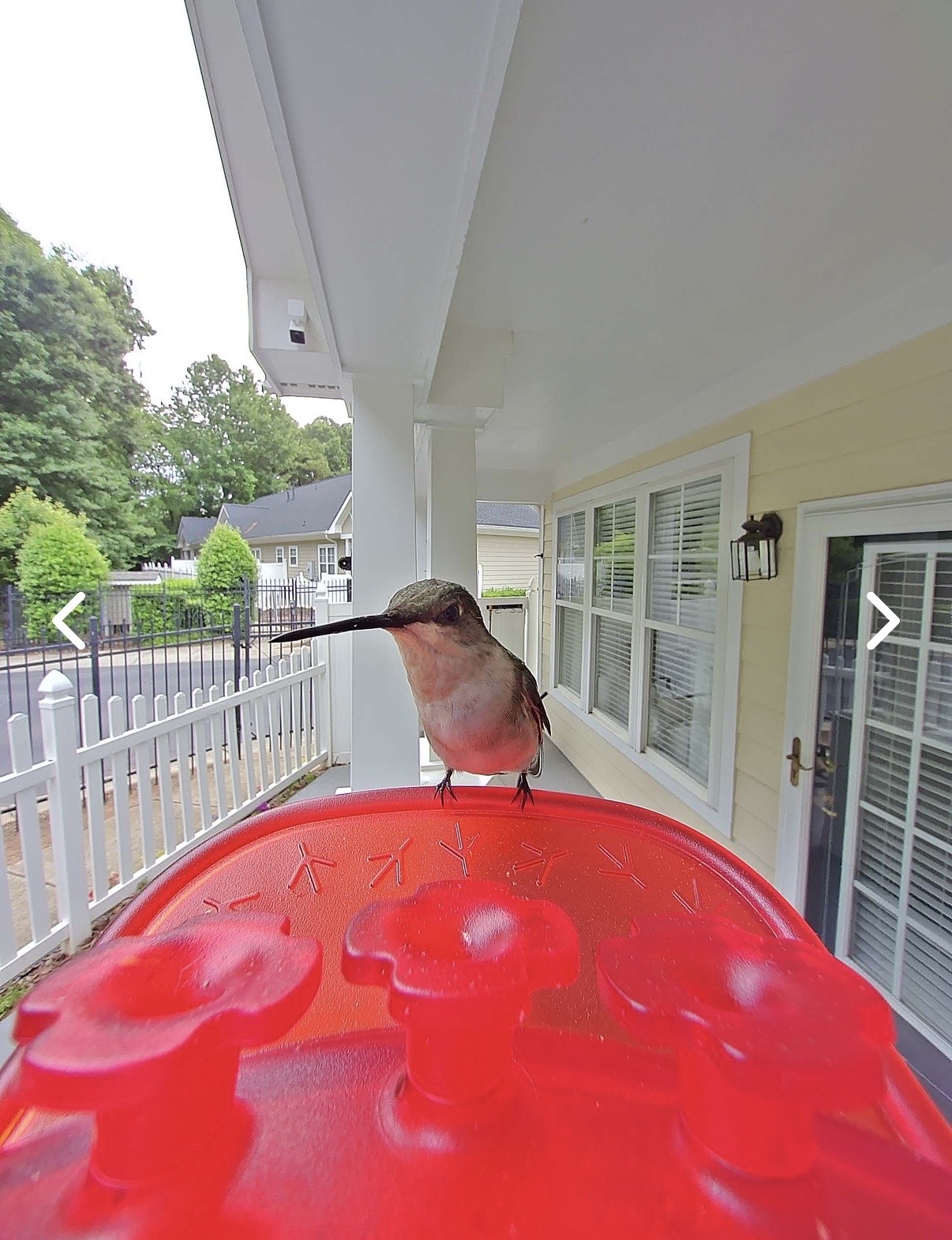
Adult males have a brilliant iridescent red throat (gorget) and emerald green back. Females (shown) and juveniles have a white throat, green back, and buffy or white underparts with white tips on the outer tail feathers.
Key field marks
Slender, slightly down-curved bill; green crown/back; white underparts; females have white-tipped tail feathers.
Size & weight
Length: 7-9 cm (2.8-3.5 in), Wingspan: 8-11 cm (3.1-4.3 in), Weight: 2-6 g (0.07-0.21 oz)
Voice — call & song
Rapid, high-pitched squeaky chipping notes and a low humming sound produced by wing vibrations.
Diet & foraging
Nectar from flowers and feeders; also consumes small insects and spiders for protein.
Habitat
Deciduous forests, edge habitats, orchards, and suburban gardens.
Migration & movement
Migratory; they travel from the Eastern US/Canada across the Gulf of Mexico to Central America for winter.
Nesting & breeding
Builds a tiny cup nest made of thistle/dandelion down held together with spider silk and camouflaged with lichen; typically 2 eggs.
Similar species
Black-chinned Hummingbird (found further west, males have purple band) and Rufous Hummingbird (more orange/rufous coloration).
Ecological significance
Primary pollinator for many tubular wildflowers; they facilitate plant reproduction while feeding.
Conservation status
Least Concern (IUCN); population is stable or increasing.
Observation tips
Maintain a red nectar feeder with 1:4 sugar-to-water ratio. They are most active in the early morning and late afternoon.
Interesting facts
They can beat their wings about 53 times per second and are the only birds that can fly backward and upside down.
More like this