Order: Apodiformes, Family: Trochilidae
Ruby-throated Hummingbird
Archilochus colubris
A tiny, energetic bird capable of hovering and flying backward, featuring iridescent green upperparts and swift, insect-like flight.
Explore Ruby-throated Hummingbird in the encyclopedia →Identify your own birds.
Get a report just like this from any photo or call, free.
Plumage & appearance
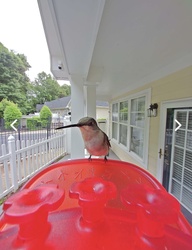
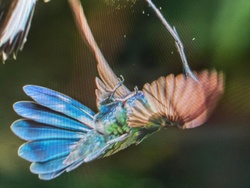
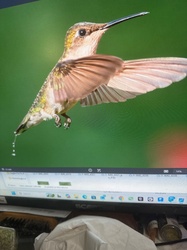
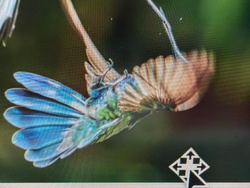
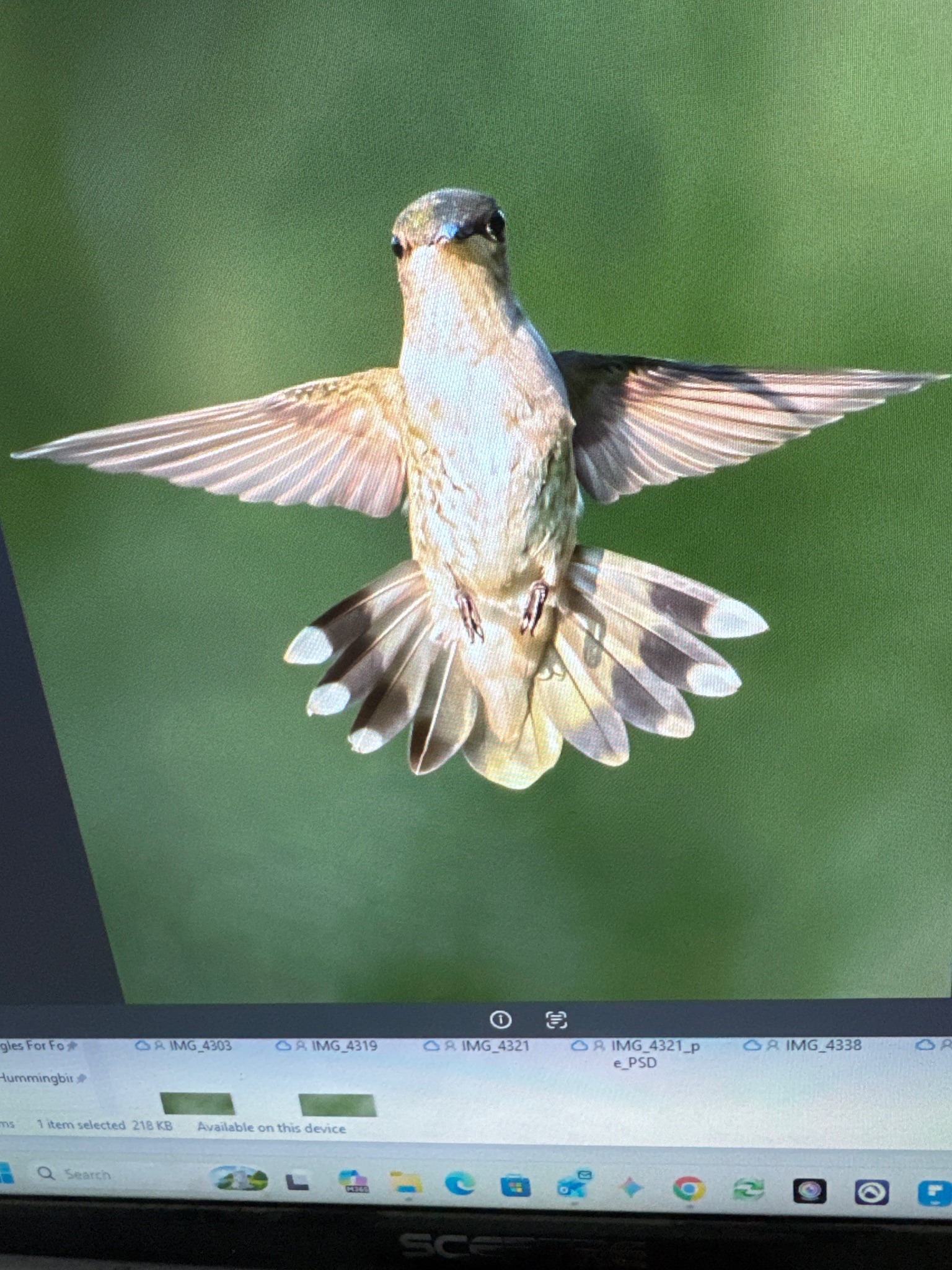
Adult males have a brilliant iridescent ruby-red throat, a white collar, and metallic green upperparts. Females and immatures lack the red throat, having a white throat (sometimes lightly spotted), grayish flanks, and rounded tail feathers tipped with white.
Key field marks
Metallic green back, whitish underparts, and rounded tail with white tips (visible in females/immatures), coupled with the distinct lack of a red throat on females.
Size & weight
Length: 7-9 cm (2.8-3.5 in), Wingspan: 8-11 cm (3.1-4.3 in), Weight: 2-6 g (0.07-0.21 oz)
Voice — call & song
A series of rapid, high-pitched chipping notes, often described as a squeaky chitter.
Diet & foraging
Nectar from flowers and small insects/spiders for protein, foraged by hovering or catching insects mid-air.
Habitat
Deciduous and mixed woodlands, forest edges, orchards, meadows, and suburban gardens with flowering plants.
Migration & movement
Migratory; travels thousands of miles twice a year, including a non-stop flight across the Gulf of Mexico.
Nesting & breeding
Builds a tiny, cup-shaped nest using plant fibers and spider silk, camouflaged with lichen on a downward-sloping tree branch. Clutch size is typically 2 white eggs.
Similar species
Black-chinned Hummingbird, which has a darker face and purple gorget in males, though females are very difficult to distinguish.
Ecological significance
Acts as an important pollinator for many native wildflowers and tubular plants, transferring pollen while feeding on nectar.
Conservation status
Least Concern, with stable or increasing populations
Observation tips
Set up a nectar feeder or plant red, tubular flowers in the garden; be ready with a fast shutter speed camera as they move extremely quickly.
Interesting facts
Their wings can beat at about 53 beats per second during normal flight, and their hearts can reach over 1,200 beats per minute.
More like this