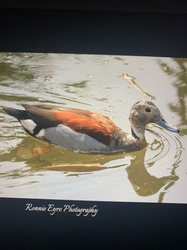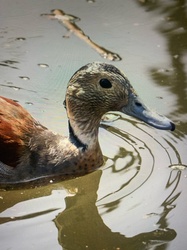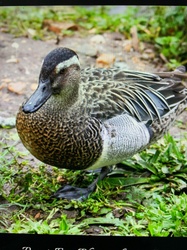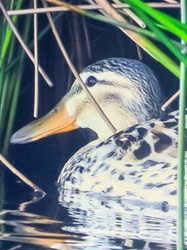
Order: Anseriformes, Family: Anatidae
Pink-footed Goose
Anser brachyrhynchus
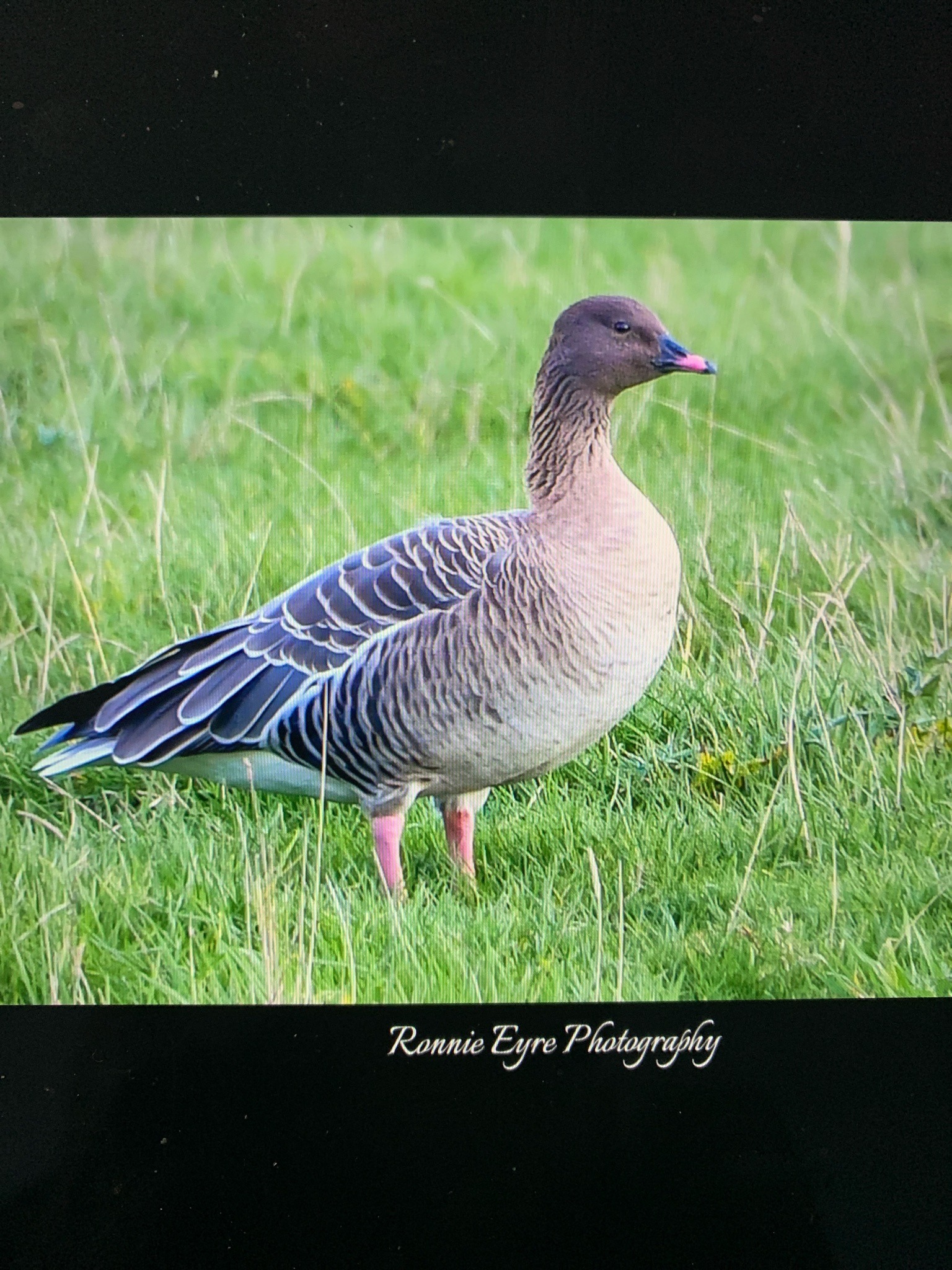
A medium-sized, compact goose with a relatively small, rounded head, short stubby black and pink bill, and bright pink legs. Known for its high-pitched, gabbling calls.
Explore Pink-footed Goose in the encyclopedia →Identify your own birds.
Get a report just like this from any photo or call, free.
Plumage & appearance
Brownish-grey head and neck, dark mantle, pinkish-grey breast and flanks, and darker grey-brown wings with pale feather fringes creating a scalloped effect. The bill is short and dark with a distinct pink band or patch across the middle. Sexes look alike; juveniles have duller plumage and less distinct markings.
Key field marks
Small stubby bill with a pink band, dark brown head and neck contrasting with a paler grey-brown chest, dark grey upperparts with pale fringes, and bright pink legs.
Size & weight
Length: 60-75 cm; Wingspan: 135-170 cm; Weight: 1.8-3.4 kg
Voice — call & song
A high-pitched, resonant, two-note gabbling or yapping call, often described as 'wink-wink' or 'unet-unet', noticeably higher-pitched than Greylag or Bean geese.
Diet & foraging
Herbivorous. Feeds on grasses, leaves, roots, agricultural crops (such as potatoes, sugar beets, and spilled grain), and stubble fields.
Habitat
Breeds on Arctic cliffs, plateaus, and tundra near water. Winters in agricultural fields, coastal marshes, estuaries, and lowland pastures.
Migration & movement
Migratory. Undertakes long-oversea migrations between Arctic breeding grounds and European wintering quarters twice a year.
Nesting & breeding
Nests on steep slopes, cliff ledges, or tundra mounds, often near predator-deterring gull or raptor nests. Lays 3-6 cream-white eggs in a shallow scrape lined with down.
Similar species
Bean Goose (Anser fabalis), which lacks the pink bill band and has a longer, more uniform bill; Greater White-fronted Goose, which has a prominent white face patch and belly bars.
Ecological significance
Acts as a seed disperser and grazes on vegetation, influencing plant communities in both its Arctic breeding grounds and agricultural wintering sites.
Conservation status
Least Concern, with an increasing population trend.
Observation tips
Look for large, noisy flocks feeding on agricultural fields or coastal marshes, particularly in the UK and northwestern Europe during winter. Use binoculars or a spotting scope to check bill and leg coloration.
Interesting facts
Pink-footed geese are highly social and form strong lifelong pair bonds. They are capable of flying at high altitudes, sometimes recorded soaring above 6,000 meters during migration.
More like this