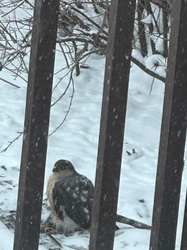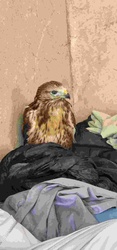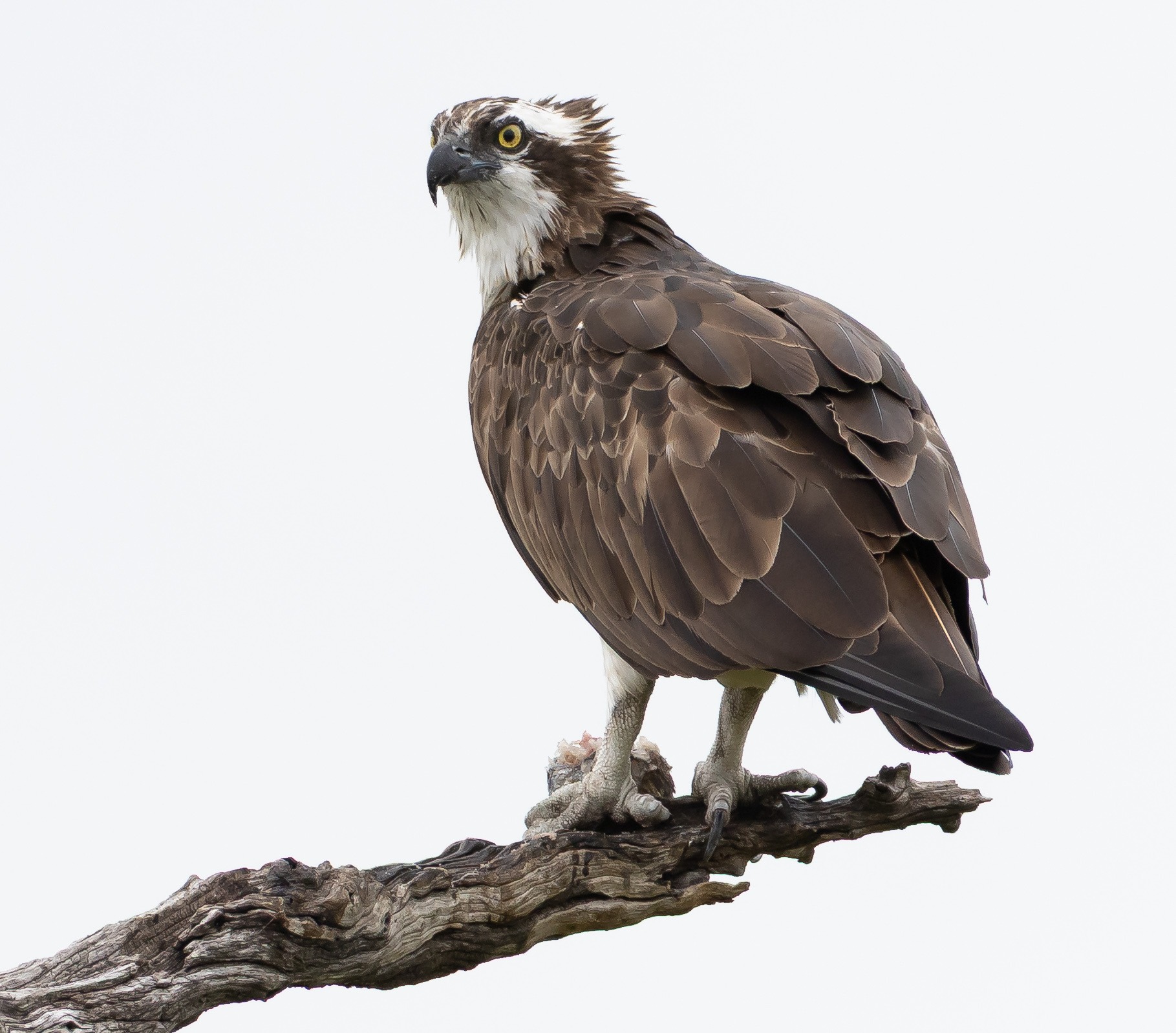
Order: Accipitriformes; Family: Pandionidae
Osprey
Pandion haliaetus
A unique, fish-eating raptor with long, narrow wings and a white head. It is known for its ability to dive into water to catch prey.
Explore Osprey in the encyclopedia →Identify your own birds.
Get a report just like this from any photo or call, free.
Plumage & appearance
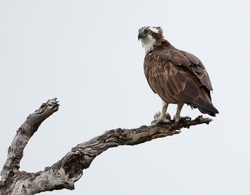
Brown upperparts and white underparts. White head with a distinctive dark mask through the eye. Females often have a 'necklace' of brown feathers on the breast. Juveniles show light buff edges to back feathers.
Key field marks
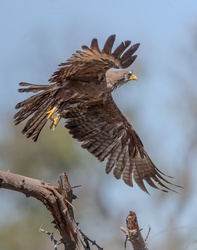
Dark eye stripe, white crown, white underparts, and 'M' shaped wing silhouette when viewed from below in flight.
Size & weight
Length: 54-58 cm; Wingspan: 127-180 cm; Weight: 1.2-2.1 kg.
Voice — call & song
A series of sharp, high-pitched whistling chirps described as 'cheep, cheep' or 'yewk, yewk'.
Diet & foraging
Piscivorous; diet consists almost entirely of live fish. They hunt by hovering and سپس plunging feet-first into water.
Habitat
Near fresh or salt water: lakes, rivers, marshes, and coastal estuaries.
Migration & movement
Migratory in most northern populations, traveling to South America, Africa, or South Asia for winter. Populations in warm climates may be resident.
Nesting & breeding
Builds huge stick nests (eyries) in high locations. Usually lays 2-4 eggs. Both parents guard the nest, but the male does most of the fishing.
Similar species
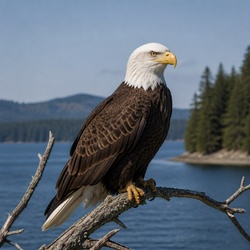
Bald Eagle (larger, all white head as adult) and various large gulls (different beak shape and flight style).
Ecological significance
As an apex predator specializing in fish, they are vital indicators of aquatic ecosystem health and water quality.
Conservation status
Least Concern (Population increasing)
Observation tips
Look for large stick nests on top of man-made platforms, utility poles, or dead trees near bodies of water. Use binoculars to spot them hovering over lakes.
Interesting facts
Ospreys have specialized barbed pads on their feet called spicules to help them grip slippery fish, and they can close their nostrils during dives.
More like this