Order: Accipitriformes; Family: Pandionidae
Osprey
Pandion haliaetus
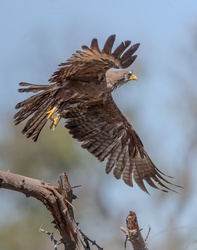
A large, distinctively colored raptor specialized in catching fish. It has long, narrow wings with a characteristic 'M' shape when viewed from below in flight.
Explore Osprey in the encyclopedia →Identify your own birds.
Get a report just like this from any photo or call, free.
Plumage & appearance
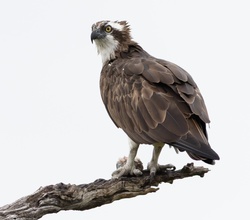
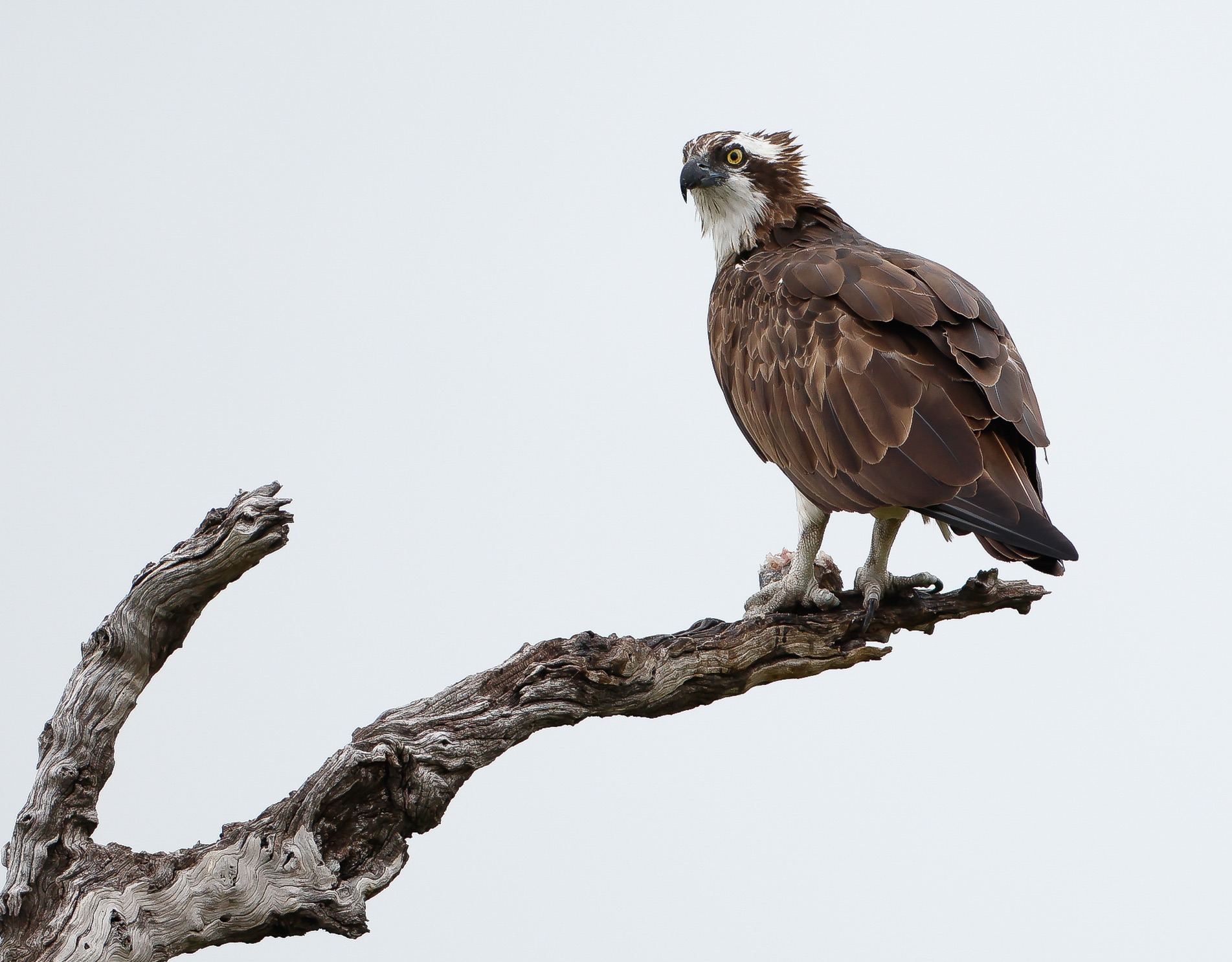
Brown upperparts and predominantly white underparts. The head is white with a distinctive dark mask across the eyes. Females often have a thicker 'necklace' of dark feathers on the breast than males. Juveniles have buff-fringed feathers on their back, giving a spotted appearance.
Key field marks
White head with dark eye stripe, white underparts with dark wrist patches visible in flight, and hooked black beak.
Size & weight
Length: 50–66 cm (20–26 in); Wingspan: 127–180 cm (50–71 in); Weight: 0.9–2.1 kg (2–4.6 lbs).
Voice — call & song
A series of high-pitched, whistling chirps or pips: 'cheep-cheep-cheep'.
Diet & foraging
Almost exclusively fish (99%). They hunt by hovering over water and diving feet-first to snatch prey with specialized barbed talons.
Habitat
Near any body of water with adequate fish supply, including salt marshes, estuaries, large lakes, and reservoirs.
Migration & movement
Most North American and European populations are long-distance migrants, wintering in South America or Africa. Some populations in warmer climates are residents.
Nesting & breeding
Builds large stick nests (eyries) at the tops of trees, cliffs, or artificial platforms. They usually lay 2-4 eggs and both parents protect the nest, though the female does most incubation.
Similar species
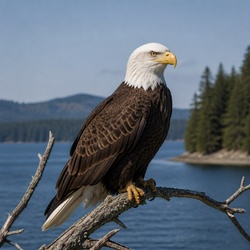
Bald Eagle (larger, different color pattern) and various Gulls (much smaller, different beak and flight style).
Ecological significance
As an apex predator of fish, they are excellent indicators of aquatic ecosystem health and water quality.
Conservation status
Least Concern (IUCN); population is generally increasing following the ban of DDT.
Observation tips
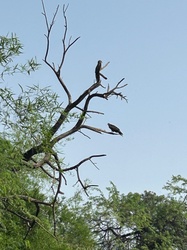
Look near large bodies of water, including lakes, rivers, and coasts. They are frequently seen perched on tall snags, utility poles, or nesting platforms.
Interesting facts
Ospreys have reversible outer toes and barbed pads on their feet (spicules) to help them grip slippery fish. They always carry fish head-first to make them more aerodynamic during flight.
More like this