Order: Anseriformes, Family: Anatidae
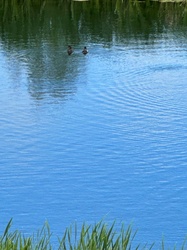
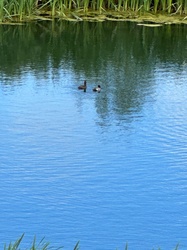
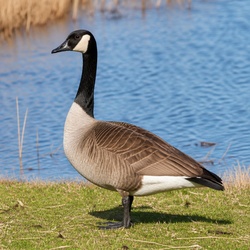
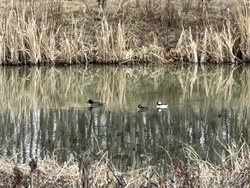
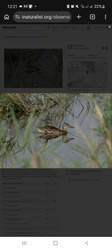
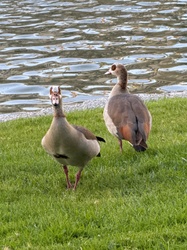
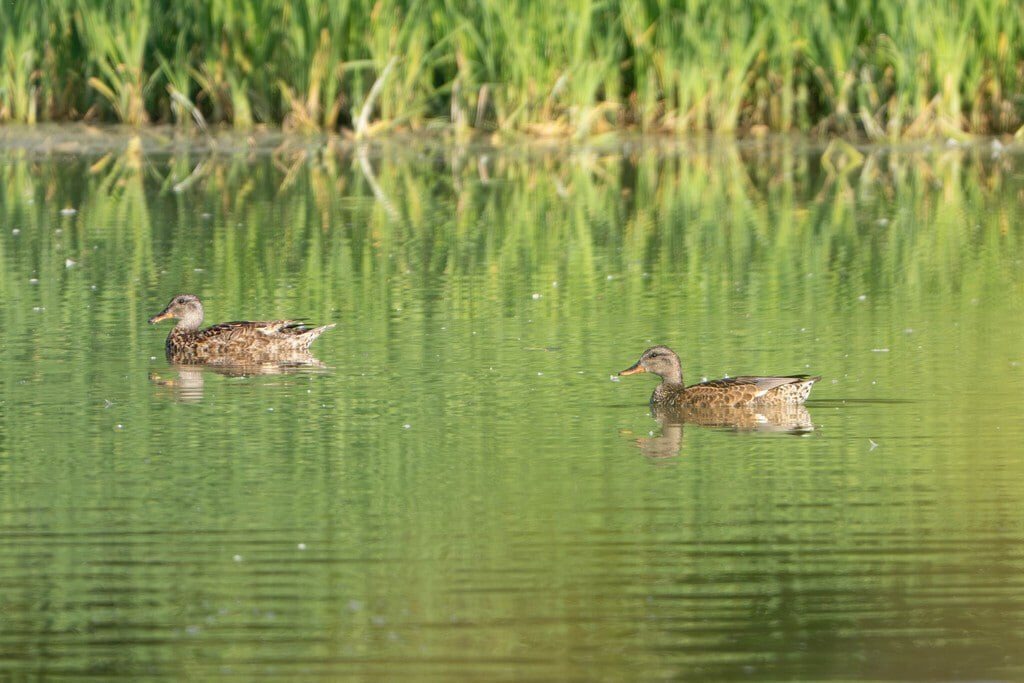
Mallard (Female)
Anas platyrhynchos
A medium-sized dabbling duck with a robust body, rounded head, and broad bill. Females are primarily mottled brown for camouflage and are known for their classic 'quack' vocalization.
Explore Mallard (Female) in the encyclopedia →Identify your own birds.
Get a report just like this from any photo or call, free.
Plumage & appearance
Females have mottled brown, buff, and black plumage providing camouflage while nesting. They feature a dark crown, a pale eyebrow stripe, and an orange-and-brown bill. The speculum (wing patch) is iridescent blue bordered with white.
Key field marks
Mottled brown body, orange-and-black bill, white-bordered iridescent blue speculum visible on the wings, and pale tail.
Size & weight
Length: 50-65 cm (20-26 in), Wingspan: 81-98 cm (32-39 in), Weight: 720-1,580 g (1.6-3.5 lbs)
Voice — call & song
Females produce a loud, descending series of quacks. Males emit quieter, low-pitched, muffled grunts or whistles.
Diet & foraging
Omnivorous; feeds on plant materials, seeds, roots, insects, small fish, and amphibians by dabbling (tipping up in the water) or grazing on land.
Habitat
Found in a wide variety of wetlands, including lakes, ponds, rivers, marshes, estuaries, and urban park ponds.
Migration & movement
Partially migratory; northern populations migrate south for winter, while temperate and urban populations are largely resident year-round.
Nesting & breeding
Nests on the ground hidden in dense vegetation, tall grass, or under shrubs near water. Lays 8-13 creamy-white to greenish eggs, incubated solely by the female for about 27-30 days.
Similar species
American Black Duck and female Pintail or Gadwall. Distinguished by the female Mallard's distinct white borders on the blue speculum wing patch and orange-mottled bill.
Ecological significance
Mallards play an important role in aquatic ecosystems by dispersing seeds of aquatic plants, controlling aquatic insect and weed populations, and serving as prey for various predators.
Conservation status
Least Concern (Population stable and widespread)
Observation tips
Look for them in almost any body of fresh water, including city parks, ponds, lakes, and rivers. They are generally habituated to humans and can be observed easily from a short distance.
Interesting facts
Mallards are the ancestors of almost all domestic duck breeds. Their specialized plumage structure traps air to keep them buoyant and waterproof.
More like this