Order Anseriformes, Family Anatidae
Northern Shoveler
Spatula clypeata
A medium-sized dabbling duck instantly recognizable by its oversized, shovel-shaped bill equipped with comb-like edges (lamellae) used for straining food from the water.
Explore Northern Shoveler in the encyclopedia →Identify your own birds.
Get a report just like this from any photo or call, free.
Plumage & appearance
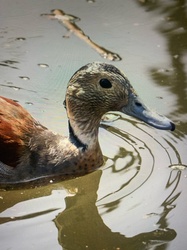
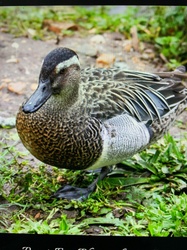
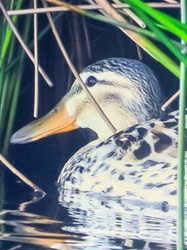
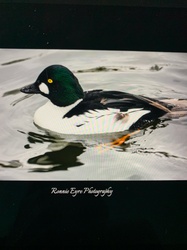
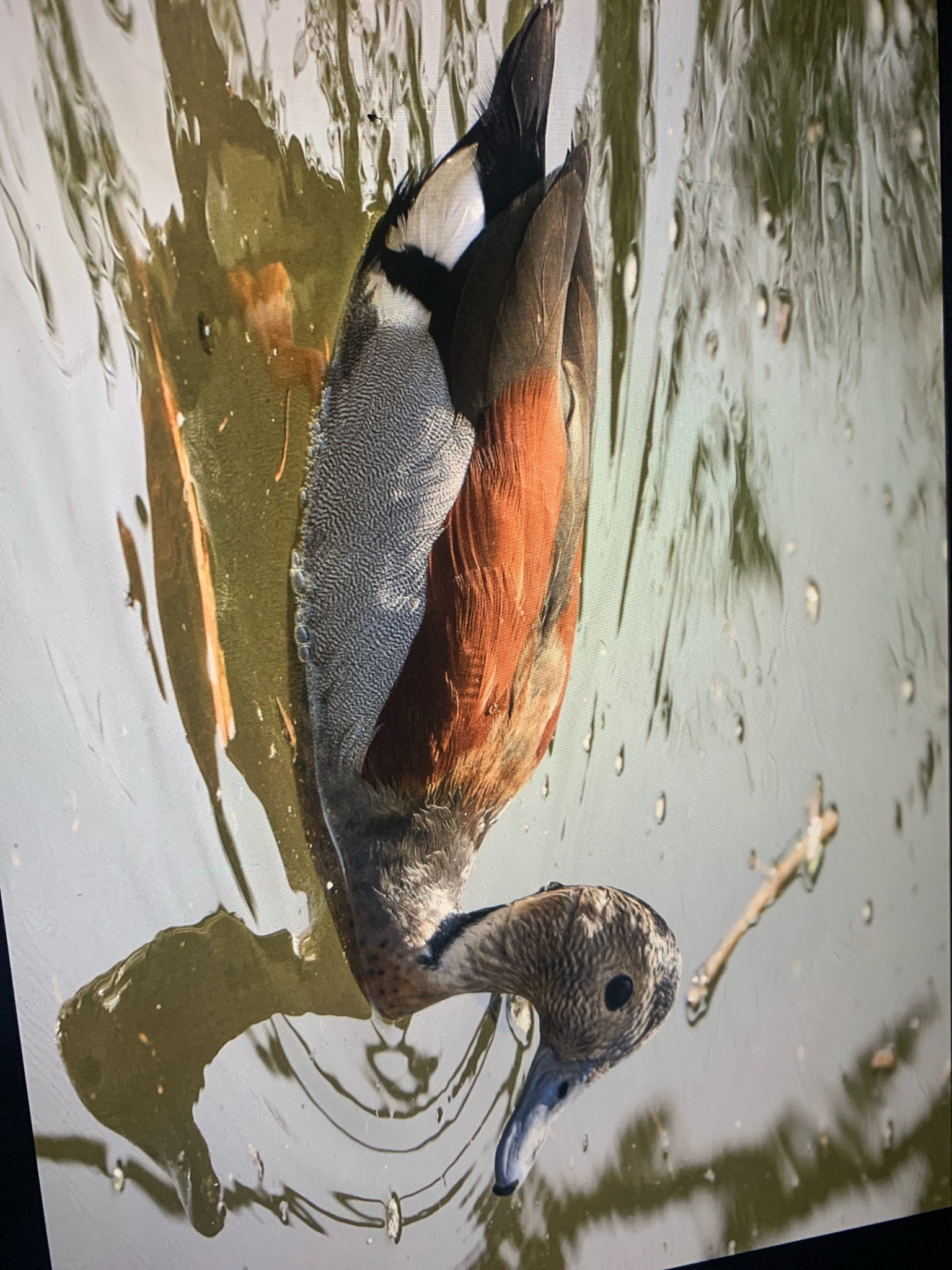
Adult breeding males have a striking dark green head, white chest, rich chestnut-brown flanks, and pale blue-gray shoulder patches (coverts) contrasting with a blackish back and tail. Females are mottled brown with a pale blue-gray wing patch, resembling a female mallard or blue-winged teal but with a disproportionately large bill. Non-breeding (eclipse) males resemble females.
Key field marks
The exceptionally large, wide, spoon-shaped bill is diagnostic at any age or sex. Breeding males are further identified by the dark green head, white breast, and chestnut flanks.
Size & weight
Length: 43-52 cm (17-20 inches); Wingspan: 73-82 cm (29-32 inches); Weight: 400-700 g (0.88-1.54 lbs).
Voice — call & song
Generally quiet outside of courtship. Males give a low, muffled, two-note 'took-took' or a muted rattle. Females give a classic soft, quacking sound similar to a Blue-winged Teal.
Diet & foraging
Primarily feeds on aquatic invertebrates (such as crustaceans, mollusks, and insect larvae), seeds, and aquatic vegetation, straining food particles from the water using its specialized bill.
Habitat
Shallow freshwater marshes, wetlands, flooded agricultural fields, shallow lakes, and occasionally sheltered coastal lagoons with abundant emergent vegetation.
Migration & movement
Migratory. Northern populations travel substantial distances southward for the winter, while some western North American and European populations may be year-round residents.
Nesting & breeding
Nests on the ground in a shallow depression lined with grasses and downy feathers, hidden well in dense vegetation near water. Lays 6 to 12 pale olive or greenish-buff eggs. Incubated solely by the female for about 22-25 days.
Similar species
Blue-winged Teal and Cinnamon Teal, both of which are noticeably smaller and lack the massive, spatulate bill characteristic of the Northern Shoveler.
Ecological significance
Acts as an important predator of aquatic invertebrates, zooplankton, and mosquito larvae, helping to control populations in wetland ecosystems. Their foraging disturbs benthic sediment, which can aid in nutrient cycling.
Conservation status
Least Concern, with stable or increasing global populations.
Observation tips
Look for them in shallow, nutrient-rich wetlands, marshes, and ponds. They often forage in groups, swinging their large bills side-to-side in a distinctive sweeping motion just below the water's surface.
Interesting facts
The Northern Shoveler's bill has over 100 fine, comb-like projections called lamellae along its edges, functioning like a sieve to trap tiny food items while letting water escape.
More like this