Order: Charadriiformes, Family: Burhinidae
Water Thick-knee
Burhinus vermiculatus
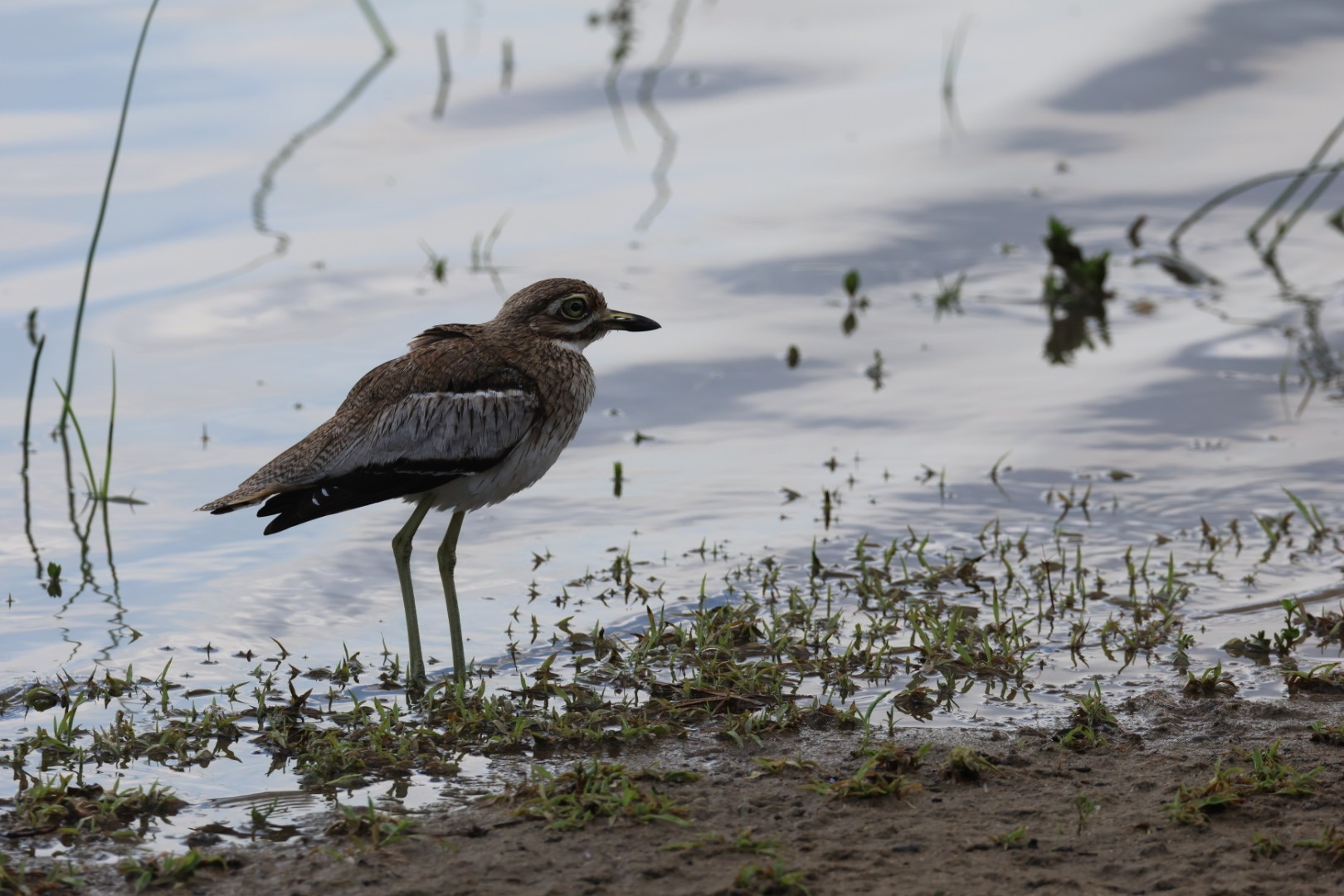
A medium-large, ground-dwelling wader with large yellow eyes, a short heavy bill, and long greenish-grey legs. It has a nocturnal habits, often freezing or crouching when approached.
Explore Water Thick-knee in the encyclopedia →Identify your own birds.
Get a report just like this from any photo or call, free.
Plumage & appearance
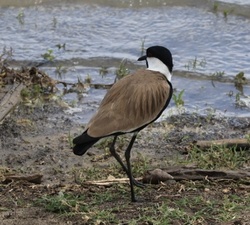
Upperparts are greyish-brown with fine dark streaks and vermiculations. Underparts are whitish with dark streaks on the breast. Prominent black and white patches on the folded wings. Sexes are similar in appearance, and juveniles resemble adults but may have duller plumage and more mottling.
Key field marks
Large yellow eyes, thick black-tipped bill, greyish-brown streaked plumage, distinctive white panel on the folded wing bordered by black, and long greenish legs.
Size & weight
Length: 38-42 cm; Wingspan: approximately 70-80 cm; Weight: 400-500 g.
Voice — call & song
A loud, wailing, plover-like whistle often given at night, sounding like a mournful 'wee-ooo' or repeated piping notes.
Diet & foraging
Primarily carnivorous, feeding on insects (such as beetles and grasshoppers), crustaceans, mollusks, frogs, and occasionally small fish or rodents, foraging mainly by walking and probing on foot.
Habitat
Found near water bodies including rivers, lakes, estuaries, mangrove swamps, and occasionally coastal lagoons with sandy or muddy margins.
Migration & movement
Non-migratory resident, though local movements can occur in response to seasonal flooding or drought.
Nesting & breeding
Nests on bare ground, often a shallow scrape in sand, gravel, or mud close to water. Clutch size is typically 1 to 2 eggs. Both parents share incubation duties and fiercely defend the nest.
Similar species
Spotted Thick-knee (Burhinus capensis), which prefers drier, more open habitats and lacks the prominent wing pattern and heavy association with water characteristic of the Water Thick-knee.
Ecological significance
Acts as an important predator of insects and small invertebrates, helping to regulate prey populations in wetland and shoreline ecosystems.
Conservation status
Least Concern, with a stable population trend across its extensive African range.
Observation tips
Best observed near water bodies at dusk or dawn, or at night using a spotlight where its reflective yellow eyes stand out. During the day, look for them resting motionless in shade near riverbanks.
Interesting facts
Water thick-knees are strictly nocturnal or crepuscular, spending daylight hours roosting motionless. They are also known as water dikkops due to their distinctive calls.
More like this