Order: Gruiformes, Family: Gruidae
Grey Crowned Crane
Balearica regulorum
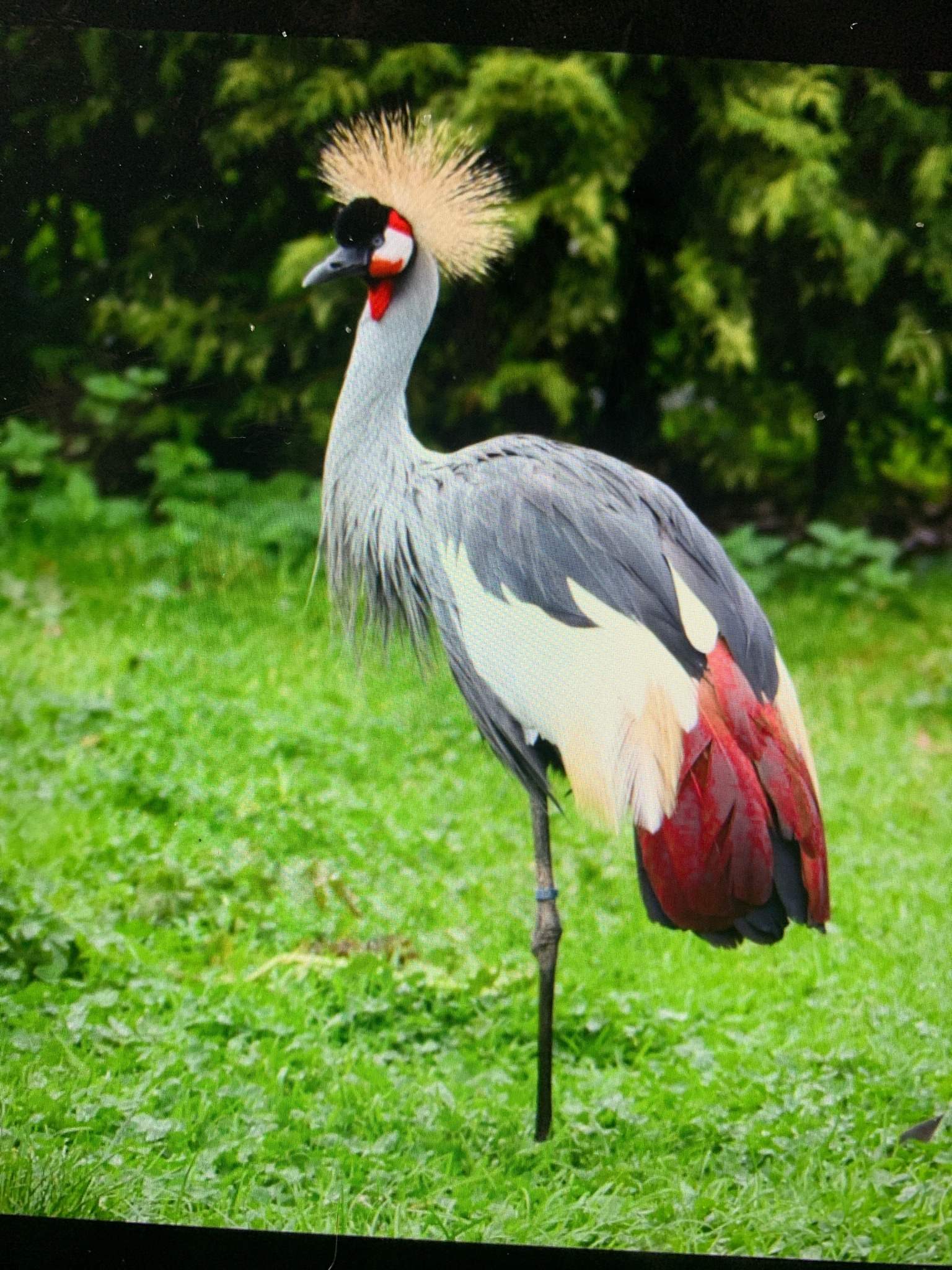
An elegant, tall bird with a striking stiff golden crown, red gular pouch under the chin, and elaborate courtship displays involving dancing, bowing, and leaping.
Explore Grey Crowned Crane in the encyclopedia →Identify your own birds.
Get a report just like this from any photo or call, free.
Plumage & appearance
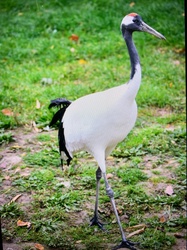
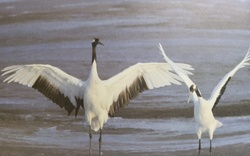
Body plumage is mostly grey. The wings are a mixture of white, brown, and black feathers, with distinctive bright red and buff-colored secondary feathers. The face features prominent white and red patches, a black forehead, and a stiff, golden-yellow crown of bristly feathers on the head. Juveniles are duller and greyer with feathered faces.
Key field marks
Stiff golden crown, grey body, white and black wing patches, red gular pouch, and white/red cheek patches.
Size & weight
Height: about 100 cm (39 inches), Weight: 3.5 kg (7.7 lbs), Wingspan: 180-200 cm (71-79 inches).
Voice — call & song
A loud, resonant honking or booming call, often accompanied by inflation of the red throat pouch.
Diet & foraging
Omnivorous; feeds on plants, seeds, grains, insects, frogs, lizards, small mammals, and occasionally other birds' eggs. Forages by walking and pecking or probing in shallow water and mud.
Habitat
Wetlands, marshes, river valleys, and adjacent grassy savannas or agricultural lands.
Migration & movement
Mainly resident, but undertakes local nomadic movements in response to seasonal water availability.
Nesting & breeding
Builds a large platform nest of grass and sedges in or near shallow water. Lays 2 to 5 eggs, incubated by both parents for roughly 28 to 31 days.
Similar species
Black Crowned Crane (Balearica pavonina), which has a more northerly African distribution, a darker neck, and different facial skin coloration (white above red rather than red above white).
Ecological significance
Acts as an umbrella species for wetland ecosystems and helps control insect and small vertebrate populations.
Conservation status
Endangered, with decreasing population trends primarily due to habitat loss and capture for the illegal pet trade.
Observation tips
Look for them in open grasslands adjacent to wetlands, especially in the morning or late afternoon when they are actively foraging. Use binoculars or a spotting scope for best viewing.
Interesting facts
The Grey Crowned Crane is the national bird of Uganda and features prominently on the Ugandan national flag and coat of arms. Unlike most other cranes, they can roost in trees due to a long hind toe that can grasp branches.
More like this