Order: Gruiformes, Family: Gruidae
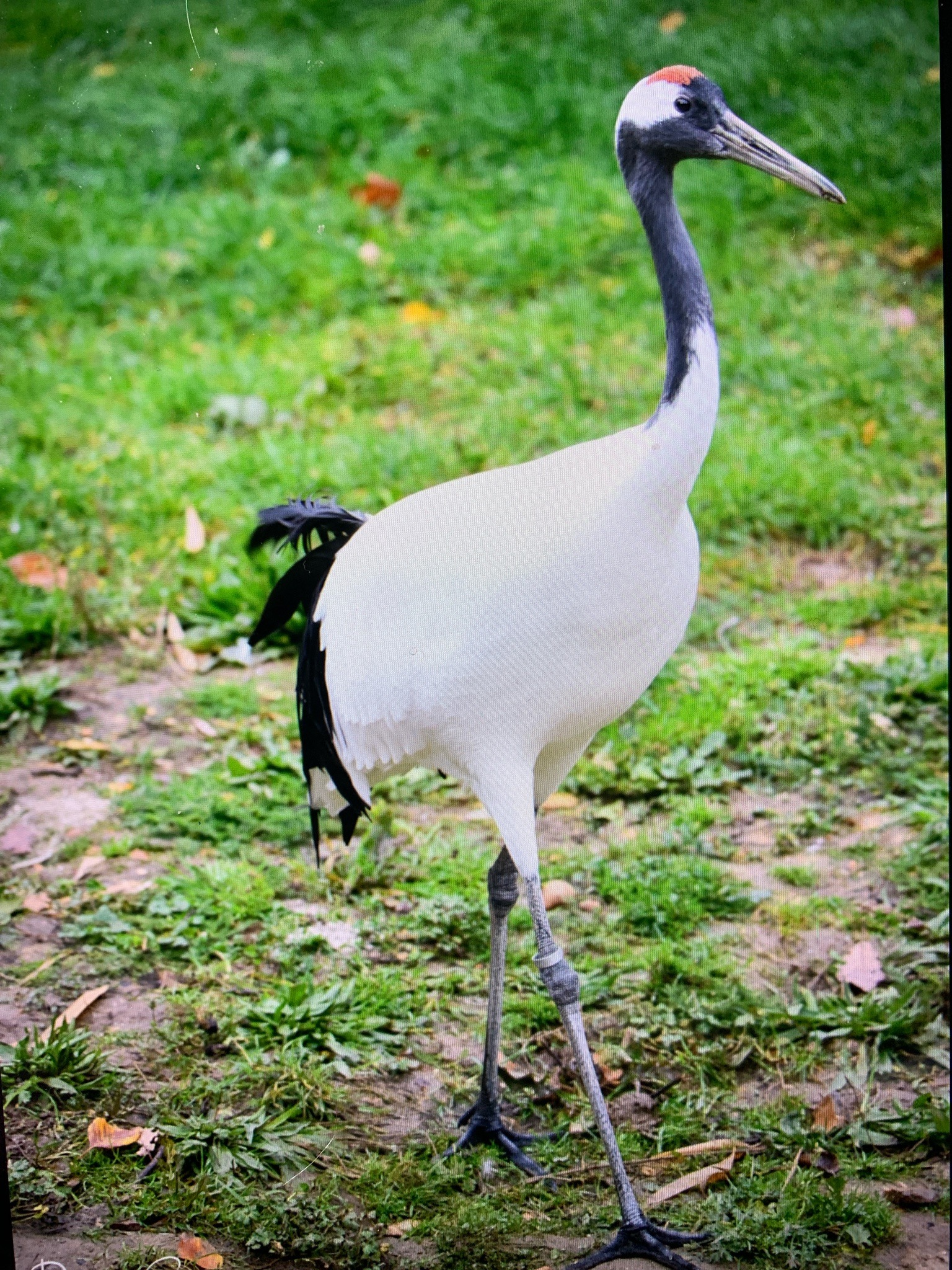
Red-crowned Crane
Grus japonensis
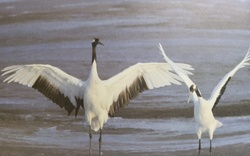
A magnificent, large white crane known for its elegant posture, striking black and white contrasting plumage, and bare red crown. They are famous for their elaborate, synchronized courtship dances.
Explore Red-crowned Crane in the encyclopedia →Identify your own birds.
Get a report just like this from any photo or call, free.
Plumage & appearance
Adults are mostly snow-white with a black neck, cheeks, and throat. They have a striking patch of bare red skin on the crown, which becomes brighter during the breeding season. Secondary and tertiary wing plumes are elongated and black, drooping over the tail like a bustle when at rest. Juveniles have brownish plumage with mottled buff and white, lacking the red crown patch.
Key field marks
Snow-white body, contrasting black neck and throat, black secondary wing feathers, long dark legs, and a distinct bare red patch on the crown.
Size & weight
Length: 140-158 cm; Wingspan: 220-240 cm; Weight: 7-10 kg, with males generally larger than females.
Voice — call & song
A loud, echoing, bugling call that can be heard from a great distance, often performed as a duetting ritual with paired mates.
Diet & foraging
Omnivorous. Feeds on aquatic invertebrates, fish, amphibians, small rodents, reeds, rice, corn, and various aquatic plant roots, foraging by probing with its long bill.
Habitat
Wetlands, marshes, peat bogs, river plains, wet meadows, and flooded agricultural fields.
Migration & movement
Partially migratory. Populations in Japan (Hokkaido) are largely resident, while mainland Asian populations are migratory, moving south for the winter.
Nesting & breeding
Builds large nests of reeds and grasses on wet ground or shallow water. Lays 2 eggs per clutch in spring. Both parents share incubation duties and fiercely protect their chicks.
Similar species
White-naped Crane and Hooded Crane, but the Red-crowned Crane is easily distinguished by its pure white body, contrasting black neck, and prominent red crown patch.
Ecological significance
As apex wetland species, they act as umbrella species; protecting their wetland habitats safeguards numerous other aquatic and marsh-dwelling flora and fauna.
Conservation status
Endangered, with a decreasing trend primarily due to wetland destruction, agriculture expansion, and human encroachment.
Observation tips
Best observed in wetlands, marshes, and agricultural fields in eastern Hokkaido (Japan) or specific nature reserves in China and Korea during winter. Use spotting scopes to avoid disturbing them.
Interesting facts
The Red-crowned Crane is a symbol of luck, longevity, and fidelity in Asian cultures, often featured in traditional art, folklore, and origami.
More like this