Order: Anseriformes, Family: Anatidae
Australian Shelduck
Tadorna tadornoides
A large, goose-like duck with striking chestnut and grey plumage, an upright stance when on land, and powerful flight.
Explore Australian Shelduck in the encyclopedia →Identify your own birds.
Get a report just like this from any photo or call, free.
Plumage & appearance
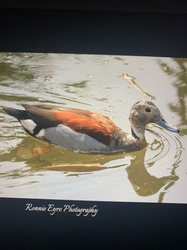
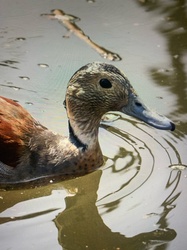
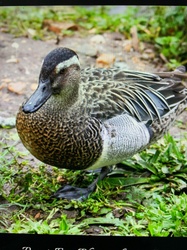
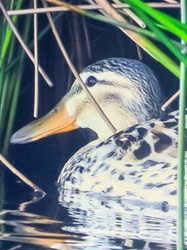
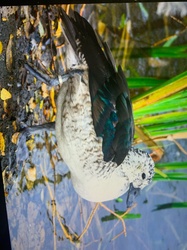
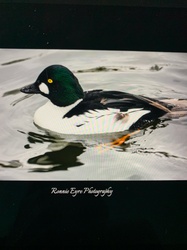
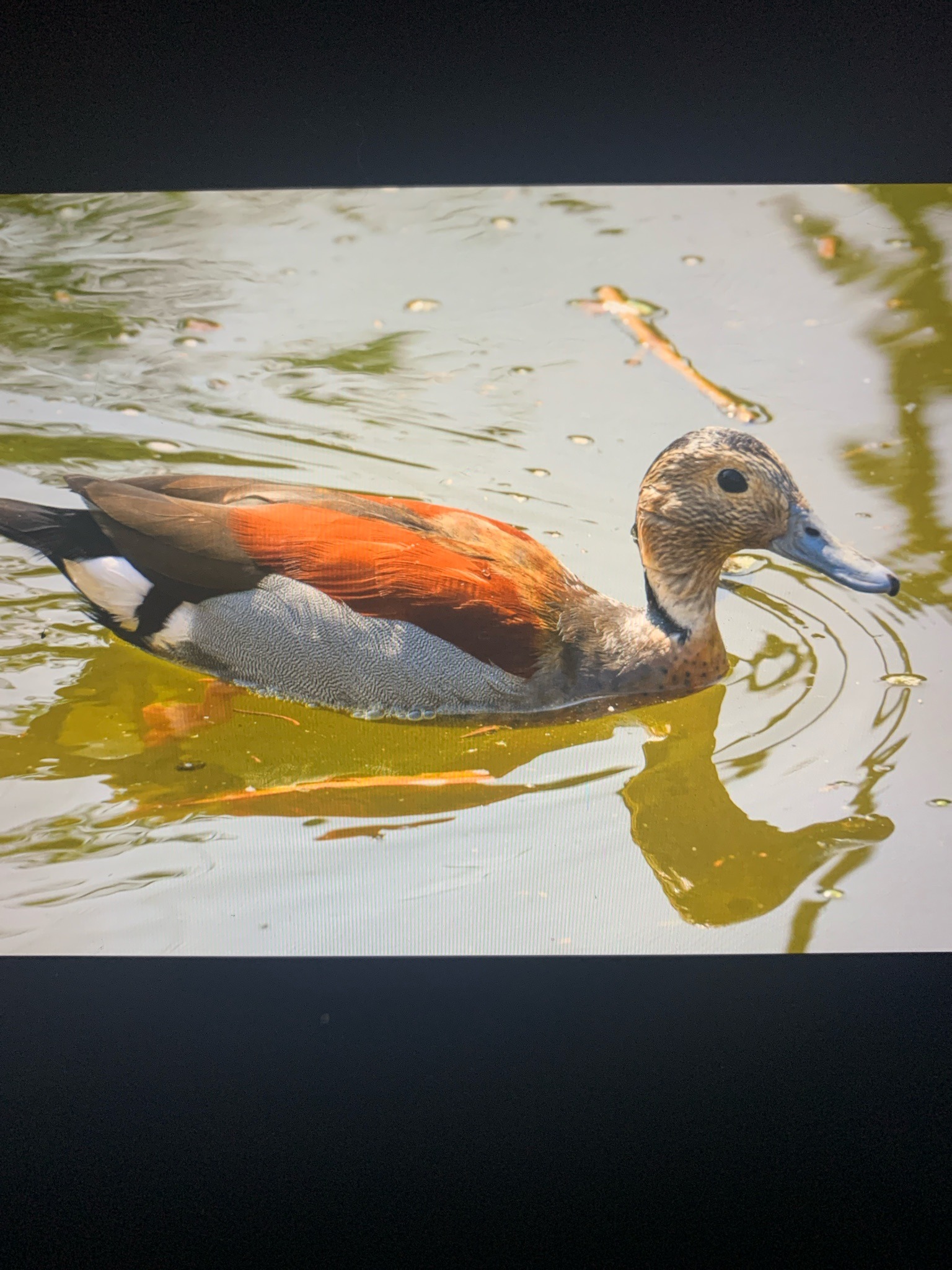
Adult males have a dark green head with a white ring around the base of the bill, a chestnut breast, black and white shoulders, and grey vermiculated flanks. Females are similar but have a more prominent white eye-ring and white facial markings around the bill and eye. Juveniles are duller and browner with mottled underparts.
Key field marks
Chestnut breast band, grey flanks, dark green head (male) or white face markings (female), and large white wing patches visible in flight.
Size & weight
Length: 55–73 cm; Wingspan: 100–125 cm; Weight: 1.2–1.8 kg.
Voice — call & song
Loud, resonant honking calls, often given in flight. Females produce a distinctive, repeated deep barking or chattering call.
Diet & foraging
Herbivorous and omnivorous; feeds on grasses, seeds, aquatic plants, algae, and small aquatic invertebrates by grazing on land or dabbling in shallow water.
Habitat
Found near large open bodies of fresh, brackish, or saline water, including lakes, swamps, estuaries, and flooded agricultural pastures.
Migration & movement
Partial migrant or nomad; many birds undertake a large-scale moult migration to specific large lakes (like Lake George) in summer and autumn.
Nesting & breeding
Nests in hollow trees, rabbit burrows, or dense vegetation, usually close to water. Clutch size is typically 10 to 14 creamy-white eggs. Both parents care for the ducklings.
Similar species
Pacific Black Duck or other shelducks; distinguished by the Australian Shelduck's bold chestnut breast, grey flanks, and larger, goose-like posture.
Ecological significance
Acts as a seed disperser and helps control aquatic invertebrates and vegetation in wetland ecosystems.
Conservation status
Least Concern, with a stable and widespread population.
Observation tips
Look for them in open wetlands, pastures, and lakes. They are often quite vocal and bold, making them relatively easy to spot and photograph during early morning or late afternoon.
Interesting facts
Unlike many ducks, Australian Shelducks form long-term pair bonds that can last for multiple breeding seasons, and they are fiercely territorial during breeding.
More like this