Order: Passeriformes, Family: Prunellidae
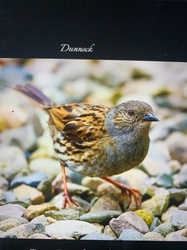
Dunnock
Prunella modularis
A small, unassuming, sparrow-like bird with a fine, pointed bill adapted for eating insects and small seeds. Often seen skulking low near the ground or hopping with a characteristic nervous flick of its wings.
Explore Dunnock in the encyclopedia →Identify your own birds.
Get a report just like this from any photo or call, free.
Plumage & appearance
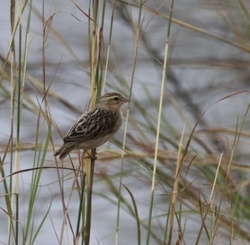
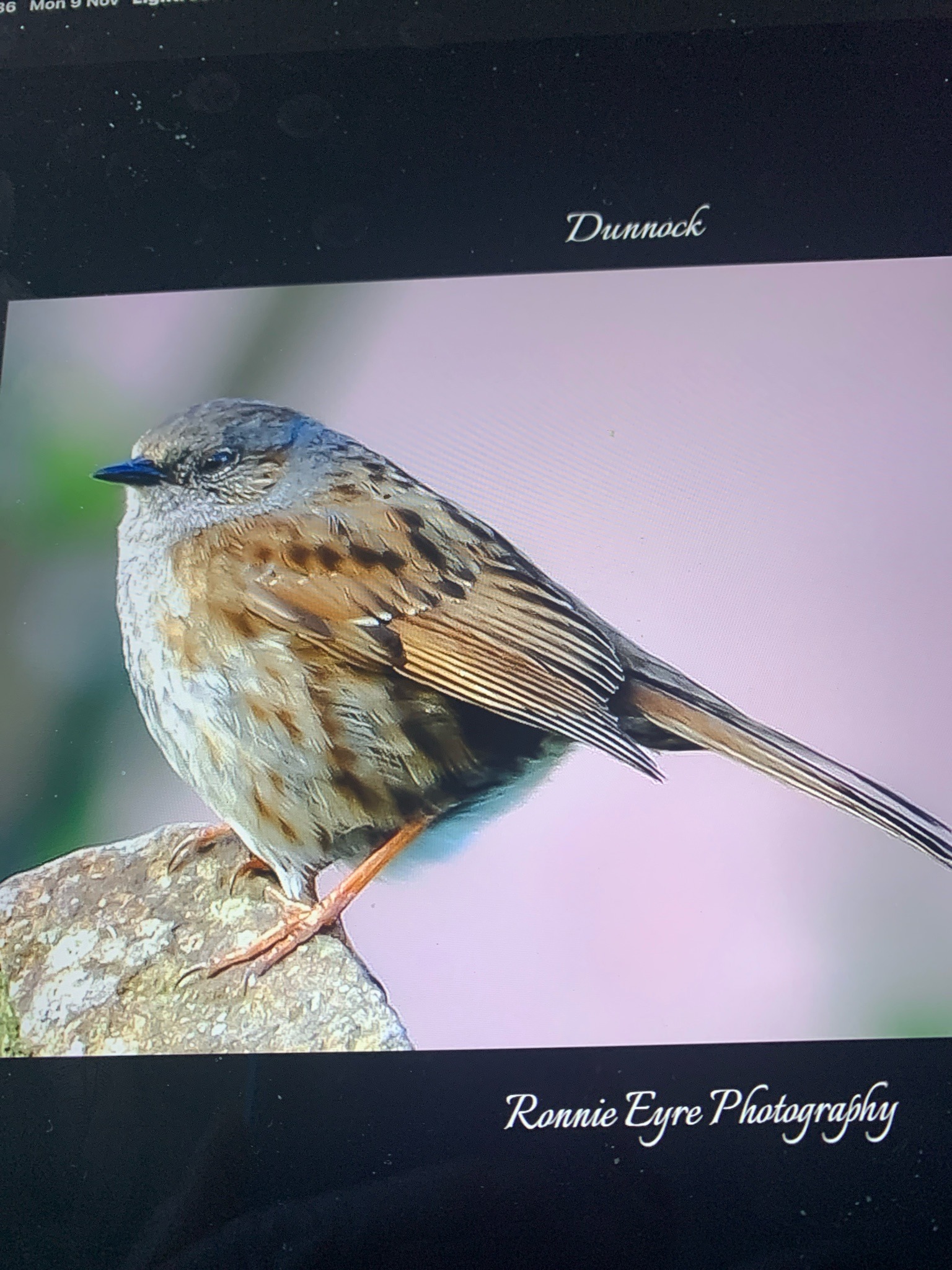
Grey head and underparts with a brownish-grey wash, streaked dark brown mantle and back, chestnut-brown wing coverts, and finely streaked flanks. Sexes are visually very similar, with males having slightly more grey on the head.
Key field marks
Slate-grey head and breast, brown streaked back, finely streaked flanks, thin pointed black bill, and relatively thin pinkish-brown legs.
Size & weight
Length: 13-14.5 cm, Wingspan: 19-21 cm, Weight: 15-24 g.
Voice — call & song
Song is a thin, high-pitched, hurried, squeaking jingle, resembling that of a wren. Call is a high, thin, piercing 'pseep'.
Diet & foraging
Insects, spiders, and small worms in spring and summer; weed seeds and small grains in autumn and winter. Forages mostly on the ground by hopping and rummaging through leaf litter.
Habitat
Woodlands with undergrowth, scrub, hedgerows, parks, and suburban gardens.
Migration & movement
Mostly sedentary resident, though northern and eastern populations may move south or to lower altitudes for the winter.
Nesting & breeding
Builds a neat, cup-shaped nest of twigs, moss, and grass lined with softer materials like hair or feathers, usually hidden low in dense shrubs, conifers, or ivy. Clutch size is typically 4 to 5 unspotted bright blue eggs, laid in breeding seasons starting in April.
Similar species
House Sparrow or Eurasian Tree Sparrow, but the Dunnock is easily distinguished by its finer, slender black bill, grey head, and streaked grey underparts rather than stout bills and heavy brown-and-black patterning.
Ecological significance
Helps control insect populations and acts as a seed disperser; frequently serves as a host to the brood-parasitic Common Cuckoo.
Conservation status
Least Concern, with a stable population trend.
Observation tips
Look for them low down in garden shrubberies, hedgerows, or woodland edges, often flicking through leaf litter. Listening for their high-pitched, thin song from a visible perch in spring is an easy way to locate them.
Interesting facts
Dunnocks have a notoriously complex and flexible mating system that can involve monogamy, polygyny, polyandry, and even polygynandry within the same population.
More like this