Order: Passeriformes, Family: Prunellidae
Dunnock
Prunella modularis
A small, unassuming, sparrow-sized bird with an understated elegance. It spends much of its time skulking low to the ground or within dense undergrowth, frequently flicking its wings nervously.
Explore Dunnock in the encyclopedia →Identify your own birds.
Get a report just like this from any photo or call, free.
Plumage & appearance
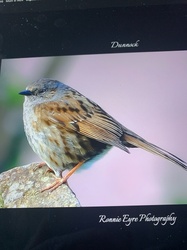
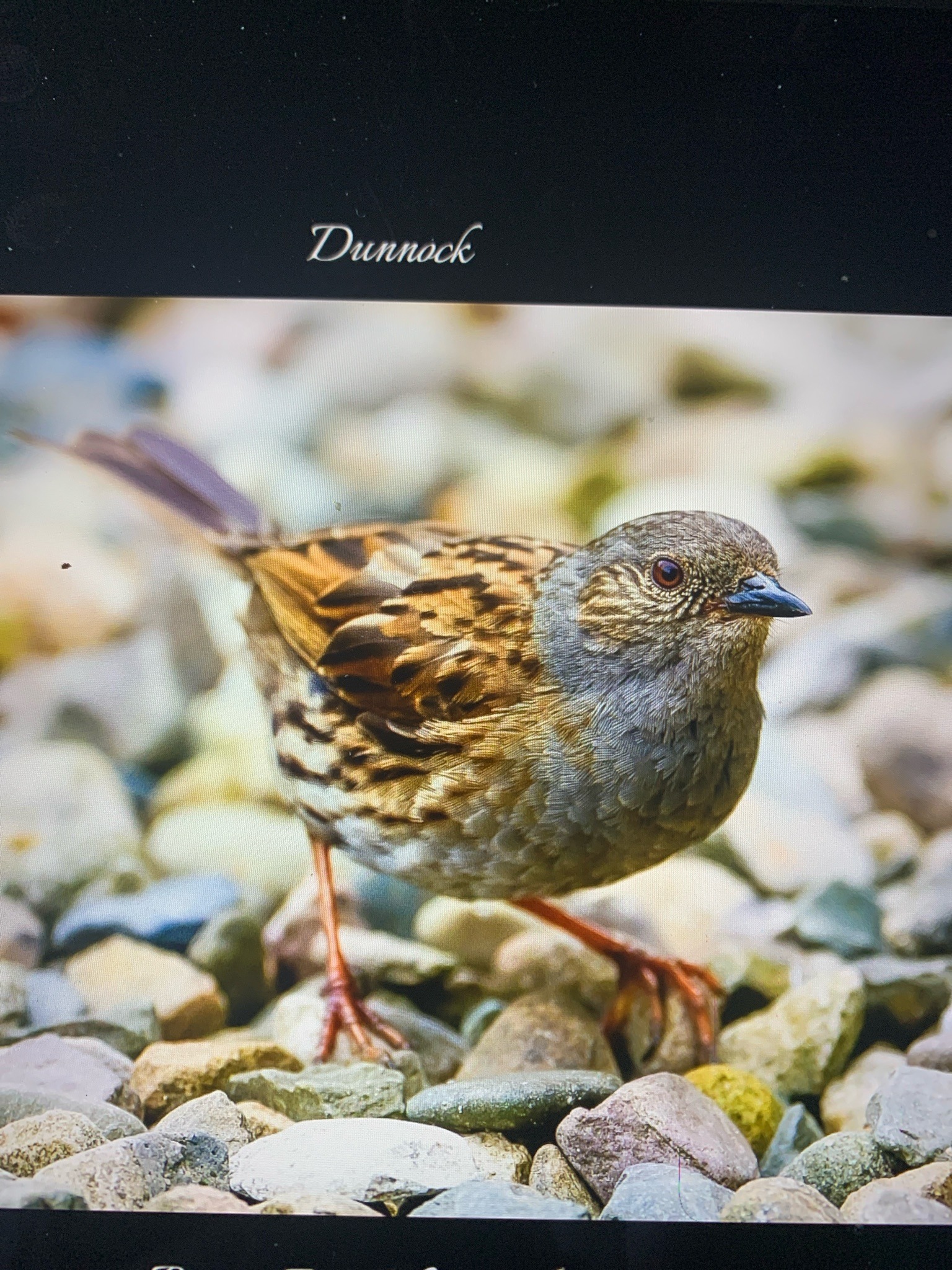
Sexes are very similar. Head, throat, and breast are slate-grey. Back and wings are warm brown with heavy dark streaks. Flanks show prominent bold brown and buff streaks. Belly is whitish. Bill is thin and pointed, dark grey. Legs are reddish-brown.
Key field marks
Slate-grey head and underparts, streaked brown upperparts, thin needle-like bill, and reddish-brown legs.
Size & weight
Length: 13-14.5 cm, Wingspan: 19-21 cm, Weight: 14-23 g
Voice — call & song
Song is a thin, high-pitched, hurried, squeaky trill often delivered from a prominent bush or roof top. Call is a high, thin 'tseep'.
Diet & foraging
Invertebrates (especially beetles, spiders, and caterpillars) during spring and summer; seeds and small fruits during autumn and winter. Forages primarily by ground-gleaning.
Habitat
Woodland edges, scrub, hedgerows, parks, and suburban gardens with dense cover.
Migration & movement
Mostly sedentary resident, though northern and eastern populations may move south or west during harsh winters.
Nesting & breeding
Builds a neat cup-shaped nest of twigs, moss, and grass lined with softer materials like hair or wool, hidden low in dense bushes or conifers. Clutch size is typically 4-5 bright turquoise-blue eggs.
Similar species
House Sparrow or Eurasian Tree Sparrow, but distinguished immediately by the Dunnock's slate-grey head and breast, and very fine, pointed insect-eating bill.
Ecological significance
Acts as an insect controller in gardens and woodlands, and serves as a primary host species for the brooding cuckoo in many European habitats.
Conservation status
Least Concern, with a stable and widespread population trend.
Observation tips
Look for them hopping quietly along garden paths, flower beds, or the edges of dense shrubs. They respond well to quiet observation and are often spotted scratching the ground for fallen seeds.
Interesting facts
Dunnocks have a notoriously complex mating system that can involve monogamy, polygyny, polyandry, and even polygynandry all within the same population.
More like this