Order: Columbiformes, Family: Columbidae
Identified from audio
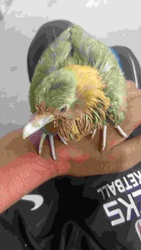
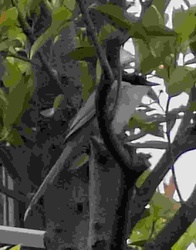
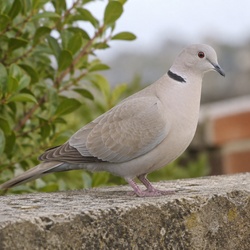
Eurasian Collared-Dove
Streptopelia decaocto
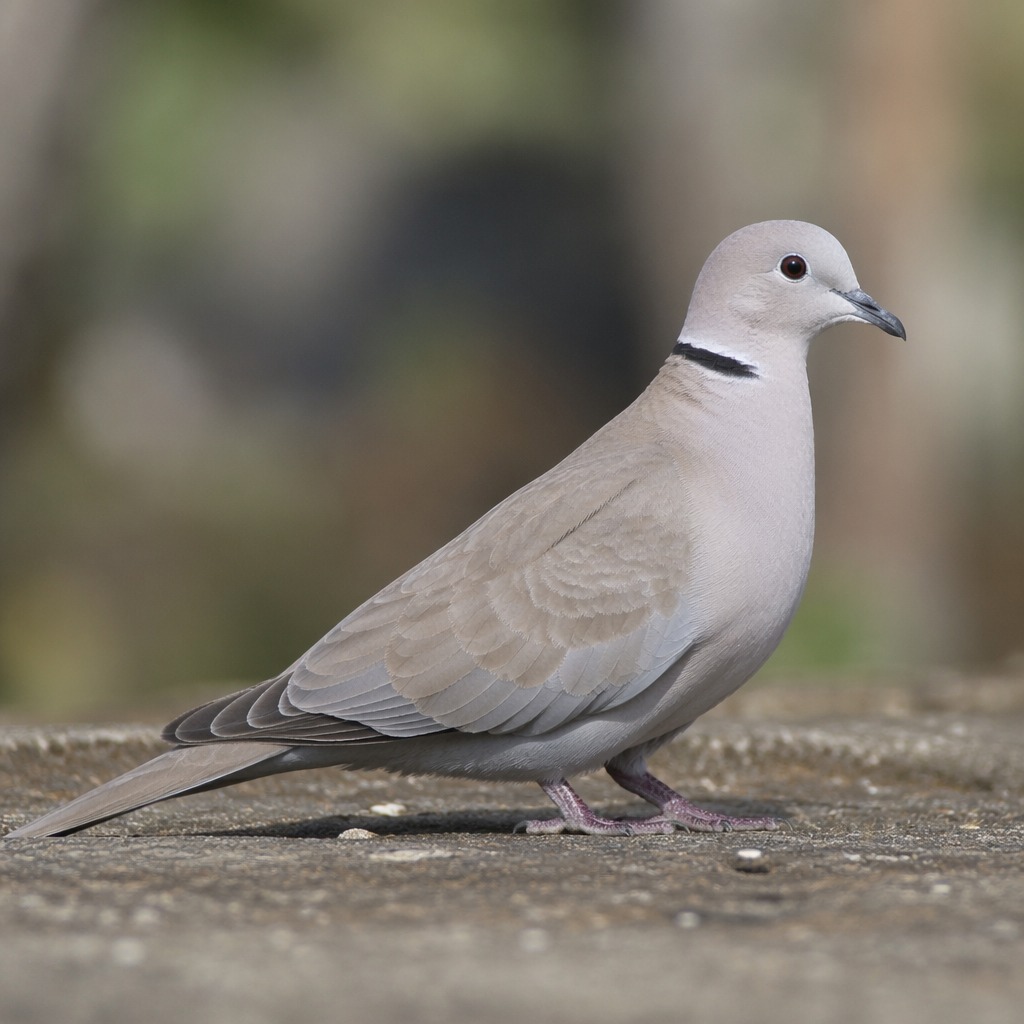
A medium-sized dove with a slender build, graceful posture, and a distinct black neck patch. They are active during the day, often seen perched on wires, roofs, or foraging on the ground in pairs or small flocks.
Explore Eurasian Collared-Dove in the encyclopedia →Identify your own birds.
Get a report just like this from any photo or call, free.
Plumage & appearance
Pale grey-buff to pinkish-grey overall, with a distinctive black half-collar edged with white on the back of the neck. Darker primary flight feathers and a long, square-ended tail with white outer feathers.
Key field marks
Black neck collar, pale grey-brown body, square-tipped tail with white outer feathers.
Size & weight
Length: 31-34 cm, Wingspan: 47-55 cm, Weight: 125-240 g
Voice — call & song
The recording features its characteristic monotonous, rhythmic, three-note cooing song ('coo-koo-kook'), repeated persistently.
Diet & foraging
Primarily granivorous, eating seeds, grains, waste corn, and sometimes berries or insects.
Habitat
Urban areas, suburban neighborhoods, agricultural land, farmyards, and open woodland edges.
Migration & movement
Mostly resident, though some northern populations may disperse in winter.
Nesting & breeding
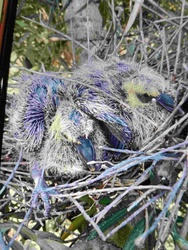
Builds a flimsy stick platform nest in trees or shrubs; lays 2 white eggs.
Similar species
Mourning Dove (smaller, lacks the black neck collar and square tail with white patches) and Ringed Turtle-Dove (smaller and paler domestic relative).
Ecological significance
Acts as a seed disperser and plays a role in the urban and agricultural food web, though its rapid expansion has sometimes brought it into competition with native species.
Conservation status
Least Concern (IUCN)
Observation tips
Look and listen around suburban gardens, farms, and city parks. They frequently perch conspicuously on overhead wires and television antennas.
Interesting facts
The Eurasian Collared-Dove has experienced one of the most remarkable natural range expansions of any bird, spreading across Europe and North America from a small introduced population in the Bahamas in the 1970s.
More like this