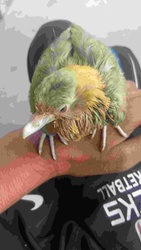
Order: Columbiformes, Family: Columbidae
Mourning Dove
Zenaida macroura
A slender, medium-sized dove with a small head, plump body, and a long, tapering tail. Known for its graceful flight and soft, mournful cooing calls.
Explore Mourning Dove in the encyclopedia →Identify your own birds.
Get a report just like this from any photo or call, free.
Plumage & appearance
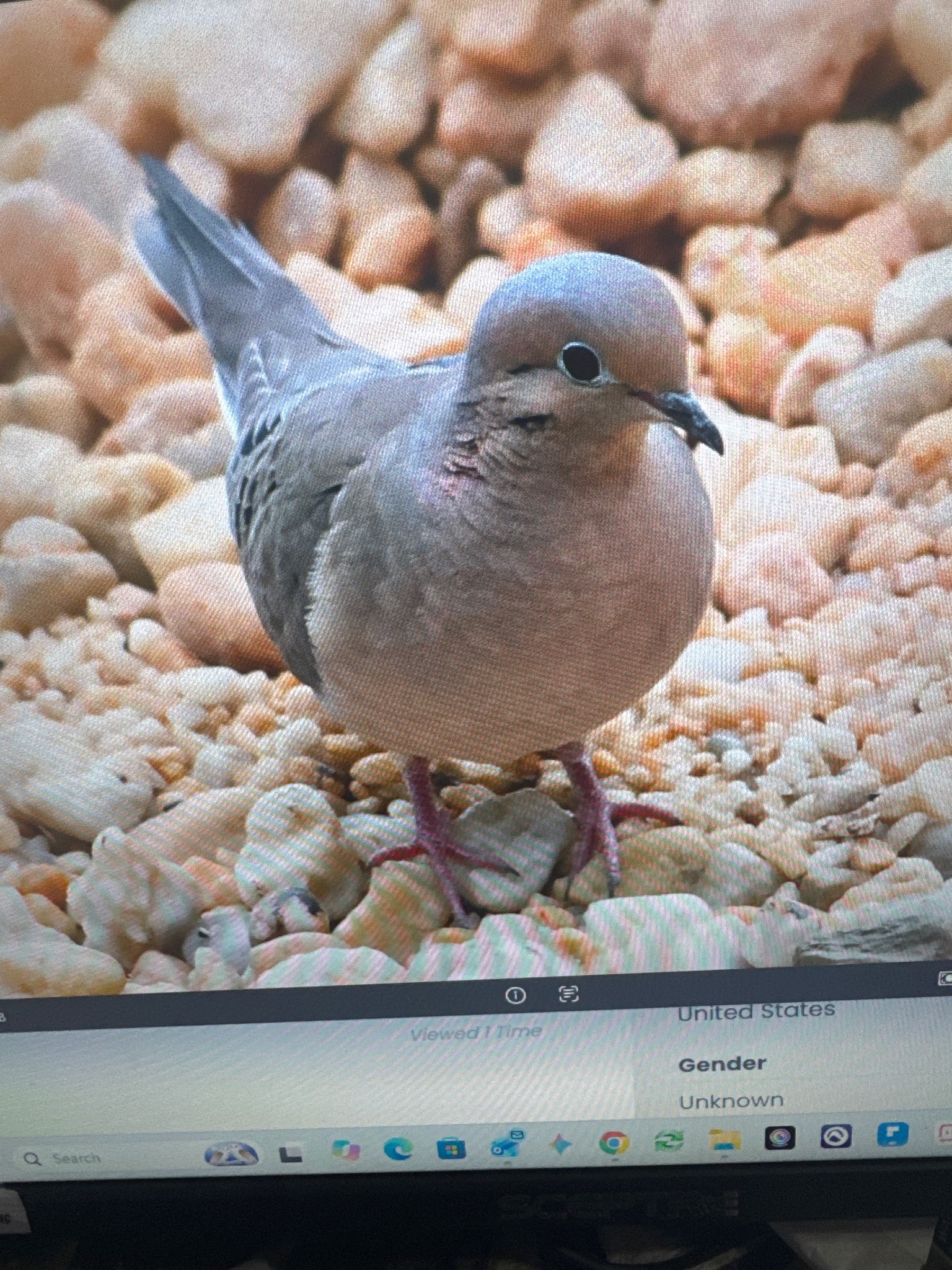
Delicate light grey-brown overall with pinkish-fawn underparts. Black spots are present on the lower coverts and wings, and a dark spot appears below and behind the eye. The long, pointed tail has white outer edges. Males and females look very similar, though males often have a more bluish crown and rosy-pink iridescence on the neck.
Key field marks
Small head, plump body, long pointed tail with white tips, black spots on the wings, and a dark spot below the eye.
Size & weight
Length: 22-34 cm (8.7-13.4 in), Wingspan: 37-45 cm (14.6-17.7 in), Weight: 85-170 g (3-6 oz).
Voice — call & song
A haunting, resonant, owl-like cooing song that sounds like 'coo-oo, oo, oo, oo', often mistaken for an owl by beginners.
Diet & foraging
Primarily granivorous, eating a wide variety of seeds from weeds, grasses, herbs, and cultivated grains. They swallow small gravel or sand (grit) to help grind down hard seeds in their gizzards.
Habitat
Open and semi-open habitats, including agricultural fields, prairies, deserts, scrublands, urban areas, and suburban neighborhoods. They generally avoid dense forests.
Migration & movement
Partial migrant. Northern populations are migratory and travel south for the winter, while southern populations are year-round residents.
Nesting & breeding
Constructs a flimsy, flat platform nest made of twigs, usually placed in a tree, shrub, or sometimes on the ground or building ledges. Clutch size is almost always 2 white eggs. Both parents incubate and feed the young 'pigeon's milk', a nutritious secretion from the crop.
Similar species
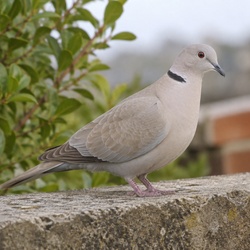
Eurasian Collared-Dove (larger, square tail with a black neck ring) and White-winged Dove (shorter, rounded tail with white wing patches).
Ecological significance
Acts as an important seed disperser for various grasses and weeds, and serves as a major prey species for many raptors and mammalian carnivores.
Conservation status
Least Concern, with stable and very large populations distributed across North America.
Observation tips
Often found walking on the ground in open country, farmyards, and suburban lawns looking for seeds. They are frequent visitors to backyard bird feeders, especially platform and ground feeders.
Interesting facts
Mourning Doves are one of the most widely distributed and abundant game birds in North America. They can fly at speeds up to 55 mph (88 km/h) and produce a whistling sound with their wings upon takeoff.
More like this