Order: Charadriiformes, Family: Charadriidae
Spur-winged Lapwing
Vanellus spinosus
A medium-sized, long-legged wader with a bold black, white, and brown color pattern. Known for being vocal, alert, and occasionally aggressive when defending its territory.
Explore Spur-winged Lapwing in the encyclopedia →Identify your own birds.
Get a report just like this from any photo or call, free.
Plumage & appearance
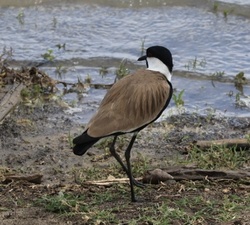
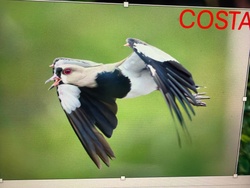
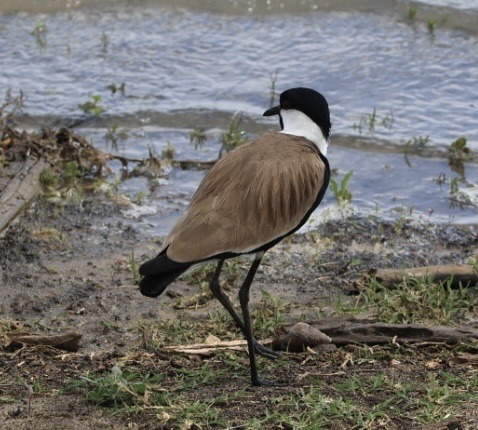
Adults have a striking black crown, nape, breast, and tail contrasting sharply with white cheeks and underparts. The back and wings are a soft grey-brown. Sexes are similar in appearance, though males can be slightly larger.
Key field marks
Distinctive black cap, white cheek patch, black breast, grey-brown back, and long black legs. Look for the small, often hard-to-see wing spur during close observation.
Size & weight
Length: 29-32 cm, Wingspan: 69-80 cm, Weight: 120-230 g
Voice — call & song
A loud, metallic, repeating 'tink-tink-tink' or sharp alarm call often given in flight.
Diet & foraging
Insects and other small invertebrates, which it forages for by pecking while walking on the ground.
Habitat
Wetlands, marshes, lake shores, river banks, floodplains, and damp agricultural lands.
Migration & movement
Mostly resident, though northern populations in parts of the Middle East may undertake short-distance movements during winter.
Nesting & breeding
Nests on the ground in a shallow scrape near water, often lined with plant material. Usually lays 2 to 4 eggs, with both parents fiercely defending the nesting territory.
Similar species
Black-headed Lapwing (Vanellus tectus), which has a red bill base and lacks the extensive black breast and clear-cut white cheek patch of the Spur-winged Lapwing.
Ecological significance
Acts as an important predator of aquatic and terrestrial insects, helping to control invertebrate populations in wetland ecosystems.
Conservation status
Least Concern, with a stable or increasing population trend.
Observation tips
Look for them near freshwater lakes, rivers, marshes, and agricultural fields in the Middle East and Africa. Approach slowly, as they are quick to sound alarm calls when disturbed.
Interesting facts
The bird derives its name from a sharp, inconspicuous horny spur located on the bend of each wing, which is occasionally used in territorial combat.
More like this