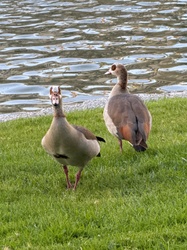
Order: Anseriformes, Family: Anatidae
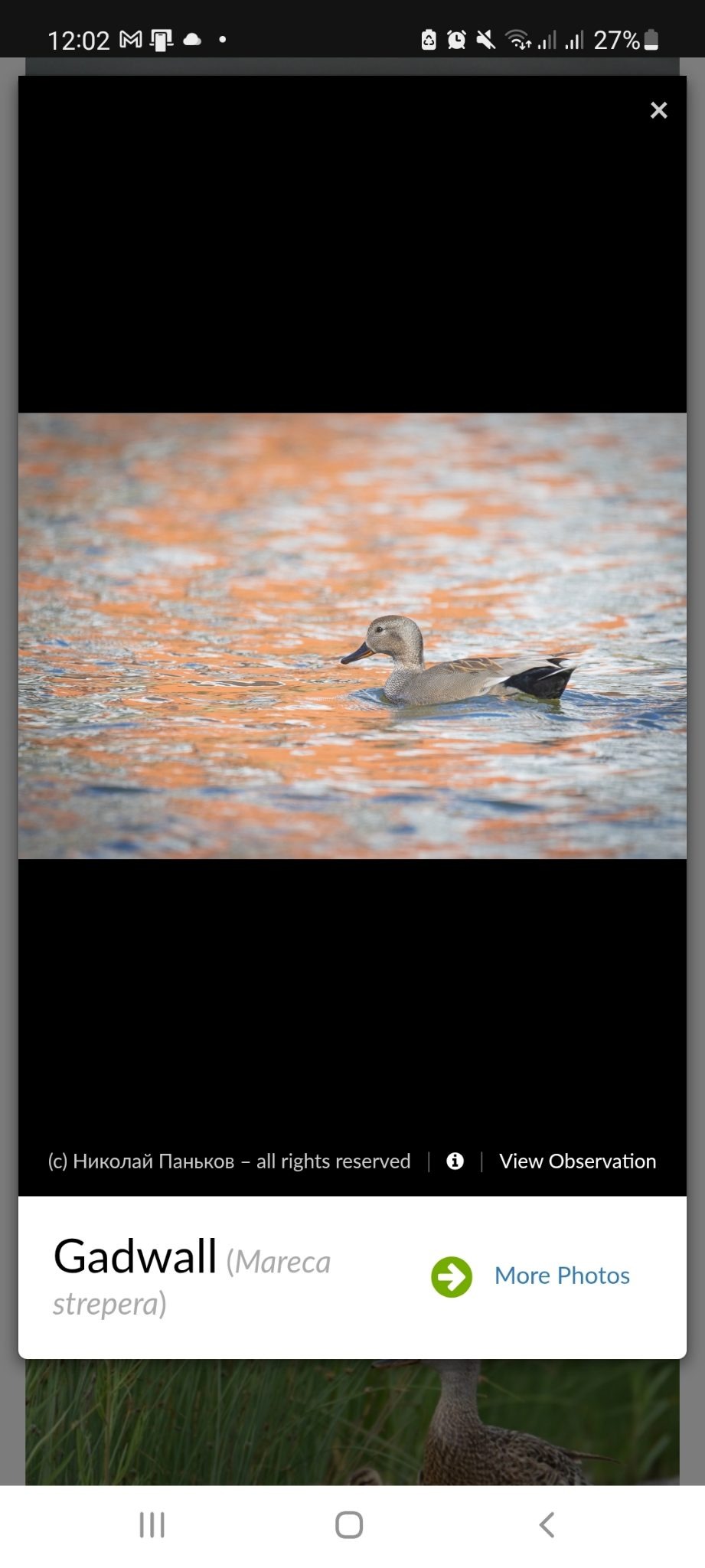
Gadwall
Mareca strepera
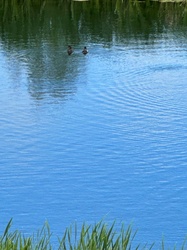
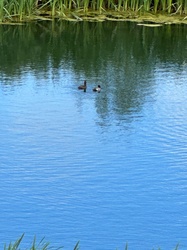
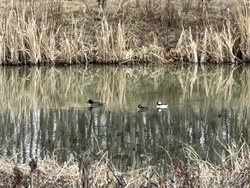
A medium-sized dabbling duck that often appears subtly patterned in shades of gray from a distance. While females look somewhat plain and brownish, males feature elegant vermiculated gray body plumage contrasted by a dark tail area and a neat, square head shape.
Explore Gadwall in the encyclopedia →Identify your own birds.
Get a report just like this from any photo or call, free.
Plumage & appearance
Adult males in breeding plumage appear largely gray with a distinct black rear end (upper and under tail coverts) and a white speculum on the wing, visible in flight. Females are mottled brown, closely resembling a female Mallard, but distinguished by a white speculum and an orange-edged bill. Non-breeding males (eclipse plumage) resemble females but retain darker gray scapulars and back feathers.
Key field marks
Male: Gray body, black rear end, white speculum. Female: Mottled brown body, white wing speculum, dark-edged orange bill.
Size & weight
Length: 46-56 cm (18-22 in), Wingspan: 78-90 cm (31-35 in), Weight: 500-1,000 g (1.1-2.2 lbs)
Voice — call & song
Females give a loud, Mallard-like quack, though often higher-pitched and with a quicker tempo. Males produce low-pitched burps, whistles, and deep kuck-kuck calls.
Diet & foraging
Primarily herbivorous, feeding on stems, leaves, seeds, and roots of aquatic plants. Also supplements diet with small fish, snails, and aquatic insects, particularly during breeding season.
Habitat
Prefers wetland habitats with dense emergent vegetation, such as freshwater marshes, shallow lakes, flooded agricultural fields, and occasionally sheltered coastal lagoons or estuaries.
Migration & movement
Migratory in the northern parts of its range, moving south for the winter. Populations in Western Europe and parts of North America may be resident or only undergo short-distance movements.
Nesting & breeding
Nests on the ground in dense vegetation, well-hidden near water. The nest is a shallow depression lined with grass and down feathers. Clutch size is typically 7-12 creamy-white eggs, incubated solely by the female for about 27-28 days.
Similar species
Female Mallard and Northern Pintail females. The Gadwall is best distinguished by its white wing speculum (which Mallards also have, but Gadwalls lack the strong blue-purple border) and its distinct orange-edged bill in females and black rear end in males.
Ecological significance
Acts as both a seed disperser and a consumer of aquatic vegetation and invertebrates, helping to control aquatic plant growth and serving as a vital part of wetland food webs for predators.
Conservation status
Least Concern, with a stable and widespread global population.
Observation tips
Look for them in quiet wetlands, lakes, and marshes with abundant emergent vegetation. They are often found dabbling near the edges or associating with other duck species. Using binoculars or a spotting scope helps identify the male's distinct black stern and the white wing patch.
Interesting facts
Gadwalls are notorious for kleptoparasitism—they frequently steal food from diving ducks like coots and pochards after those birds surface with aquatic vegetation.
More like this