Order: Anseriformes, Family: Anatidae
Red-crested Pochard
Netta rufina
A large, diving duck characterized by the male's unmistakable bright orange-red head and crimson bill. They are confident swimmers and divers, often dabbling as well.
Explore Red-crested Pochard in the encyclopedia →Identify your own birds.
Get a report just like this from any photo or call, free.
Plumage & appearance
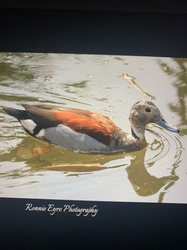
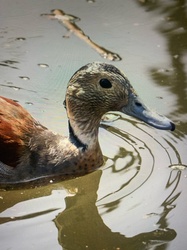
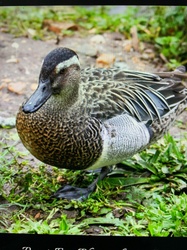
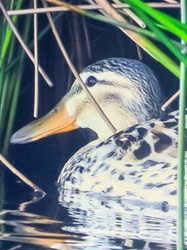
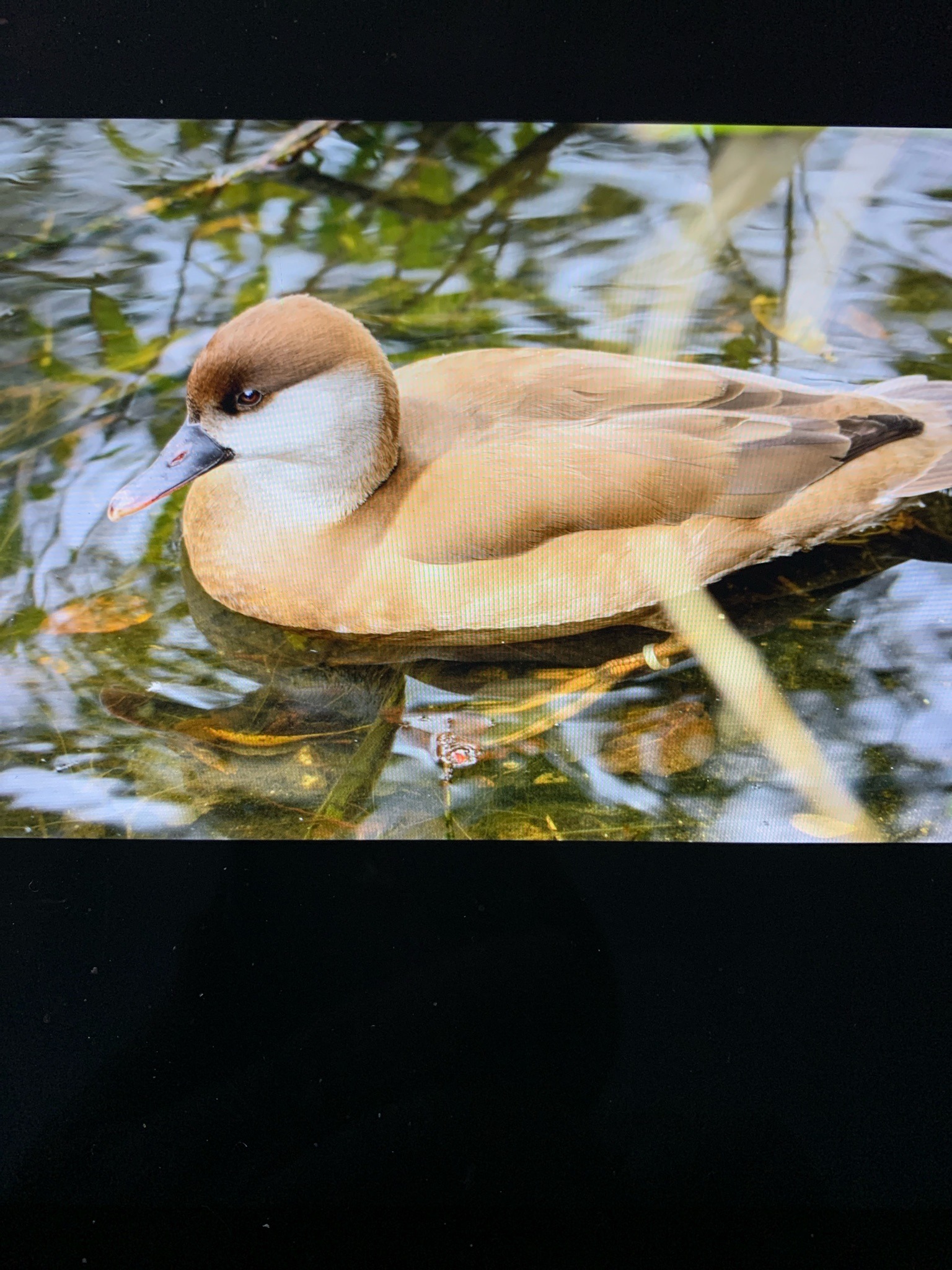
Adult male has a striking orange-red rounded head, a black breast, red bill, and whitish flanks. Adult female is duller, brownish-grey with a pale face and a dark patch extending below the eye.
Key field marks
Male: Shaggy orange-red head, red bill, black chest, white flanks. Female: Brownish body with a distinctly contrasting pale whitish face and dark cheek patch.
Size & weight
Length: 53–57 cm, Wingspan: 85–92 cm, Weight: 800–1,500 g.
Voice — call & song
Quiet and generally silent outside the breeding season. Males emit a low whistle or purring call during courtship, while females give a harsh, low quack.
Diet & foraging
Primarily vegetarian, feeding on leaves, stems, seeds of aquatic plants, and occasionally small fish, mollusks, and insects by diving or dabbling.
Habitat
Inhabits lowland wetlands, deep freshwater lakes, slow-flowing rivers, and coastal lagoons with abundant submerged vegetation.
Migration & movement
Partial migrant. Populations in northern and eastern parts of its range are migratory, while southern populations are mostly resident.
Nesting & breeding
Nests on the ground amongst dense vegetation near water, often utilizing old coot or grebe nests. Clutch size ranges from 6 to 12 eggs, incubated solely by the female for about 26 to 28 days.
Similar species
Can be confused with Common Pochard or Tufted Duck, but the male's bright orange head and red bill make it distinct. Females resemble other female diving ducks but have a distinctive pale face.
Ecological significance
Acts as a seed disperser and helps control aquatic invertebrate populations, while serving as prey for larger predators.
Conservation status
Least Concern (LC), with a generally stable global population trend.
Observation tips
Look for them on large lowland lakes, eutrophic wetlands, and slow-flowing rivers with dense aquatic vegetation. Use binoculars or a spotting scope from a concealed blind for best results.
Interesting facts
Unlike many diving ducks, Red-crested Pochards frequently feed by dabbling on the surface like dabbling ducks, and they can fly swiftly and powerfully in tight flocks.
More like this