Order Coraciiformes, Family Coraciidae
Lilac-breasted Roller
Coracias caudatus
A striking, vividly colored medium-sized bird with a relatively large head, heavy black bill, and striking tail streamers. Known for its acrobatic flight displays and habit of perching conspicuously on high branches.
Explore Lilac-breasted Roller in the encyclopedia →Identify your own birds.
Get a report just like this from any photo or call, free.
Plumage & appearance
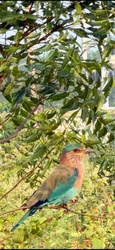
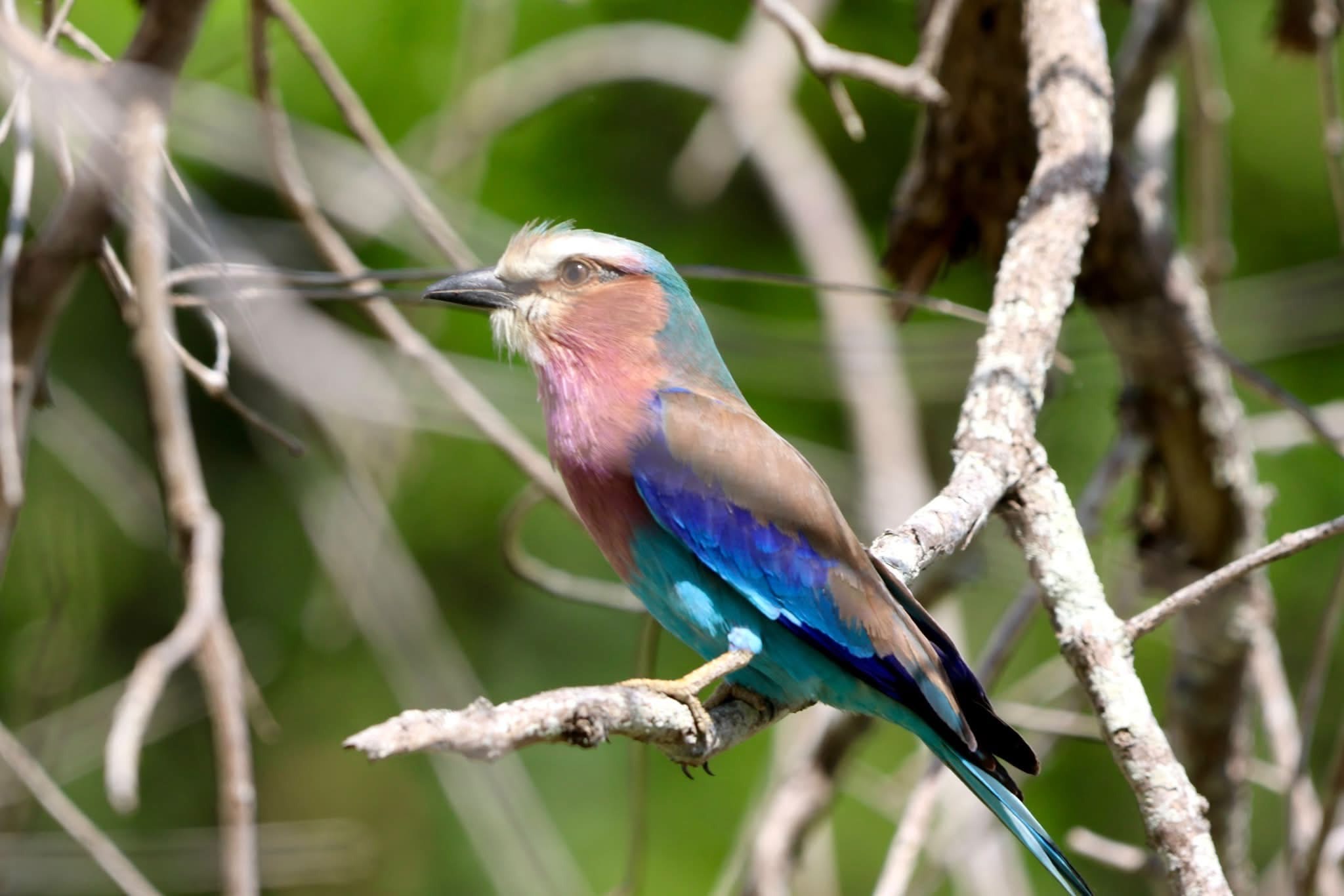
Adults have a light blue head, a distinct white stripe over the eye, a lilac-pink throat and breast, a rich brown back, vibrant turquoise belly and underparts, and dark blue outer wings with long, pale blue tail streamers in mature birds. Juveniles are duller with less distinct lilac and blue markings.
Key field marks
Lilac-pink throat and upper breast, pale blue head, white patch above the eye, bright turquoise belly, brownish back, and elongated outer tail feathers.
Size & weight
Length: 28 to 38 cm (including tail streamers), Wingspan: 50 to 58 cm, Weight: 104 to 140 grams
Voice — call & song
A harsh, grating, raspy rattle often described as 'rak-rak-rak' repeated rapidly
Diet & foraging
Mainly insects (grasshoppers, beetles, mantises), arachnids, and small vertebrates such as lizards, chameleons, and small rodents. Forages by sallying from a perch to snatch prey from the ground.
Habitat
Open savanna, scrub forest, bushy grasslands, and agricultural areas with scattered trees
Migration & movement
Mainly resident throughout its range, though some local or seasonal movements occur in response to rainfall
Nesting & breeding
Nests in natural tree cavities or old woodpecker holes, lined with grass or feathers. Clutch size is typically 2 to 4 eggs. Both parents aggressively defend their nest and take turns incubating.
Similar species
Abyssinian Roller and Purple Roller, which have different color distributions and lack the distinct lilac breast and streaming tail feathers combination.
Ecological significance
Acts as an apex predator of small insects and vertebrates in its local habitat, helping to control pest populations, and often utilizes cavities created by woodpeckers or natural decay.
Conservation status
Least Concern, with a stable population trend
Observation tips
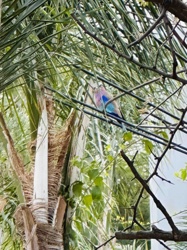
Look for them perched high and exposed on dead tree branches, utility wires, or fence posts in open savanna landscapes. They are quite bold and often allow close approaches by vehicles.
Interesting facts
It is the national bird of Kenya and is famous for its breathtaking roller-coaster courtship display flights, during which it dives steeply while emitting harsh rolling calls.
More like this