Order: Anseriformes, Family: Anatidae
African Pygmy Goose
Nettapus auritus
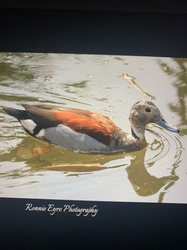
One of the world's smallest ducks, with a short bill and an upright posture reminiscent of a goose. They spend much of their time perched on branches or near water, possessing strong perching abilities due to sharp claws.
Explore African Pygmy Goose in the encyclopedia →Identify your own birds.
Get a report just like this from any photo or call, free.
Plumage & appearance
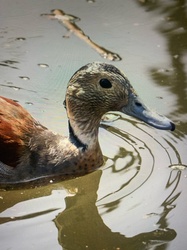
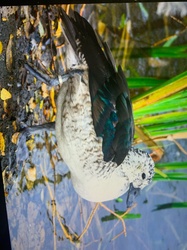
Features a white face with a distinctive large dark patch around the eye and ear-coverts. Males have glossy green and black upperparts with bright orange flanks and pale yellow patches on the sides of the neck. Females have duller grey-brown flanks, lack the bright yellow neck patches, and have a smaller dark head patch.
Key field marks
Tiny size, short goose-like bill, distinctive white face with a prominent dark spot around the eye, and glossy dark upperparts.
Size & weight
Length: 28-33 cm (11-13 inches), Wingspan: 45-55 cm, Weight: 260-350 g
Voice — call & song
Soft, high-pitched whistling calls and piping notes, often given in flight or when disturbed.
Diet & foraging
Primarily feeds on seeds, particularly those of water lilies (Nymphaea), supplemented with aquatic insects, small crustaceans, and green vegetation.
Habitat
Freshwater lakes, slow-moving rivers, swamps, and flooded grasslands with abundant aquatic vegetation, especially water lilies.
Migration & movement
Generally resident, though local nomadic movements occur in response to seasonal rainfall and flooding patterns.
Nesting & breeding
Nests in tree cavities, hollows in dead branches, or sometimes in old nests of other birds near water. Clutch size typically ranges from 6 to 12 eggs, incubated mainly by the female.
Similar species
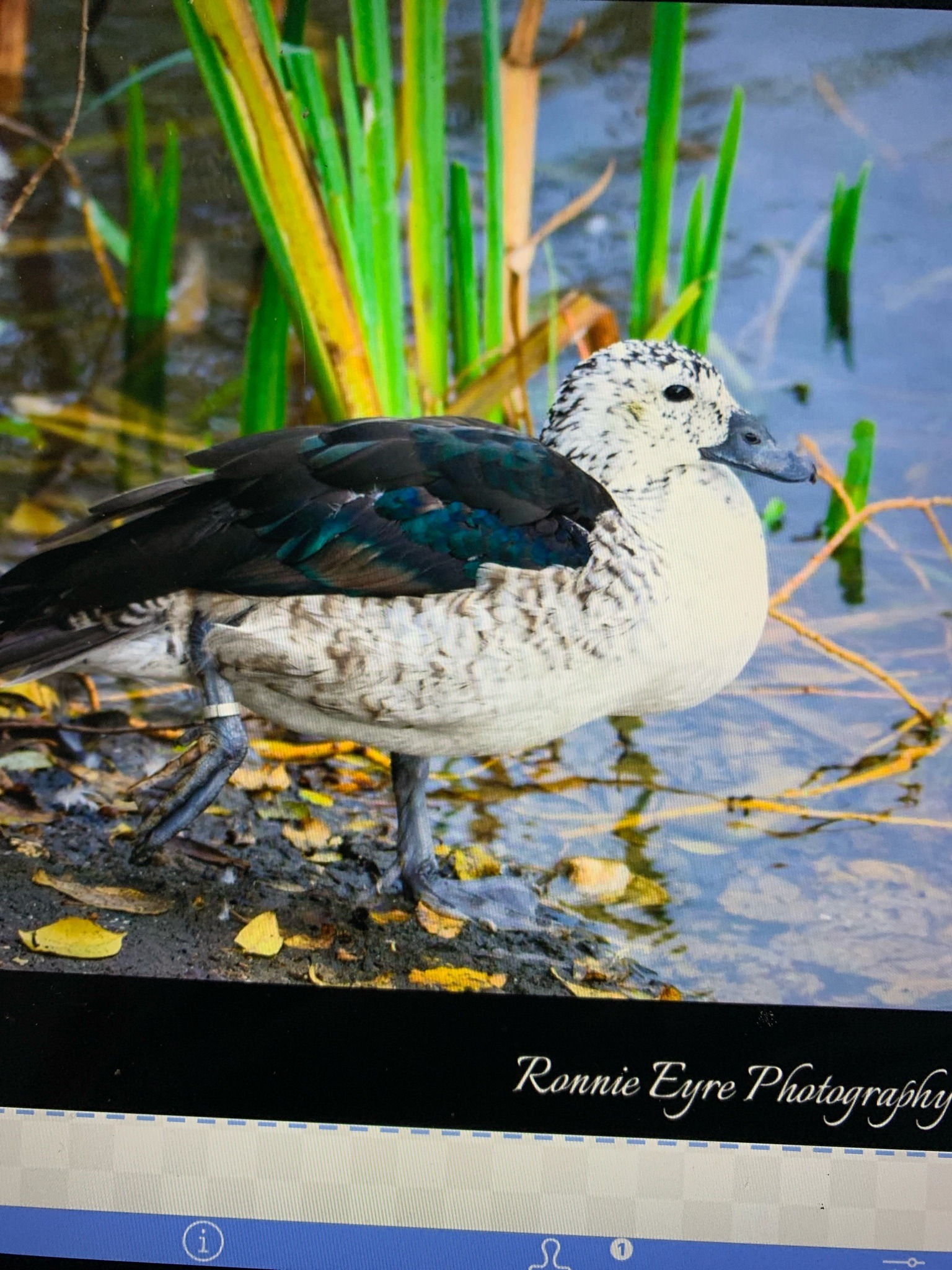
Comb Duck (Sarkidiornis melanotos) is much larger with a fleshy knob on the bill. Other pygmy goose species like the Cotton Pygmy Goose (Nettapus coromandelianus) are found in Asia and Australia, differing in facial patterns and overall coloration.
Ecological significance
Acts as an important seed disperser for aquatic vegetation, particularly water lilies, and helps regulate aquatic insect populations.
Conservation status
Least Concern, with stable populations generally widespread across suitable wetland habitats in Africa.
Observation tips
Look for them perched on emergent vegetation or tree branches overhanging quiet waters, often near water lily beds. Patience and a good pair of binoculars or a spotting scope are helpful as they can be easily overlooked.
Interesting facts
Despite being called a 'goose', they are actually perching ducks closely related to dabbling ducks. They have specialized claws adapted for perching high up in trees near aquatic environments.
More like this