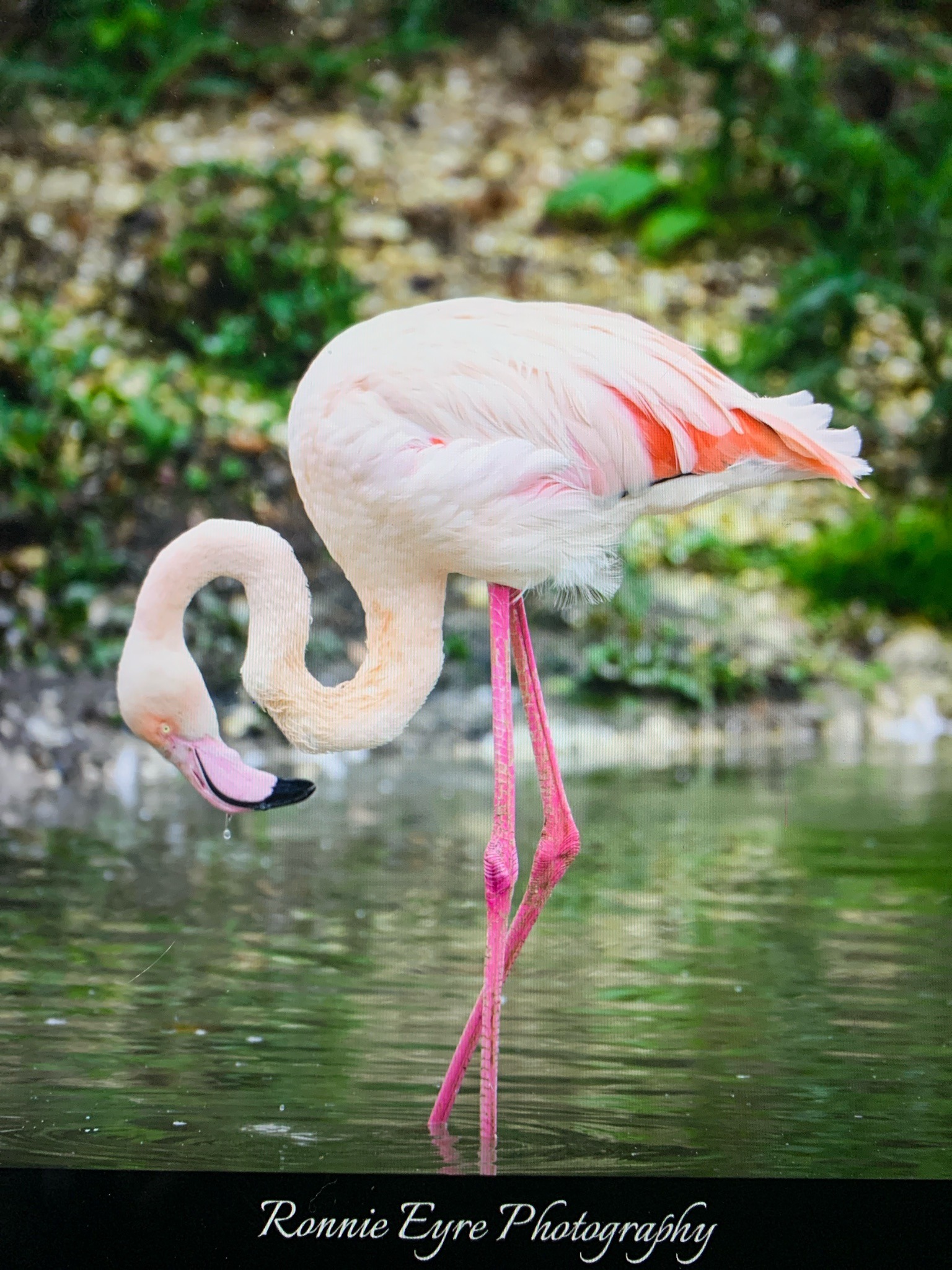
Order: Phoenicopteriformes, Family: Phoenicopteridae
Greater Flamingo
Phoenicopterus roseus
The largest and most widespread species of flamingo, characterized by extremely long legs, a long flexible neck, and a heavy down-turned bill adapted for filter feeding.
Explore Greater Flamingo in the encyclopedia →Identify your own birds.
Get a report just like this from any photo or call, free.
Plumage & appearance
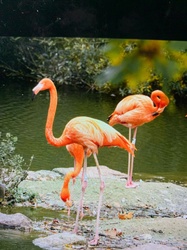
Adults have mostly white and pink plumage, with vivid pink-to-red wing coverts and black primary and secondary flight feathers. Juveniles are grayish-brown with streaks and lack the bright pink coloration.
Key field marks
Very tall stature, pale pink and white body, pink legs, and a distinctive pink bill with a sharply demarcated black tip.
Size & weight
Length: 110-150 cm (43-59 inches), Wingspan: 140-165 cm (55-65 inches), Weight: 2.1-4.1 kg (4.6-9.0 lbs).
Voice — call & song
A loud, nasal, goose-like honking or honk-grunt that helps maintain flock cohesion.
Diet & foraging
Consists of brine shrimp, blue-green algae, insect larvae, mollusks, and small fish, filtered from water using specialized lamellae in the bill.
Habitat
Large shallow alkaline or saline lakes, estuaries, mangrove swamps, and tidal flats.
Migration & movement
Partial migrant or nomadic; birds often move in response to water levels and food availability rather than strictly seasonal temperature changes.
Nesting & breeding
Builds a truncated cone-shaped mud mound nest in colonies. Lays a single chalky-white egg. Both parents incubate and feed the chick with crop milk.
Similar species
Lesser Flamingo and Caribbean Flamingo. Greater Flamingo is distinguished from the Lesser Flamingo by its larger size, paler pink coloration, and more extensively pink bill with a smaller black tip.
Ecological significance
Acts as a key species in wetland ecosystems, helping to control invertebrate populations and cycling nutrients through feeding and guano deposition.
Conservation status
Least Concern, with a generally stable global population trend.
Observation tips
Best observed in large shallow saline lakes, lagoons, and coastal mudflats using binoculars or a spotting scope. Approach slowly to avoid flushing the flock.
Interesting facts
The pink or reddish coloration of flamingos comes from carotenoid pigments found in the algae and invertebrates they consume in their diet.
More like this