Order: Phoenicopteriformes, Family: Phoenicopteridae
American Flamingo
Phoenicopterus ruber
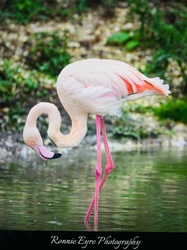
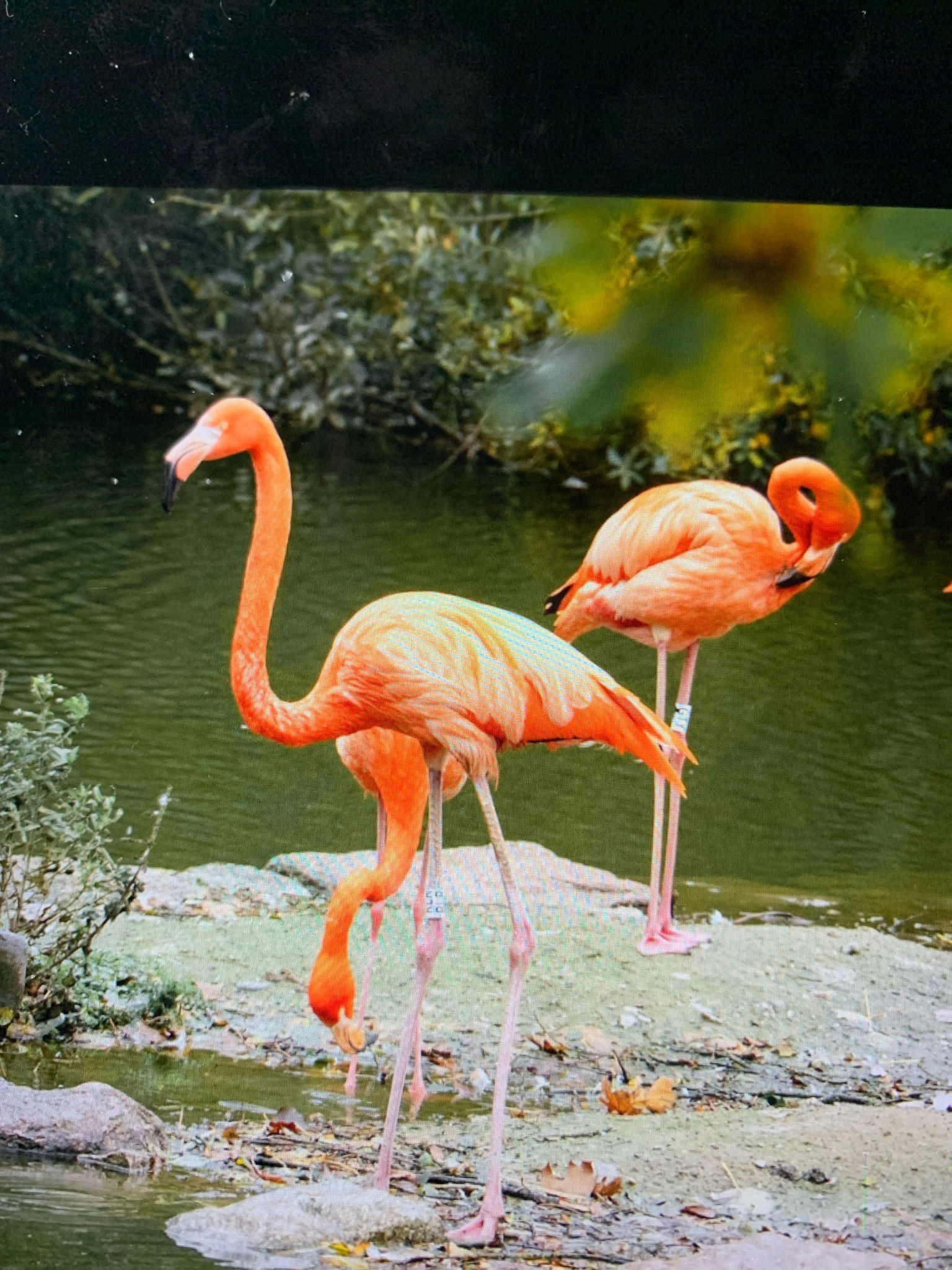
A large, tall wading bird with exceptionally long legs, a long curved neck, and a distinctive downturned bill with a black tip used for filter feeding.
Explore American Flamingo in the encyclopedia →Identify your own birds.
Get a report just like this from any photo or call, free.
Plumage & appearance
Brilliant pink, red, or orange plumage derived from carotenoid pigments in their diet of algae and crustaceans. Juveniles are grayish-brown and take up to several years to attain adult coloration.
Key field marks
Vivid pink-to-red body plumage, long pink legs with webbed toes, curved pink and black bill, and distinctive deep S-curved neck.
Size & weight
Length: 120-140 cm, Wingspan: 140-165 cm, Weight: 2.1-2.8 kg
Voice — call & song
Loud, nasal honking, cackling, and goose-like grunts, especially vocal within large colonies.
Diet & foraging
Primarily brine shrimp, blue-green algae, diatoms, and small aquatic invertebrates, filtered through specialized lamellae in the bill.
Habitat
Large alkaline or saline lakes, shallow coastal lagoons, estuaries, and mudflats.
Migration & movement
Mainly resident or nomadic, with movements driven primarily by changes in water levels and food availability.
Nesting & breeding
Builds truncated mud mounds in shallow water or on mudflats. Lays a single chalky white egg, incubated by both parents in highly social colony settings.
Similar species
Greater Flamingo (Phoenicopterus roseus), which is generally paler pink and slightly larger with a more restricted range overlapping in parts of the Caribbean/Atlantic.
Ecological significance
Acts as an umbrella species in wetland ecosystems, and their feeding and nesting activities help structure shallow water habitats and nutrient cycles.
Conservation status
Least Concern, with generally stable population trends, though vulnerable to localized habitat degradation.
Observation tips
Look for them in shallow lagoons, salt pans, and mudflats using spotting scopes. Approach quietly to avoid startling them, as they are sensitive to disturbance.
Interesting facts
Their iconic pink coloration comes directly from the carotenoid pigments found in the microscopic algae and crustaceans they eat. They are also famous for resting standing on one leg to conserve body heat.
More like this