Order: Passeriformes, Family: Thraupidae
Red-legged Honeycreeper
Cyanerpes cyaneus
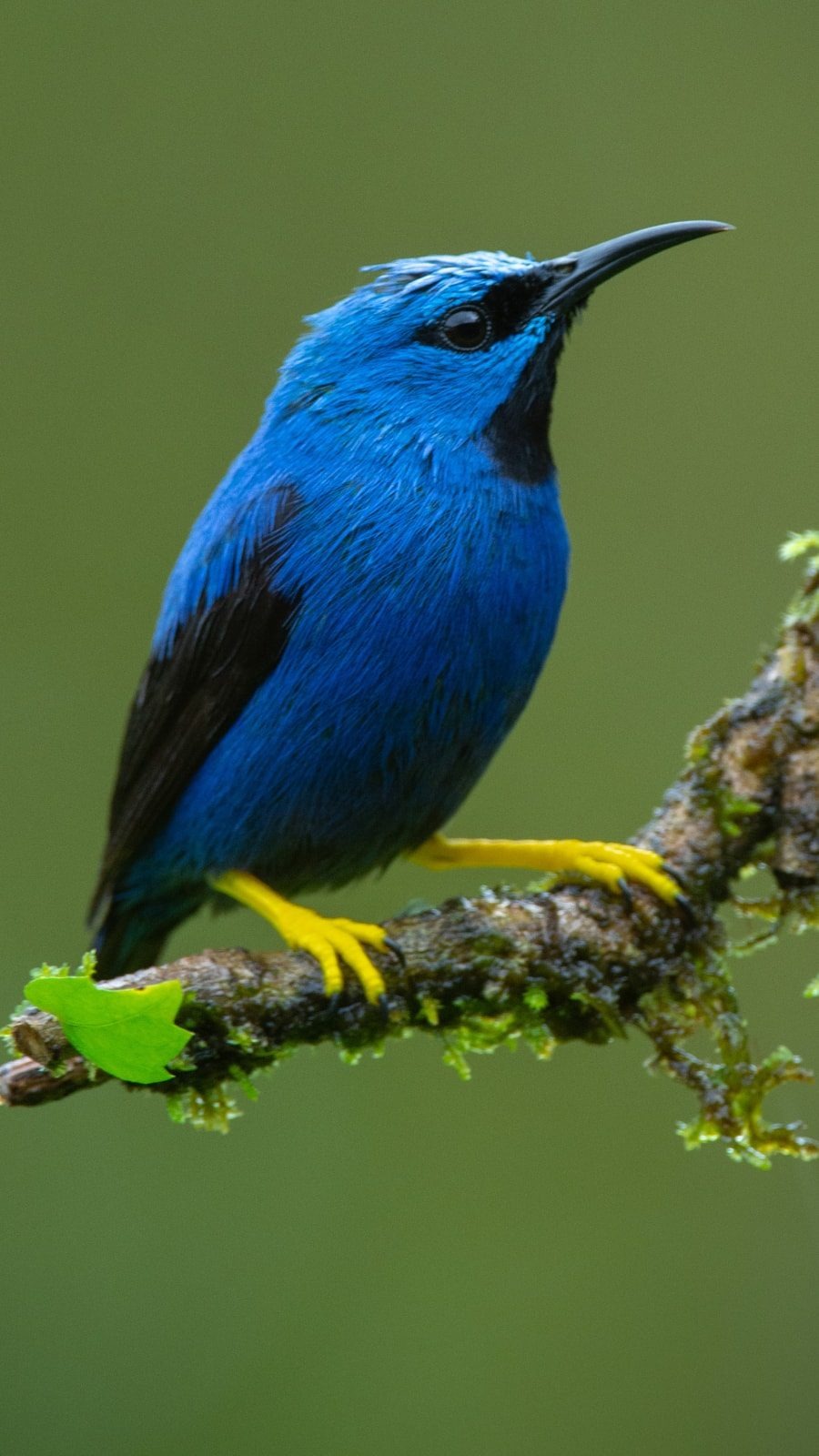
A small, active tanager with a slightly decurved black bill, bright yellow-orange or red legs depending on the subspecies, and brilliant blue male plumage.
Explore Red-legged Honeycreeper in the encyclopedia →Identify your own birds.
Get a report just like this from any photo or call, free.
Plumage & appearance
Adult males have brilliant glossy blue plumage with a black mask, throat, back, and wings, complemented by striking bright red legs. Females and juveniles are predominantly green with paler, streaked underparts and duller legs.
Key field marks
Brilliant blue body, black mask and wings, bright red or reddish-orange legs, and a moderately short, decurved black bill.
Size & weight
Length: 12 cm (4.7 in), Weight: 10 to 14 g (0.35 to 0.49 oz)
Voice — call & song
High-pitched, thin, squeaky notes and short, buzzy trills.
Diet & foraging
Nectar, small fruits, berries, and insects, often foraging actively by probing flowers with its specialized bill and gleaning foliage.
Habitat
Canopy and edges of humid lowland tropical forests, second growth, plantations, and well-treed gardens.
Migration & movement
Resident, though some local nomadic movements occur following food availability.
Nesting & breeding
Builds a small, cup-shaped nest placed low in a tree or shrub. The female typically lays 2 brown-spotted white eggs and incubates them alone.
Similar species
Purple Honeycreeper (Cyanerpes caeruleus), which features yellow legs and purple-blue plumage with a longer decurved bill; Shining Honeycreeper, which has dark legs and different facial markings.
Ecological significance
Acts as an important pollinator and seed disperser for various tropical flowering plants and trees within its forest ecosystem.
Conservation status
Least Concern, with a stable population trend.
Observation tips
Look for them in the canopy of flowering trees or around fruiting shrubs, often joining mixed-species feeding flocks. Fruiting feeders in rainforest lodges are also prime spots.
Interesting facts
Despite their name, honeycreepers are actually true tanagers (family Thraupidae) rather than members of the Hawaiian honeycreeper radiation.
More like this