Order: Passeriformes, Family: Thraupidae
Paradise Tanager
Tangara chilensis
A brilliantly colored, medium-small neotropical songbird often seen foraging in active mixed-species flocks in the forest canopy.
Explore Paradise Tanager in the encyclopedia →Identify your own birds.
Get a report just like this from any photo or call, free.
Plumage & appearance
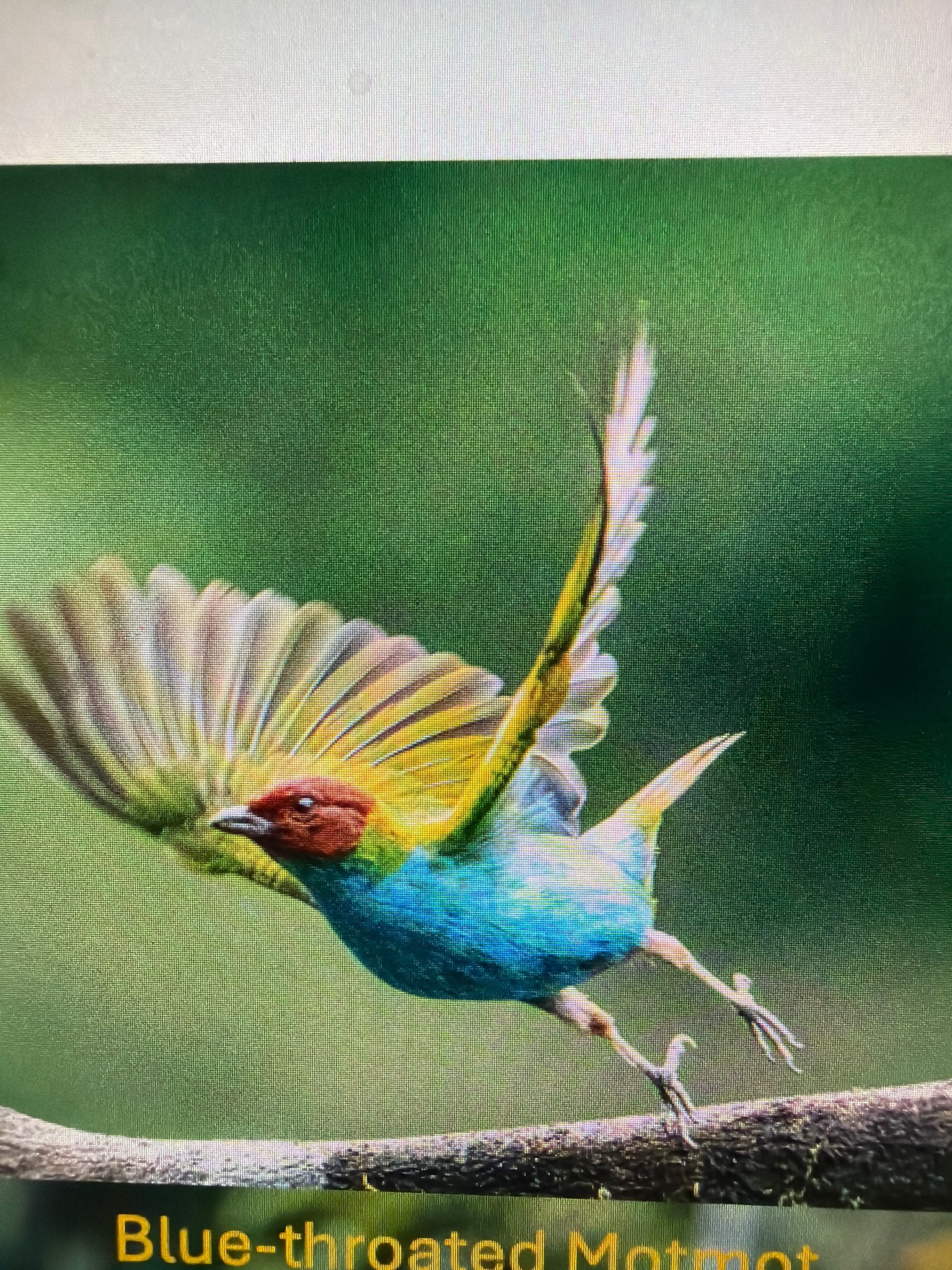
Adults have a striking and unmistakable plumage featuring a bright red head, a black nape and upper back, a yellow lower back and rump, and a vivid turquoise-blue throat, breast, and underparts. Sexes are generally similar, though females may be slightly duller.
Key field marks
Bright red head, black mantle, yellow rump, and brilliant turquoise-blue underparts.
Size & weight
Length: 13-14 cm (5.1-5.5 inches); Weight: 18-22 grams.
Voice — call & song
High-pitched, thin, metallic chipping notes and a short, twittering song.
Diet & foraging
Primarily frugivorous, feeding heavily on small berries and fruits, but also insectivorous, gleaning insects and larvae from foliage.
Habitat
Humid lowland tropical rainforests, forest edges, and second growth, primarily in the canopy and subcanopy.
Migration & movement
Non-migratory resident across its South American range.
Nesting & breeding
Constructs a cup-shaped nest out of moss, rootlets, and plant fibers placed high in a tree fork. Clutch size is typically 2 eggs, incubated primarily by the female.
Similar species
Other brightly colored tanagers in the genus Tangara, but the combination of the red head, black upper parts, yellow rump, and blue underparts is unique to the Paradise Tanager.
Ecological significance
Acts as an important seed disperser for various tropical fruiting trees and helps regulate insect populations.
Conservation status
Least Concern, with a stable population trend.
Observation tips
Look for them in the upper canopy of lowland rainforests, often identified by their high-pitched calls and by joining large mixed-species feeding flocks.
Interesting facts
Despite its specific scientific name 'chilensis', the Paradise Tanager is not found in Chile; the name was based on an erroneous locality given by early naturalists.
More like this