Order: Passeriformes, Family: Thraupidae
Green Honeycreeper
Chlorophanes spiza
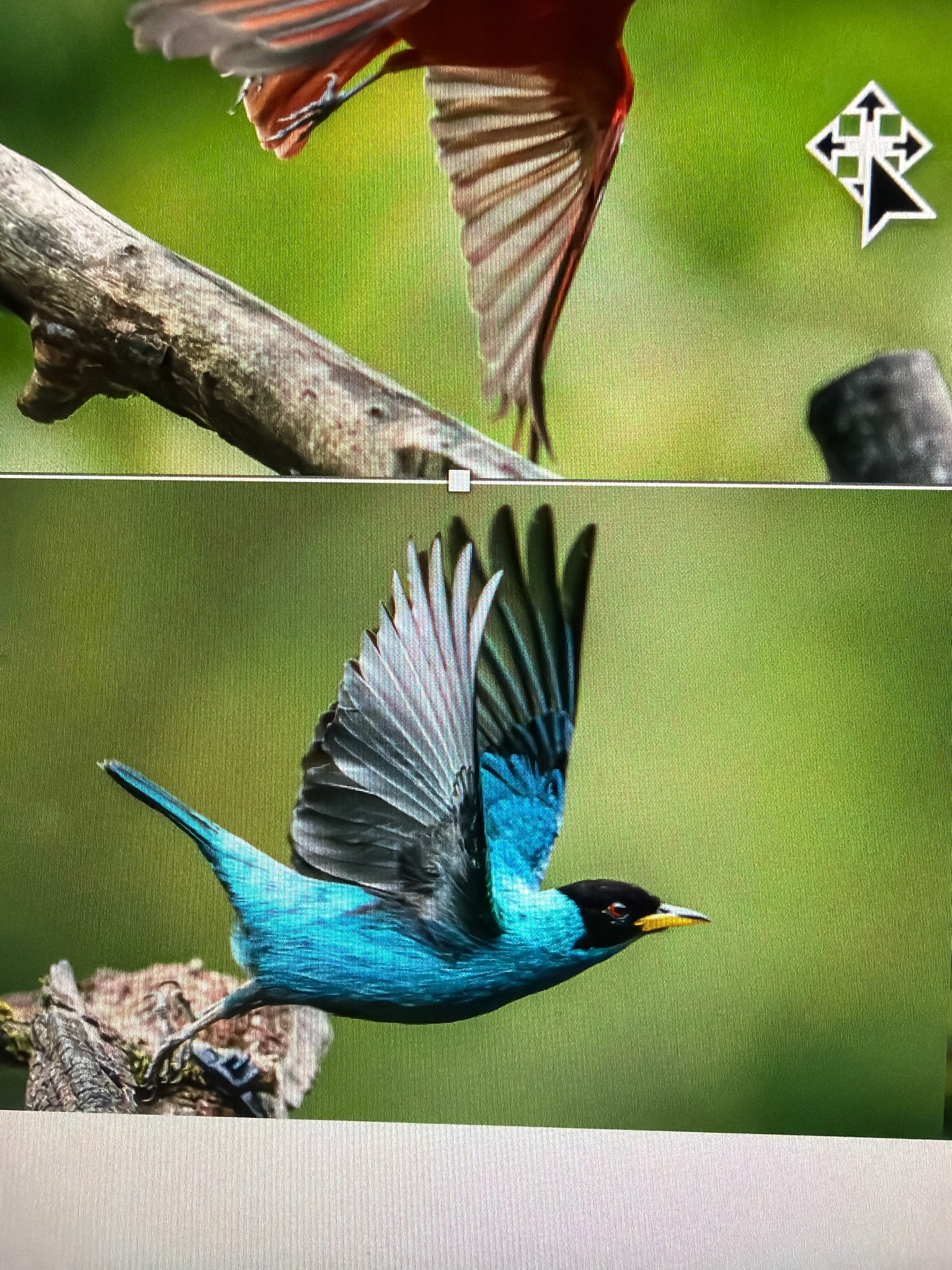
A small, active tanager with a slender, slightly decurved bill. Males flash bright turquoise and black, while females are vivid green, both displaying energetic, acrobatic movements in the forest canopy.
Explore Green Honeycreeper in the encyclopedia →Identify your own birds.
Get a report just like this from any photo or call, free.
Plumage & appearance
Pronounced sexual dimorphism. Adult males are brilliant turquoise-blue with a contrasting black head mask and a bright yellow-tipped bill. Females are primarily leaf-green overall, slightly paler below with greenish-yellow throats.
Key field marks
Bright turquoise-blue body with a black head hood (males) or bright green plumage (females), combined with a slender, slightly decurved bill with a yellow lower mandible or tip.
Size & weight
Length: 13 to 14 cm (5.1 to 5.5 inches), Weight: 14 to 22 grams.
Voice — call & song
High-pitched, thin, squeaky chips and thin zik notes, often given while moving through the canopy.
Diet & foraging
Omnivorous; feeds heavily on nectar, fruits, and small insects. Forages actively among foliage and flowers, sometimes hanging upside down like a tit.
Habitat
Humid lowland evergreen forests, forest edges, secondary growth, plantations, and well-wooded gardens.
Migration & movement
Resident (non-migratory), though local wanderings occur in response to food availability and flowering seasons.
Nesting & breeding
Builds a small, cup-shaped nest placed low or moderately high in a tree or shrub. Females lay 2 dark-spotted whitish eggs and undertake incubation.
Similar species
Other honeycreepers such as the Red-legged Honeycreeper (Cyanerpes cyaneus) and Purple Honeycreeper (Cyanerpes caeruleus), but distinguished by the Green Honeycreeper's unique turquoise coloration (in males) and yellow-tipped bill.
Ecological significance
Acts as an important pollinator and seed disperser, particularly for flowering trees and shrubs in the tropical canopy.
Conservation status
Least Concern, with a stable global population trend.
Observation tips
Look for them in the forest canopy or at fruiting and flowering trees, often joining mixed-species feeding flocks. Bird feeders with fruit or sugar water in their range frequently attract them.
Interesting facts
Despite the name 'honeycreeper', they are actually members of the tanager family (Thraupidae) rather than relatives of creepers or true honeyeaters.
More like this