Order: Passeriformes, Family: Acrocephalidae
Sedge Warbler
Acrocephalus schoenobaenus
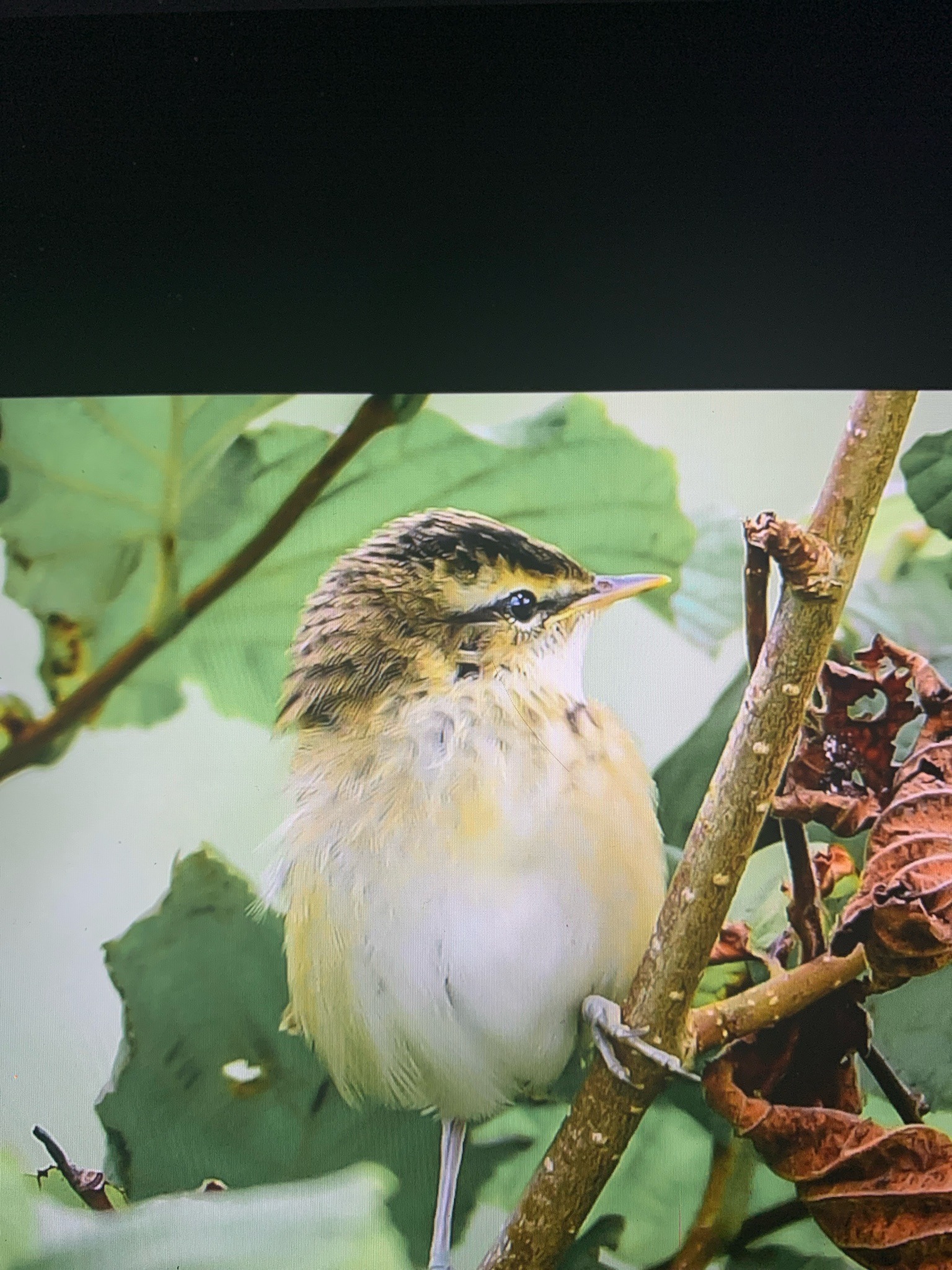
A small, active warbler with a prominent pale eyebrow, often singing from an exposed perch or performing a fluttering song-flight before diving back into cover.
Explore Sedge Warbler in the encyclopedia →Identify your own birds.
Get a report just like this from any photo or call, free.
Plumage & appearance
Buff-brown upperparts heavily streaked with blackish brown; distinctive broad creamy-white supercilium above a dark eye-stripe; warm buff underparts with a whiter throat and faint breast streaking. Sexes are similar.
Key field marks
Prominent creamy-white supercilium, heavily streaked dark brown and buff back, and warm buff-yellowish underparts.
Size & weight
Length: 11.5–13 cm; Wingspan: 17–21 cm; Weight: 10–14 g
Voice — call & song
A rich, chattering, variable song consisting of harsh notes, sweet whistles, and mimicry of other birds. Call is a dry 'churr'.
Diet & foraging
Insects, spiders, and other small invertebrates; during autumn migration, they heavily consume aphids and berries to build fat reserves.
Habitat
Wetlands, marshes, reedbeds, damp scrub, and areas with tall vegetation near rivers, lakes, or drainage ditches.
Migration & movement
Long-distance migrant; crosses the Sahara Desert twice a year between European breeding grounds and African wintering quarters.
Nesting & breeding
Builds a deep cup nest of grass and plant stems low down in dense vegetation or bushes; clutch size is 4–6 eggs; bred from May to July.
Similar species
Eurasian Reed Warbler, which lacks the prominent creamy-white supercilium and has a more uniform brownish upperpart coloration.
Ecological significance
Acts as an insect population controller in wetland ecosystems and serves as an important bioindicator of wetland habitat health.
Conservation status
Least Concern (IUCN), with stable global population trends.
Observation tips
Look and listen for males singing from prominent perches in reedbeds or bushes near water, especially during early morning in spring.
Interesting facts
Sedge warblers use the complexity of their song—which includes mimicking the calls of other African and European birds—as a key factor in female mate choice.
More like this