Order: Passeriformes, Family: Paradisaeidae
Greater Bird-of-Paradise
Paradisaea apoda
A large, crow-sized passerine famous for the male's extraordinarily long, cascading flank plumes and elaborate courtship displays.
Explore Greater Bird-of-Paradise in the encyclopedia →Identify your own birds.
Get a report just like this from any photo or call, free.
Plumage & appearance
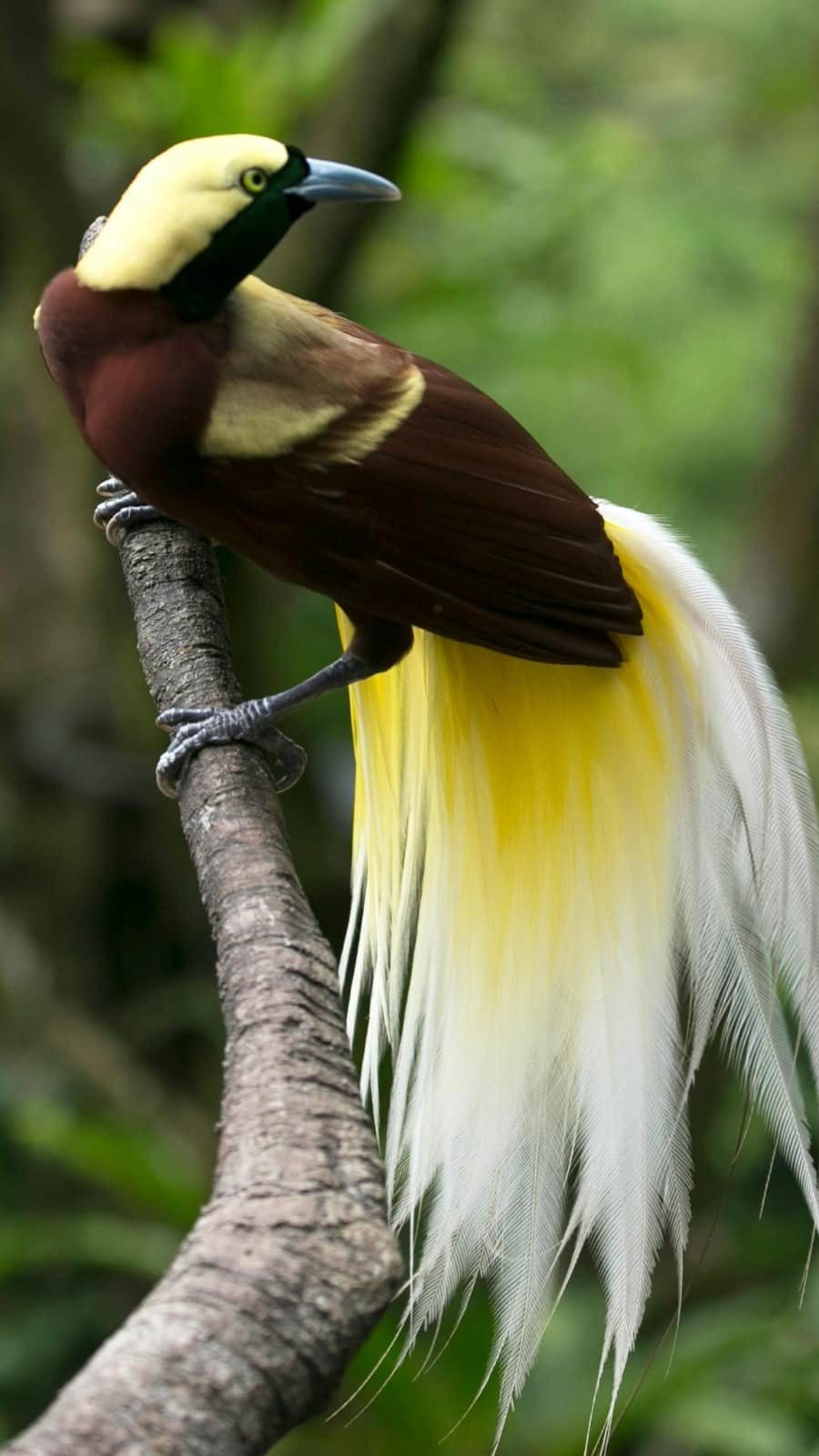
Adult males have a rich brown body, a yellow crown and mantle, an emerald-green face and throat, and large, ornate, yellow-and-white flank plumes (wires). Females are much duller, with a dark brown head, neck, and underparts, and pale yellowish-brown underparts lacking the flamboyant plumes.
Key field marks
Male: Yellow crown, emerald-green throat, dark brown body, and massive, flowing white-to-yellowish flank plumes. Female: Uniform dark brown upperparts and barred underparts.
Size & weight
Length: Approximately 43 cm (excluding extended tail plumes which can reach up to 60 cm). Weight: 200–300 grams.
Voice — call & song
A series of loud, echoing, wooden or metallic squawks and rhythmic honking notes, often delivered in chorus at display sites.
Diet & foraging
Primarily frugivorous, feeding heavily on figs and forest fruits, but also supplementing their diet with insects and arthropods.
Habitat
Lowland tropical rainforests, swamp forests, and forest edges, typically ranging from sea level up to 500 meters elevation.
Migration & movement
Non-migratory resident bird, occupying the same territories year-round.
Nesting & breeding
Females build a bulky, open-cup nest out of leaves, vine tendrils, and fern fronds placed high in the fork of a rainforest tree. Clutch is usually 1-2 eggs, incubated solely by the female.
Similar species
Lesser Bird-of-Paradise (Paradisaea minor), which is smaller, has a more yellowish back, and differs slightly in facial mask coloration and geographical range.
Ecological significance
Acts as an important seed disperser for various rainforest canopy trees and fruits, playing a vital role in maintaining forest biodiversity.
Conservation status
Least Concern, with a stable population trend, though locally affected by habitat loss and hunting for feathers.
Observation tips
Visit the lowland rainforests of New Guinea or the Aru Islands, listen for their loud calls, and search for traditional lekking trees where males display.
Interesting facts
Alfred Russel Wallace famously described the Greater Bird-of-Paradise in his writings, and early European traders received specimens from local hunters whose feet had been removed, leading to the myth that these birds stayed aloft forever and never landed.
More like this