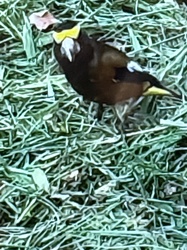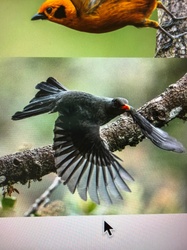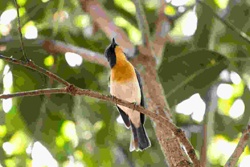
Order: Passeriformes, Family: Sittidae
White-breasted Nuthatch
Sitta carolinensis
A compact, active bird with a very short tail, long pointed bill, and an uncanny ability to walk headfirst down tree trunks.
Explore White-breasted Nuthatch in the encyclopedia →Identify your own birds.
Get a report just like this from any photo or call, free.
Plumage & appearance
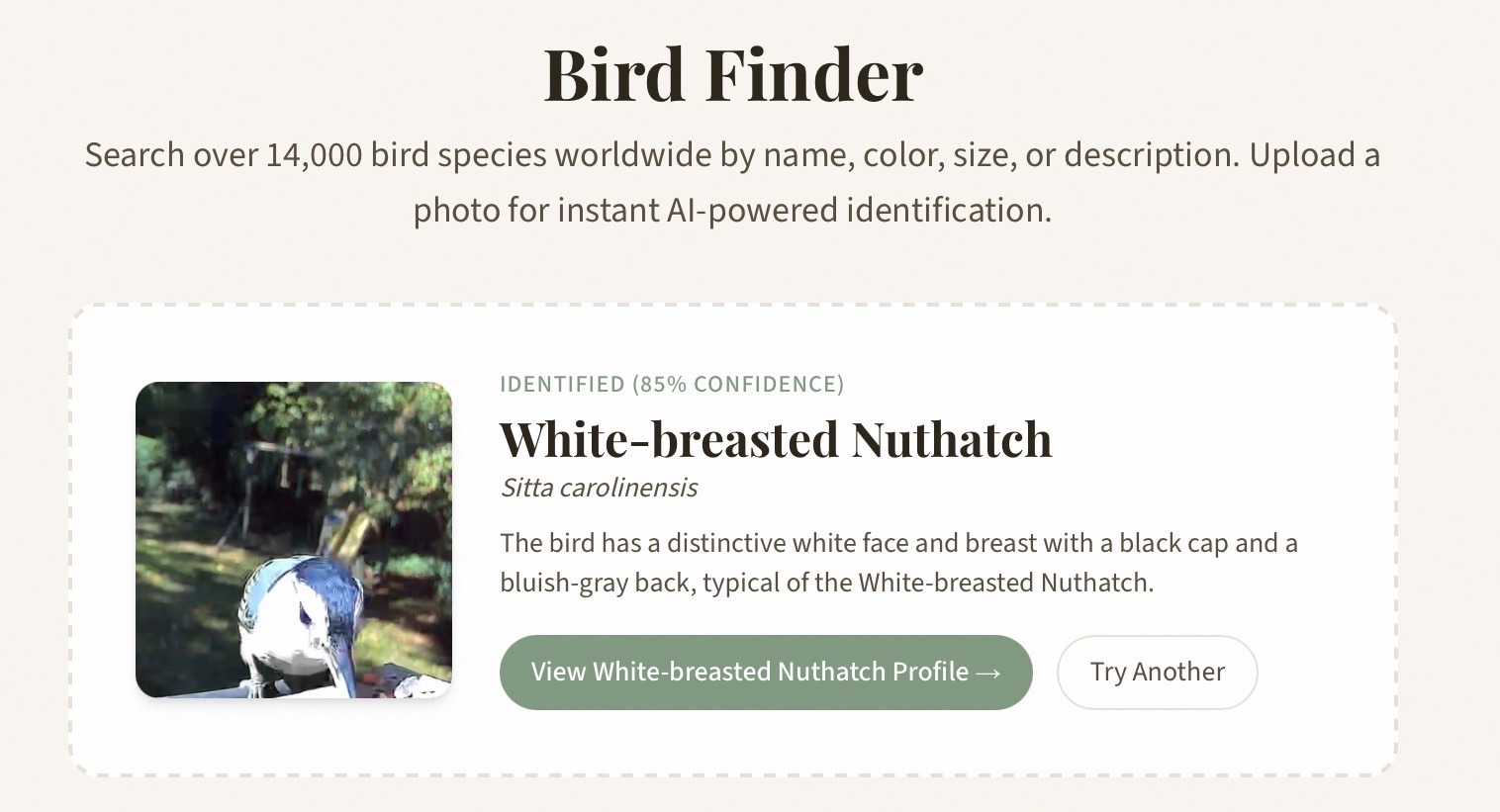
Adults have a blue-gray back, a stark white face and underparts, and a black cap and nape (the cap is glossy black in males and more grayish-black in females). Rusty-brown patches are often visible on the lower belly and undertail coverts.
Key field marks
White face and breast, black cap, bluish-gray upperparts, and distinct lack of any strong facial stripes.
Size & weight
Length: 5.1–5.5 inches (13–14 cm), Wingspan: 8.7–10.6 inches (22–27 cm), Weight: 0.6–1.1 oz (18–30 g).
Voice — call & song
A nasal, repetitive 'yank-yank' or 'quank', and a rapid series of low, nasal notes during the breeding season.
Diet & foraging
Insects and spiders during the summer; seeds and nuts (such as acorns and beechnuts) in the winter. They wedge large seeds into bark crevices to hammer them open.
Habitat
Mature deciduous and mixed forests, woodlots, suburban parks, and gardens with large trees.
Migration & movement
Non-migratory resident; largely stays on its breeding territory year-round.
Nesting & breeding
Nests in natural tree cavities or old woodpecker holes, lined with soft materials like fur, moss, and feathers. Clutch size is typically 5 to 9 white eggs with reddish spots.
Similar species
Red-breasted Nuthatch, which is smaller, has a rusty breast, and a bold white eyebrow stripe through a black eye line.
Ecological significance
Helps control insect populations by foraging on tree trunks and branches; often hoards seeds, aiding in seed dispersal.
Conservation status
Least Concern, with stable or increasing populations.
Observation tips
Listen for their nasal 'yank-yank' calls near mature deciduous or mixed forests, or attract them to backyard feeders using suet and sunflower seeds.
Interesting facts
Nuthatches are named for their habit of wedging hard nuts and seeds into bark crevices and 'hatching' (hacking) them open with their strong bills.
More like this