Order: Passeriformes, Family: Cisticolidae
Common Tailorbird
Orthotomus sutorius
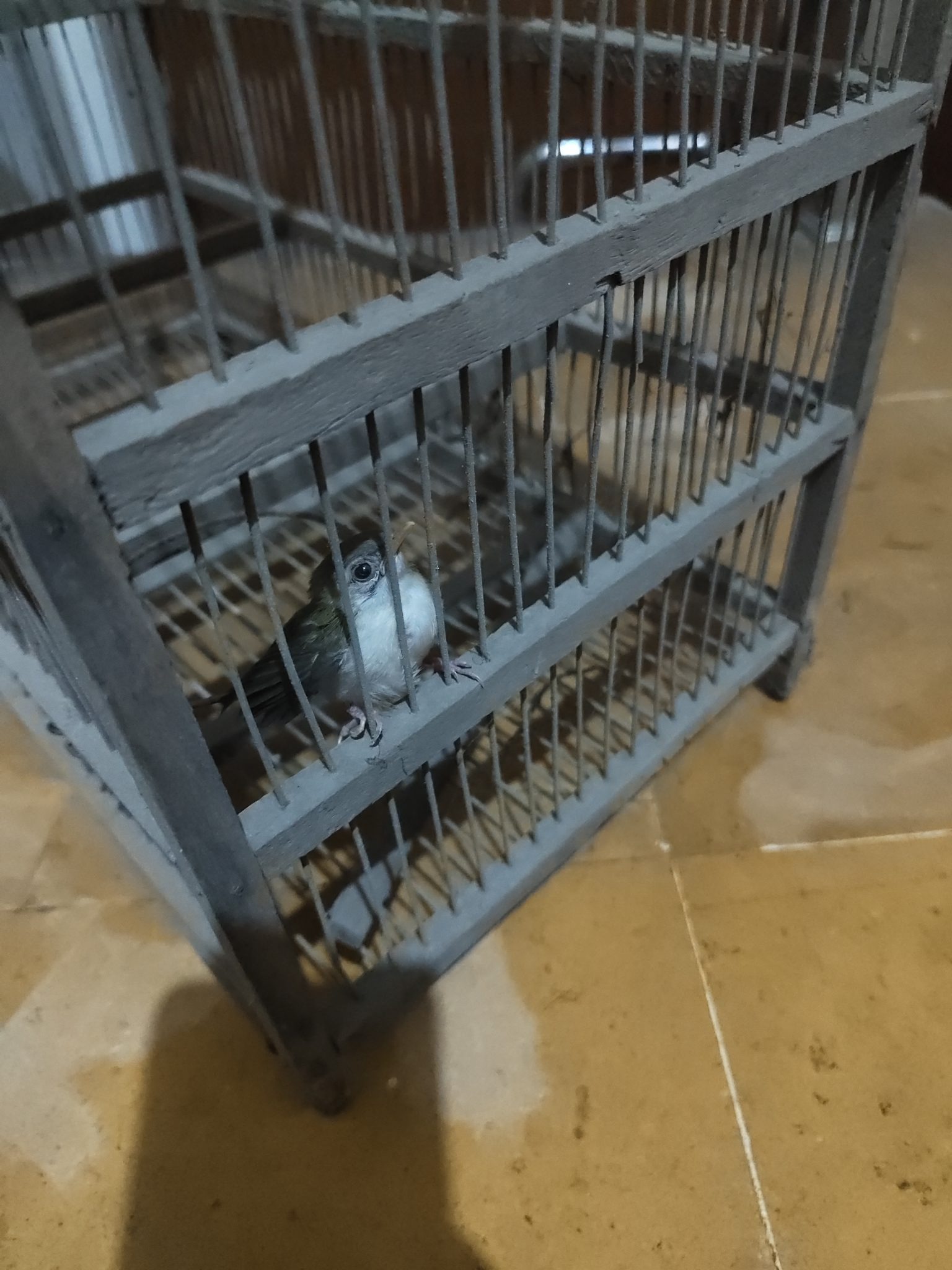
A small, active songbird with a short, upright tail that is frequently cocked. Characterized by its rufous cap and slender bill.
Explore Common Tailorbird in the encyclopedia →Identify your own birds.
Get a report just like this from any photo or call, free.
Plumage & appearance
Upperparts are bright olive-green, underparts are whitish or buff. It has a distinctive rufous crown and forehead. Sexes are similar, though males may have slightly longer central tail feathers in the breeding season.
Key field marks
Rufous crown, olive-green upperparts, whitish underparts, and long, frequently cocked tail held vertically.
Size & weight
Length: 10-14 cm; Wingspan: approx. 12-15 cm; Weight: 6-10 g
Voice — call & song
A loud, repetitive, ringing double-note call such as 'chew-it, chew-it, chew-it' or 'pretty-sweet'.
Diet & foraging
Insects, caterpillars, and other small invertebrates; occasionally takes nectar or small berries.
Habitat
Open woodlands, scrub, gardens, cultivated areas, and forest edges, often close to human habitation.
Migration & movement
Non-migratory resident across its entire range.
Nesting & breeding
Constructs a unique cradle-like nest by piercing the edges of large green leaves and sewing them together with plant fiber or spider silk, lined with soft material. Clutch size is typically 3-5 eggs.
Similar species
Dark-necked Tailorbird and other Orthotomus species; distinguished primarily by head coloration and underpart tones.
Ecological significance
Acts as a natural insect controller by consuming numerous small insects and caterpillars in its ecosystem.
Conservation status
Least Concern, with a stable population trend.
Observation tips
Look and listen in gardens, scrublands, and forest edges; their loud, repetitive calls often give away their location before they are seen.
Interesting facts
Famous for its extraordinary nest-building technique, using its sharp bill as a needle to sew large leaves together to protect its nest.
More like this