Order: Passeriformes, Family: Regulidae
Ruby-crowned Kinglet
Corthylio calendula
A very small, hyperactive songbird with a large-headed, short-tailed appearance. Constantly flicks its wings while foraging nervously through foliage.
Explore Ruby-crowned Kinglet in the encyclopedia →Identify your own birds.
Get a report just like this from any photo or call, free.
Plumage & appearance
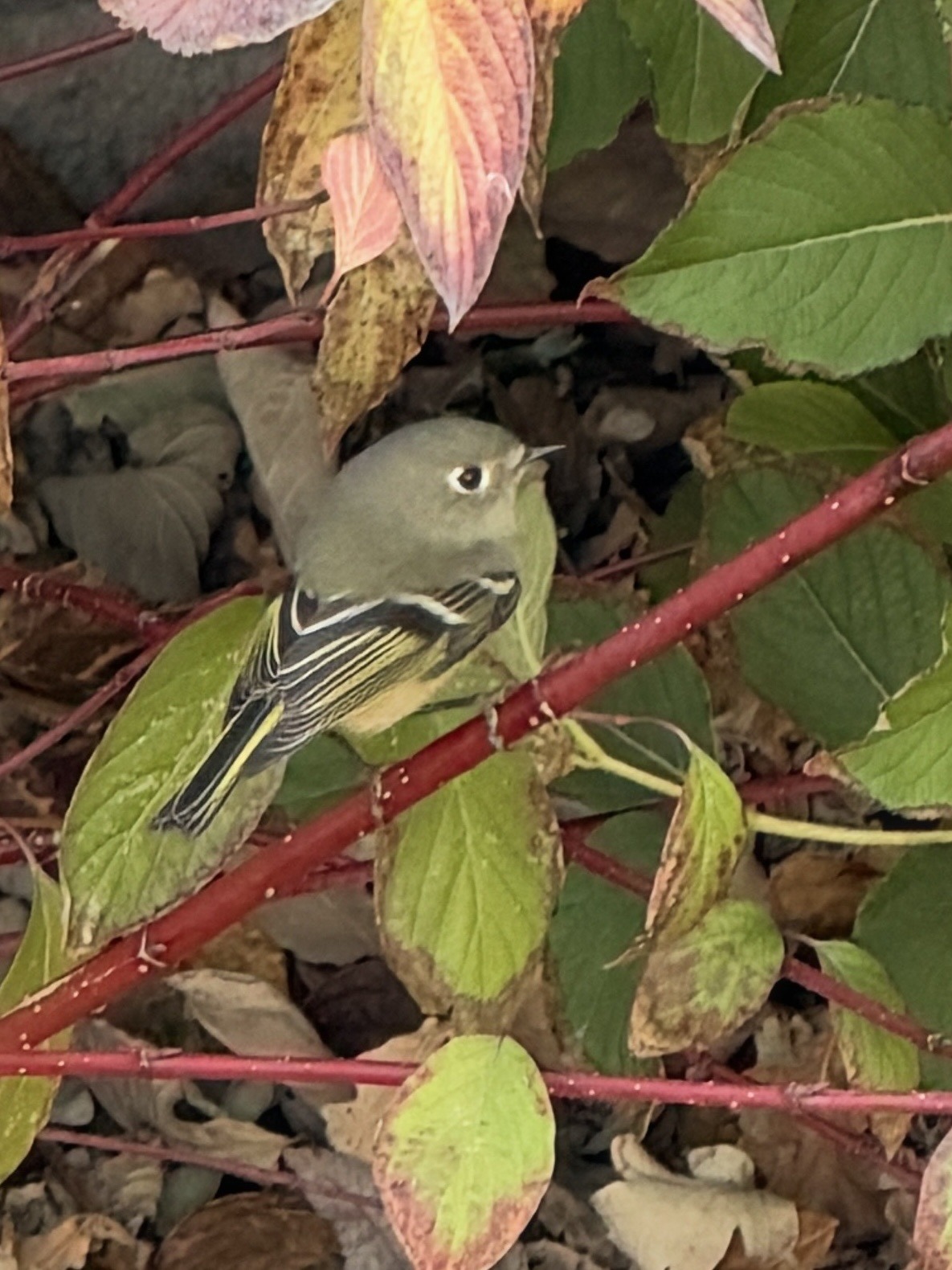
Olivaceous-grey upperparts, yellowish-olive underparts, distinct white wing-bars, and a broken white eye-ring giving it a spectacles-like appearance. Males possess a ruby-red crown patch, which is typically hidden except when excited or displaying; females and juveniles lack the red crown.
Key field marks
Small size, prominent white eye-ring, two distinct white wing-bars, yellowish-olive edges on flight feathers, and constant wing-flicking behavior.
Size & weight
Length: 9-11 cm, Wingspan: 16-18 cm, Weight: 5-10 g
Voice — call & song
Call is a distinct, sharp, double-noted 'ji-dit'. Song is a surprisingly loud, three-part phrase beginning with high thin notes, a rapid warble, and a ringing termination.
Diet & foraging
Insects and spiders, particularly small caterpillars, aphids, ants, and scale insects. Occasionally consumes small berries and tree sap.
Habitat
Coniferous and mixed forests during breeding season; brushy areas, deciduous woodlands, and suburban gardens during migration and winter.
Migration & movement
Strongly migratory, traveling from northern breeding grounds to southern wintering areas.
Nesting & breeding
Builds a deeply cupped, hanging nest made of moss, lichens, and twigs suspended from a conifer branch high up. Lays 5-12 eggs per clutch.
Similar species
Golden-crowned Kinglet, which has a distinct yellow-and-orange crown and striped facial pattern. Hutton's Vireo is stockier with a heavier bill.
Ecological significance
Acts as an important predator of forest insects, including defoliators and bark-dwelling pests, helping to regulate insect populations in coniferous and mixed forests.
Conservation status
Least Concern, with a stable population trend.
Observation tips
Listen for its remarkably loud, complex song or harsh, staccato 'ji-dit' call. Look for rapid wing-flicking in the lower to middle levels of trees and shrubs.
Interesting facts
Despite weighing less than a nickel, the Ruby-crowned Kinglet is capable of laying a clutch of eggs that can weigh almost as much as the female herself.
More like this