Order Ciconiiformes, Family Ciconiidae
Marabou Stork
Leptoptilos crumenifer
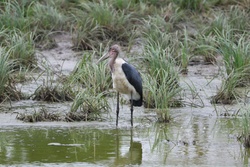
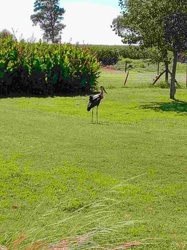
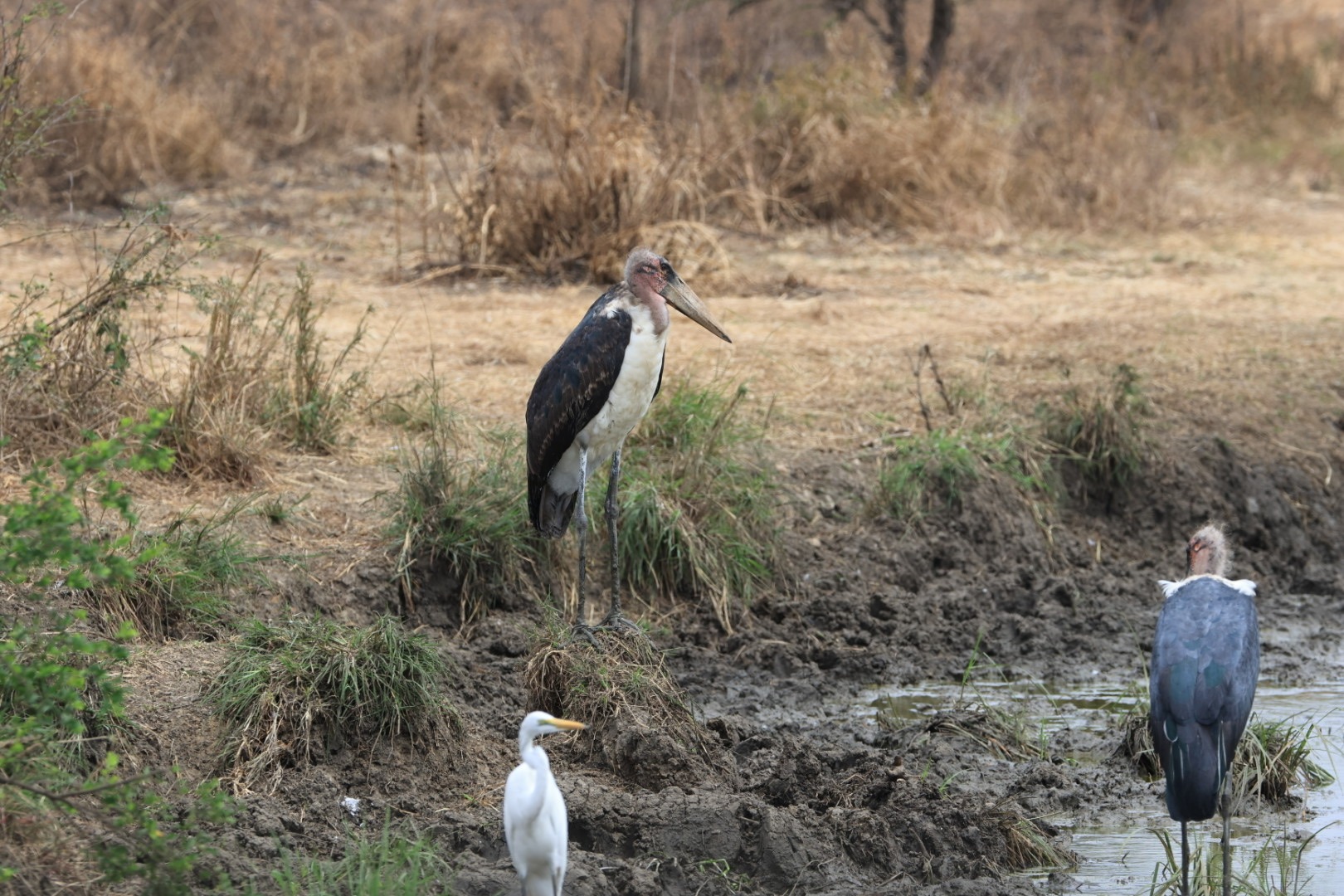
Massive, unmistakable stork with an imposing presence, often called the 'undertaker bird' due to its dark back, cloak-like wings, and bare head.
Explore Marabou Stork in the encyclopedia →Identify your own birds.
Get a report just like this from any photo or call, free.
Plumage & appearance
Adults have glossy black back and wings, contrasting stark white underparts. The head and neck are largely bare, pinkish-red, with a fleshy, inflatable throat sac (gular pouch). Juveniles are duller and browner with a smaller throat pouch.
Key field marks
Massive wedge-shaped bill, bare pinkish head and neck, dangling throat pouch, contrasting black back and white belly.
Size & weight
Length: 120-150 cm (47-59 in), Wingspan: 225-287 cm (89-113 in), Weight: 4.5-9 kg (10-20 lbs).
Voice — call & song
Generally silent, but produces croaks, grunts, and bill-clattering displays during breeding season.
Diet & foraging
Primarily a scavenger feeding on carrion, scraps, and refuse, but also preys on live fish, frogs, insects, rodents, and small birds.
Habitat
Savannahs, dry grasslands, around lakes, rivers, marshes, and often near human settlements and refuse dumps.
Migration & movement
Mainly resident, though some populations make local wandering movements depending on rainfall and food availability.
Nesting & breeding
Breeds colonially in trees near water, building large stick nests. Clutch size is typically 2-3 eggs, incubated by both parents.
Similar species
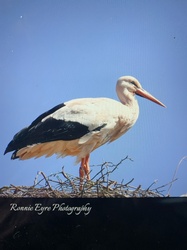
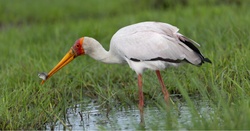
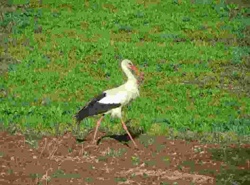
Other large storks, but easily distinguished by the naked head, massive bill, and inflatable throat pouch.
Ecological significance
Acts as an important scavenger, cleaning up carcasses and preventing the spread of disease alongside vultures.
Conservation status
Least Concern, with a generally stable population trend.
Observation tips
Look near water bodies, garbage dumps, and open grasslands, often soaring high on thermals like vultures.
Interesting facts
Marabou storks lack true vocal cords and communicate almost entirely through bill-clattering, earning them the nickname 'clatter-birds'.
More like this