Order: Ciconiiformes; Family: Ciconiidae
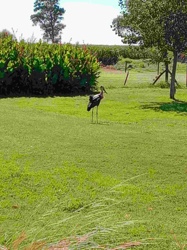
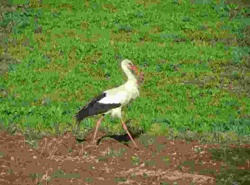
Yellow-billed Stork
Mycteria ibis
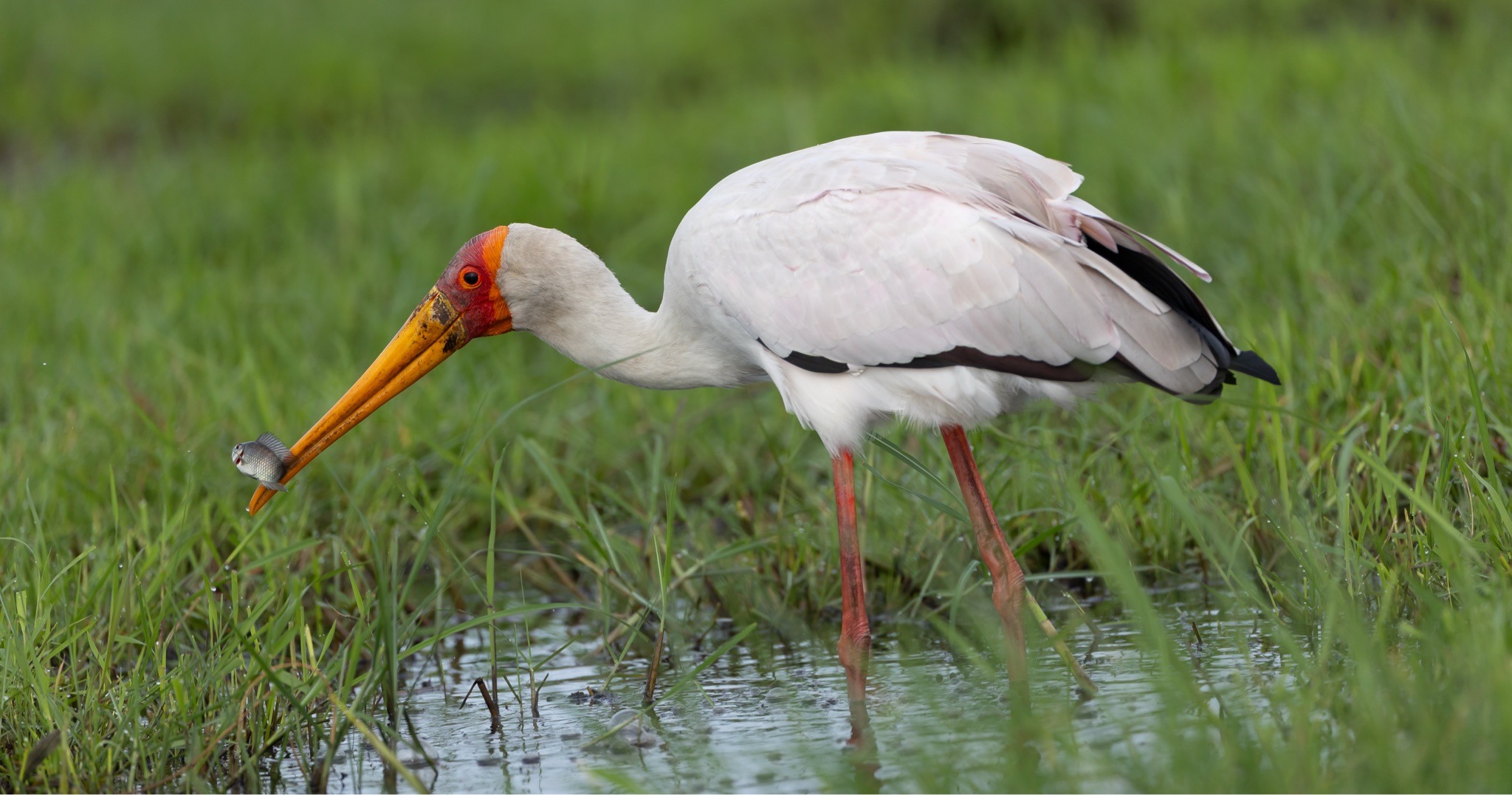
A large wading bird easily identified by its long, bright yellow bill and red facial skin. It is often seen standing in shallow water or on shorelines, hunting for fish.
Explore Yellow-billed Stork in the encyclopedia →Identify your own birds.
Get a report just like this from any photo or call, free.
Plumage & appearance
Adults are mostly white with a pinkish tinge on the wings during breeding season. They have black tails and flight feathers. Juveniles are grey-brown with a duller orange face and bill.
Key field marks
Large bright yellow bill slightly decurved at the tip, red facial skin, white body with black flight feathers, and long pinkish legs.
Size & weight
Length: 90-105 cm; Wingspan: 150-165 cm; Weight: 1.2-2.3 kg
Voice — call & song
Usually silent except for bill-clattering at the nest. They may emit a low grunt or a high-pitched squeak during social interactions.
Diet & foraging
Primarily fish, but also eats crustaceans, frogs, aquatic insects, and worms. Forages by walking in shallow water with its bill submerged.
Habitat
Freshwater wetlands, including lakes, rivers, marshes, floodplains, and alkaline lakes.
Migration & movement
Intra-African migrant; movements are determined by rainfall and the drying up of water bodies.
Nesting & breeding
Colonial breeders, often nesting in trees over or near water. They lay 2-3 eggs and both parents share incubation and chick-rearing duties.
Similar species
Painted Stork (Mycteria leucocephala) has more black and white barring on the chest and is found in Asia. Wood Stork (Mycteria americana) has a dark, scaly head and neck.
Ecological significance
As a wetland predator, it helps regulate fish and aquatic invertebrate populations. It is also an indicator species for the health of freshwater ecosystems.
Conservation status
Least Concern (IUCN); Population trend is stable.
Observation tips
Look for them in shallow lake edges, lagoons, and floodplains. They are often less wary than other storks and relatively easy to photograph while foraging.
Interesting facts
They use a technique called 'tactile foraging' where they hold their bill open in the water and snap it shut instantly when a fish touches it, a reflex that is among the fastest in the animal kingdom.
More like this