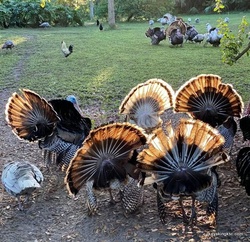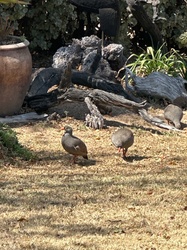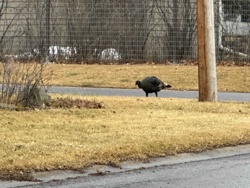
Order: Galliformes, Family: Phasianidae
Indian Peafowl (Blue Peafowl)
Pavo cristatus
Large, heavily-built ground-dwelling bird known for the male's extravagant train, used in courtship displays. They are generally terrestrial, walking rather than flying, though capable of short bursts of flight into trees to roost.
Explore Indian Peafowl (Blue Peafowl) in the encyclopedia →Identify your own birds.
Get a report just like this from any photo or call, free.
Plumage & appearance
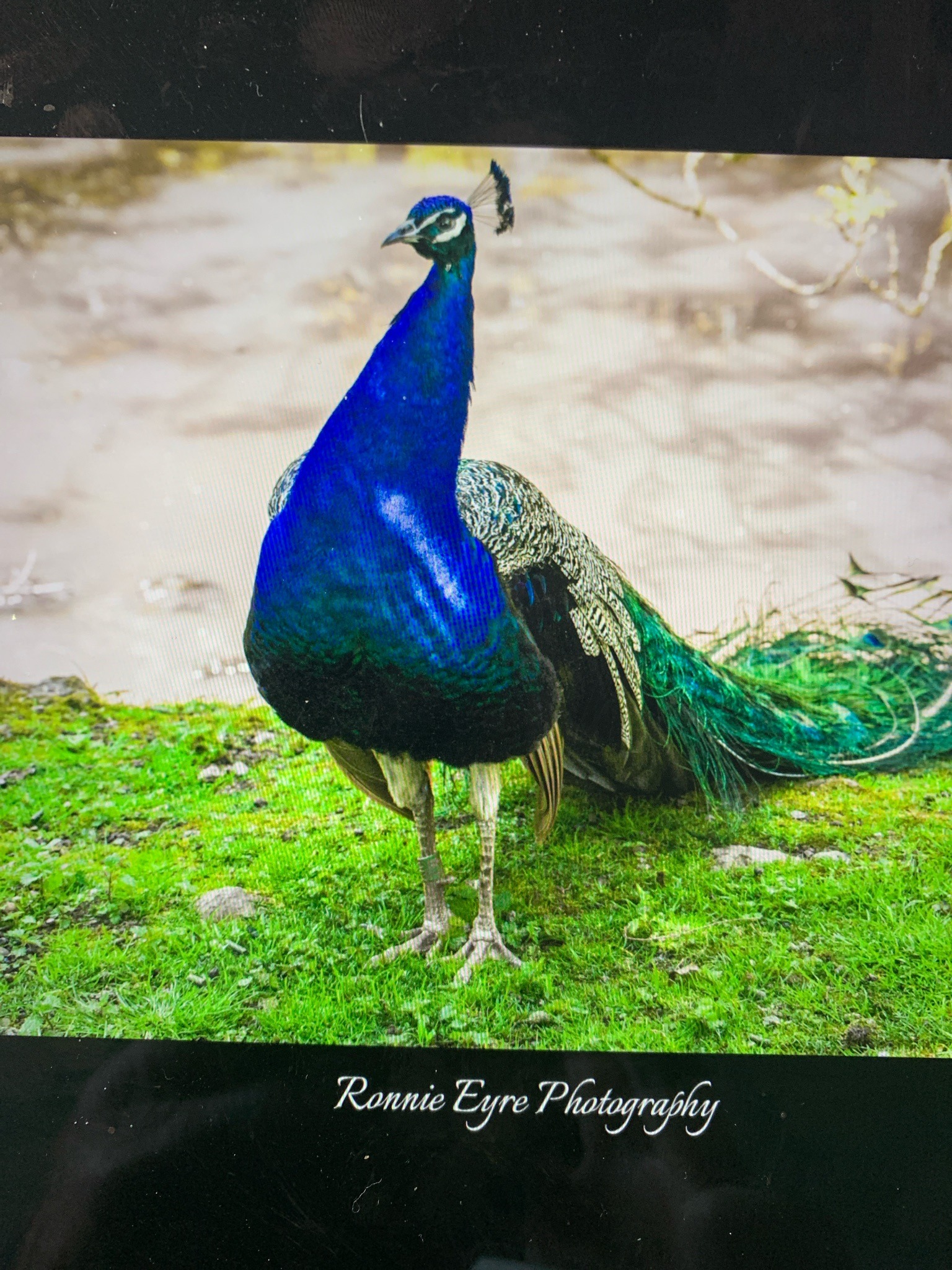
Adult males (peacocks) feature a brilliant iridescent blue neck and breast, fan-like crest with bare-shafted feathers, and an elongated train of covert feathers adorned with iridescent 'eyes'. Females (peahens) are smaller with mottled brown, green, and whitish plumage, designed for camouflage while nesting.
Key field marks
Brilliant blue neck, fan-shaped crest, naked white face patch around the eye, and the massive train of patterned eyespots in males.
Size & weight
Length: Males 100-115 cm (excluding train up to 215 cm), Females 86 cm. Wingspan: 130-160 cm. Weight: Males 4-6 kg, Females 2.7-4 kg.
Voice — call & song
Loud, piercing, trumpeting calls often described as a harsh 'may-awe' or 'keow-keow', frequently uttered at dawn or dusk and when alarmed.
Diet & foraging
Omnivorous; feeds on seeds, grains, insects, fruits, small reptiles, and amphibians by foraging on the ground.
Habitat
Found in deciduous forests, scrublands, farmlands, and cultivated areas, usually near water.
Migration & movement
Non-migratory resident.
Nesting & breeding
Ground nesters; builds a shallow scrape lined with leaves, sticks, and grass in dense undergrowth. Clutch size is typically 4-8 pale buff eggs, incubated solely by the female for about 28 days.
Similar species
Green Peafowl (Pavo muticus), which features greener plumage and a different neck pattern, found in Southeast Asia.
Ecological significance
Acts as both predator and prey in its ecosystem, helping control insect and small vertebrate populations while serving as food for larger carnivores.
Conservation status
Least Concern (LC) with a stable or increasing population trend.
Observation tips
Look and listen for them in open forests, agricultural lands, and around human settlements, particularly near water sources. They are often bold and accustomed to human presence in parks and rural areas.
Interesting facts
Despite their massive trains, peacocks can fly up into trees to escape predators and sleep at night. The 'eyes' on the train are made of intricate microscopic lattice structures that refract light to create iridescent colors.
More like this