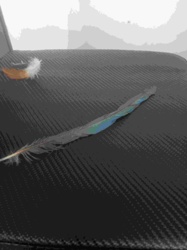
Order: Galliformes; Family: Phasianidae
Golden Pheasant
Chrysolophus pictus
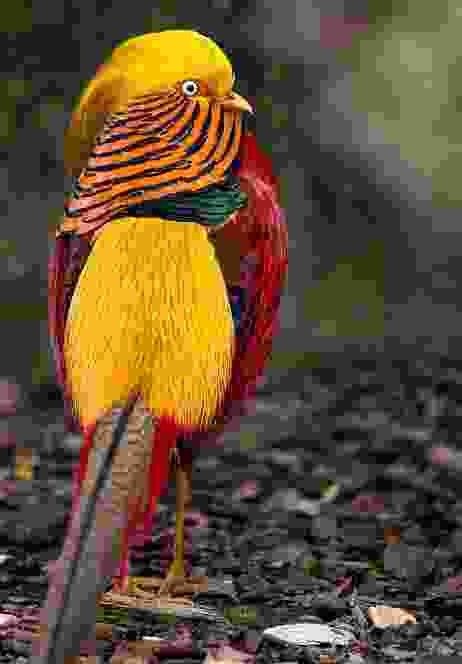
A shy, colorful forest bird known for its brilliant plumage and long, barred tail. Males perform a dramatic display by spreading their neck ruff over their face.
Explore Golden Pheasant in the encyclopedia →Identify your own birds.
Get a report just like this from any photo or call, free.
Plumage & appearance
Males are spectacularly colored with a golden crest, orange and black striped ruff (cape), green upper back, and scarlet underparts. Females are cryptic with mottled brown plumage and black barring for camouflage.
Key field marks
Golden-yellow crest, orange and black 'cape' ruff, scarlet chest, and a tail that accounts for two-thirds of the male's length.
Size & weight
Length: 90-105 cm (males, including long tail); Wingspan: ~70 cm; Weight: 500-700 g.
Voice — call & song
The male emits a harsh, metallic 'chack-chack' sound during the breeding season.
Diet & foraging
Omnivorous; feeds on grain, seeds, berries, grubs, and invertebrates found by scratching the ground.
Habitat
Prefer dense conifer or bamboo forests in mountainous regions, often in scrubby woodlands and forest clearings.
Migration & movement
Resident; they do not perform long-distance migrations but may move to lower elevations in winter.
Nesting & breeding
Ground nesters; females lay 8-12 eggs in a shallow scrape hidden by dense vegetation. Incubation lasts about 22-23 days.
Similar species
Lady Amherst's Pheasant (closely related but has white underparts and a grey/black/white tail).
Ecological significance
Acting as seed dispersers and prey for larger carnivores, they play a vital role in the food web of temperate mountain forests.
Conservation status
Least Concern (IUCN); population is stable although declining in some native ranges due to habitat loss.
Observation tips
They are very shy; look for them in dense shrubbery or at forest edges early in the morning when they may emerge to forage.
Interesting facts
The Golden Pheasant was long believed to be the inspiration for the mythical Phoenix in Chinese culture due to its vibrant, fire-like colors.
More like this