Order: Anseriformes, Family: Anatidae
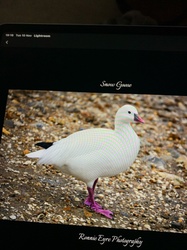
Swan Goose (Domestic / African or Chinese hybrid form)
Anser cygnoid
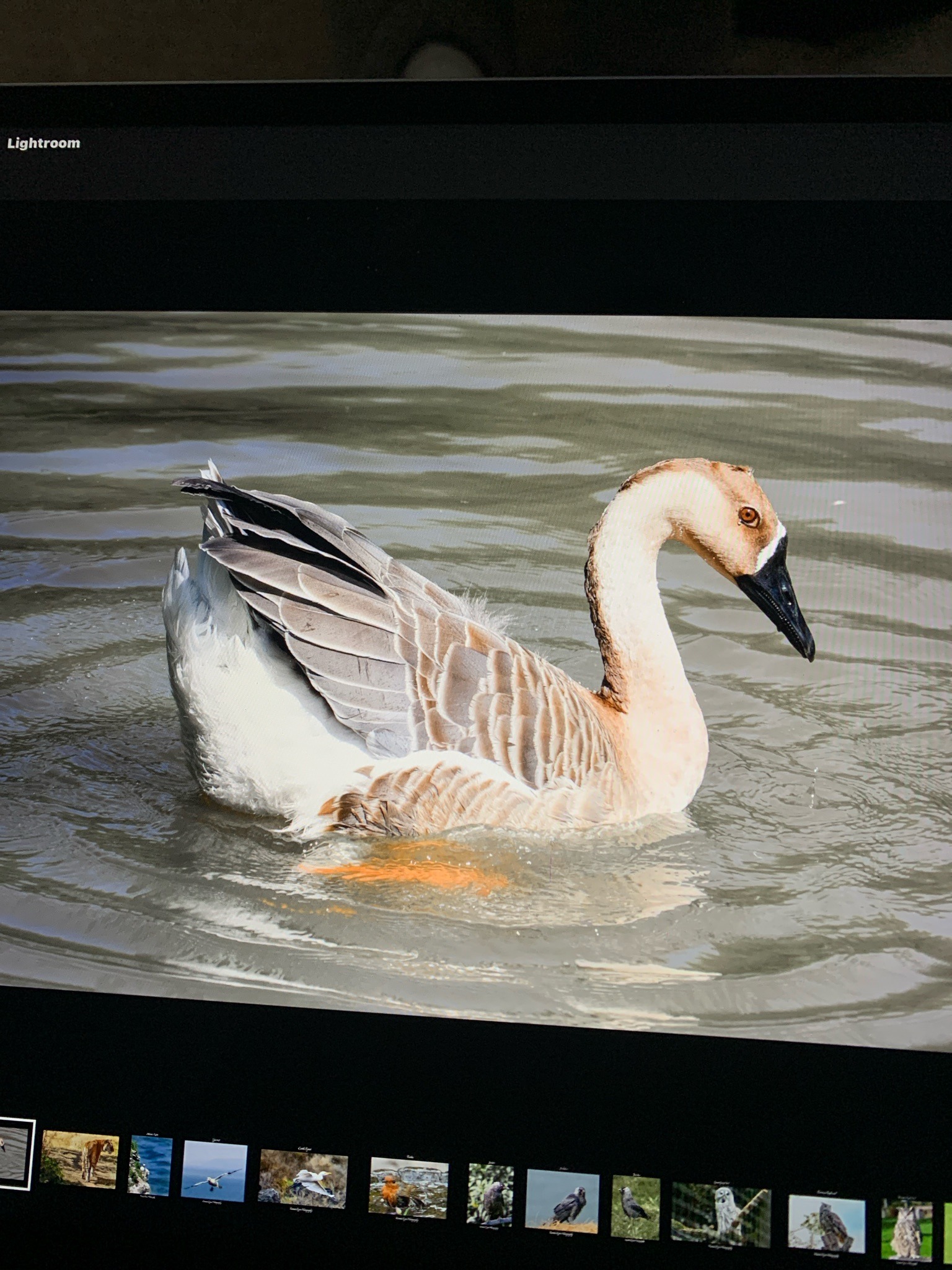
A large waterfowl with a distinctive long, angled neck and a long, heavy bill. It floats high on the water and often tilts its head downward in a graceful, swan-like posture.
Explore Swan Goose (Domestic / African or Chinese hybrid form) in the encyclopedia →Identify your own birds.
Get a report just like this from any photo or call, free.
Plumage & appearance
Wild Swan Geese have a dark brown crown and hindneck, a pale buff face and foreneck, and grayish-brown upperparts with pale fringes. This specific individual shows domestic or hybrid traits, featuring a lighter fawn/buff coloration, paler mantle feathers, and prominent orange/yellow legs and feet, along with a heavily dark-marked bill and knob typical of domesticated Chinese/African goose crosses.
Key field marks
Long, heavy black bill, pale buff head and neck contrasting with a darker crown, long slender neck, and grayish-brown barred back.
Size & weight
Length: 81-94 cm (32-37 inches); Wingspan: 140-165 cm; Weight: 2.8-5.5 kg (wild individuals can be heavier in domestic strains).
Voice — call & song
A loud, echoing, trumpet-like honk or series of sharp, nasal alarm calls.
Diet & foraging
Primarily vegetarian, eating grasses, sedges, roots, seeds, and aquatic vegetation, occasionally supplementing with insects or small aquatic organisms.
Habitat
Rivers, lakes, marshes, and damp grasslands in wild regions; farm ponds, urban parks, and agricultural fields for domestic variants.
Migration & movement
Wild populations are migratory, moving from breeding grounds in Siberia and Mongolia to wintering grounds in central and eastern China. Domestic populations are resident.
Nesting & breeding
Builds a shallow depression lined with down and plant material on the ground near water. Clutches typically consist of 5-8 creamy-white eggs incubated by the female.
Similar species
Greylag Goose and Tundra Swan; distinguished by the distinctive long bill, dark crown stripe contrasting with pale cheeks, and swan-like neck posture.
Ecological significance
Acts as a herbivore shaping aquatic and grassland vegetation through grazing. In feral settings, it can heavily impact local ponds and parks.
Conservation status
Wild populations are classified as Endangered by the IUCN due to habitat loss and overhunting, though domestic and feral populations are common worldwide.
Observation tips
Look for them in public parks, agricultural ponds, and wetlands where domestic geese are kept. Approach slowly to observe foraging behavior without causing alarm.
Interesting facts
The wild Swan Goose is the ancestor of the domestic Chinese goose breed, which was domesticated over 3,000 years ago and is valued for both egg production and its loud alarm call acting as a guard animal.
More like this