Order: Piciformes, Family: Picidae
Downy Woodpecker
Dryobates pubescens
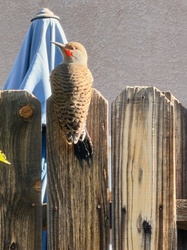
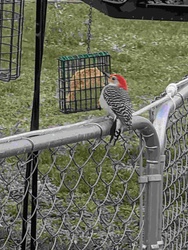
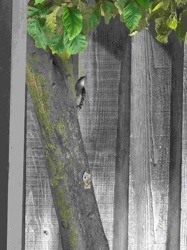
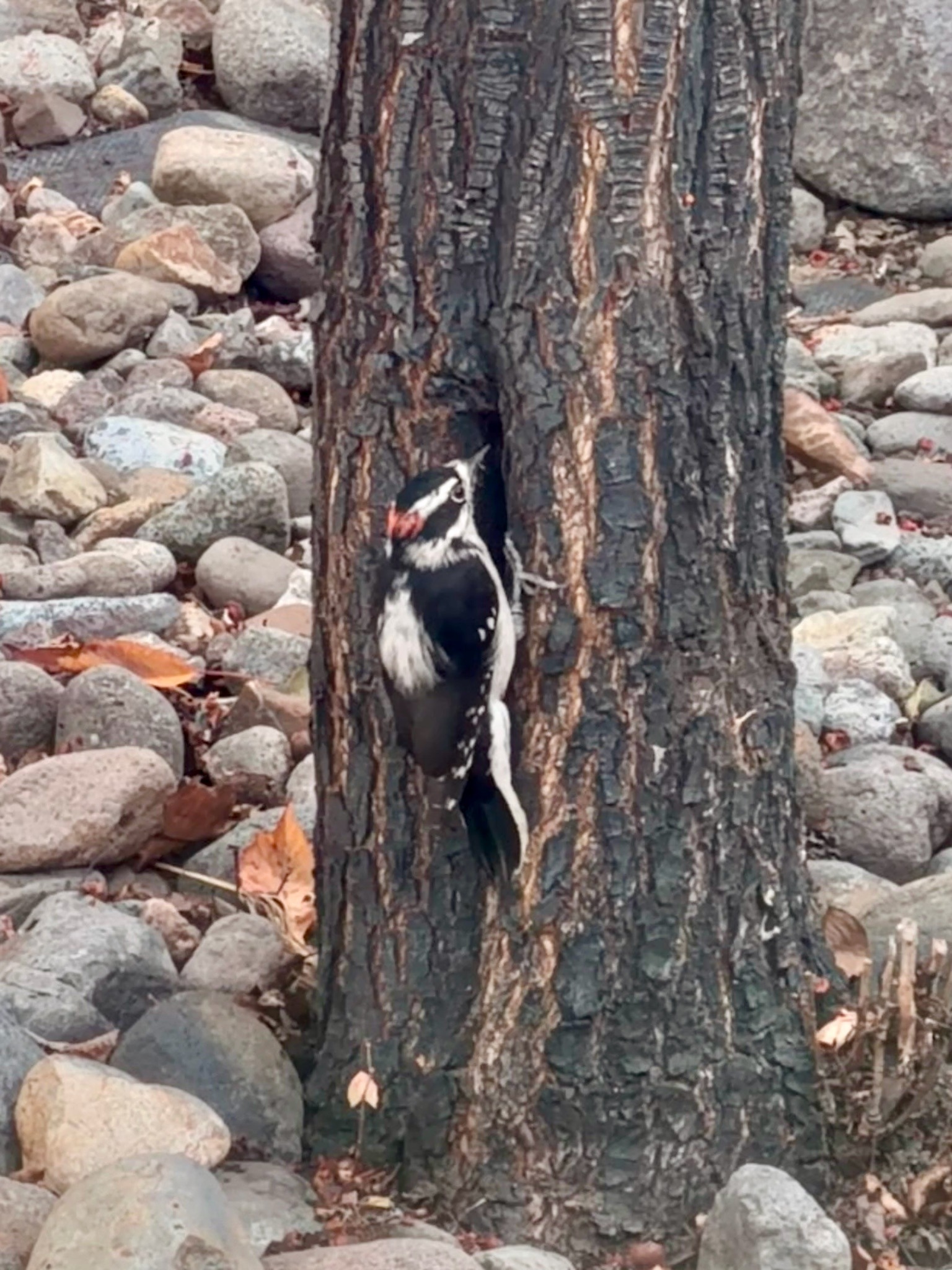
The Downy Woodpecker is the smallest woodpecker in North America. It has a short, straight, chisel-like bill, a white back, barred wings, and stiff tail feathers used for propping against tree trunks.
Explore Downy Woodpecker in the encyclopedia →Identify your own birds.
Get a report just like this from any photo or call, free.
Plumage & appearance
Black and white pied plumage with a white back. Males feature a distinct red patch on the back of the head (nape), which females lack. Juveniles have more white spotting on the wings and may show red on the crown.
Key field marks
Small size, white back stripe, black-and-white face pattern, white outer tail feathers with minimal or no spotting, and a notably short bill compared to similar species.
Size & weight
Length: 14-17 cm (5.5-6.7 in), Wingspan: 25-30 cm (9.8-11.8 in), Weight: 20-33 g (0.7-1.2 oz)
Voice — call & song
A sharp, high-pitched 'pik' call and a descending series of notes (whinny) instead of a true song. Drums on dead wood to communicate and claim territory.
Diet & foraging
Primarily insects, especially beetle larvae, ants, and caterpillars. Also consumes seeds, berries, and suet during winter months.
Habitat
Open deciduous forests, woodlots, willow groves, orchards, suburban parks, and backyard gardens.
Migration & movement
Permanent resident. Non-migratory throughout its range, though northern birds may occasionally shift slightly south in harsh winters.
Nesting & breeding
Excavates a new cavity in dead wood each year, usually 8-50 feet above ground. Lays a clutch of 3-8 white eggs, incubated by both parents for about 12 days.
Similar species
Hairy Woodpecker (Dryobates villosus) is very similar in pattern but significantly larger with a much longer, chisel-like bill relative to its head size.
Ecological significance
Acts as a key controller of insect pests like wood-boring beetle larvae. Their excavated nest cavities also provide vital homes for secondary cavity-nesting birds and small mammals.
Conservation status
Least Concern, with stable or increasing populations.
Observation tips
Often found visiting backyard suet feeders, orchards, and deciduous forests. Listen for their sharp 'pik' call or rapid drumming on dead branches.
Interesting facts
Downy Woodpeckers have specialized stiff tail feathers, shock-absorbing skull cartilage, and a long, barbed tongue wrapped around their skull to extract insects from deep crevices.
More like this