Order: Piciformes, Family: Picidae
Northern Flicker
Colaptes auratus
A medium-sized woodpecker with a brownish, barred appearance, a curved bill, and unique ground-foraging habits.
Explore Northern Flicker in the encyclopedia →Identify your own birds.
Get a report just like this from any photo or call, free.
Plumage & appearance
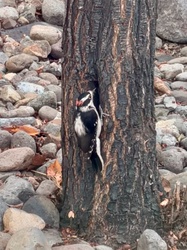
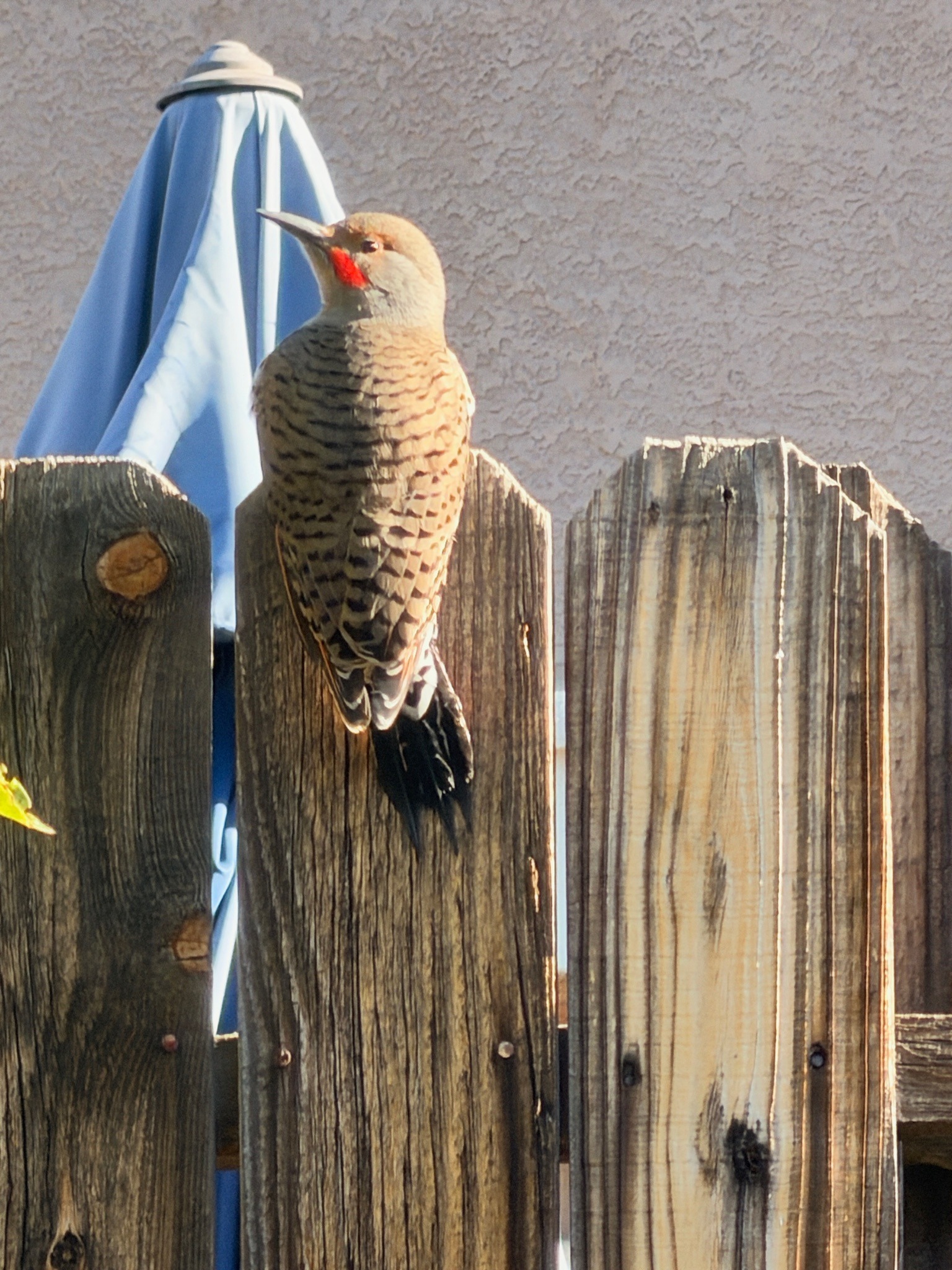
Brownish upperparts barred with black, a spotted breast with a prominent black crescent, and a white rump visible in flight. This individual shows red malan stripes (mustache), indicating it is a male of the red-shafted form (or a hybrid between red-shafted and yellow-shafted forms, which often display mixed characteristics like a red nape and red malars).
Key field marks
Black crescent on the chest, spotted underparts, barred brown back, and a white rump patch noticeable during flight.
Size & weight
Length: 28-31 cm (11-12 in), Wingspan: 42-54 cm (16.5-21.3 in), Weight: 110-160 g (3.9-5.6 oz)
Voice — call & song
A loud, piercing, rolling 'wick-wick-wick-wick' call and a sustained, rhythmic drumming.
Diet & foraging
Primarily eats ants and beetles, which it captures by probing the ground with its long, barbed tongue. It also consumes fruits, berries, and seeds during the fall and winter.
Habitat
Open woodlands, forest edges, yards, parks, and agricultural areas with scattered trees.
Migration & movement
Partial migrant. Northern populations are migratory, moving south for winter, while western and southern populations are largely year-round residents.
Nesting & breeding
Excavates cavities in dead or dying trees, utility poles, or wooden structures. Lays 5 to 8 white eggs in a clutch. Both parents incubate the eggs and feed the young.
Similar species
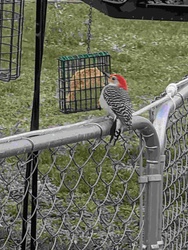
Red-bellied Woodpecker and Gilded Flicker, but distinguished by the extensive black barring on the back, spotted underparts, and black breast crescent.
Ecological significance
Acts as a keystone species by excavating tree cavities that are later used by numerous other birds and small mammals for nesting and roosting. They also help control ant and beetle populations.
Conservation status
Least Concern, with stable or slightly declining populations.
Observation tips
Look for them hopping around on lawns searching for ants, or listen for their loud, ringing calls and rhythmic drumming on dead trees or metal structures.
Interesting facts
Unlike most other woodpeckers, Northern Flickers spend a large amount of time foraging directly on the ground rather than climbing tree trunks.
More like this