Order: Piciformes, Family: Picidae
Red-bellied Woodpecker
Melanerpes carolinus
A medium-sized woodpecker known for its strikingly barred back and habit of visiting bird feeders. It is active, vocal, and can be seen hitching up tree trunks in search of food.
Explore Red-bellied Woodpecker in the encyclopedia →Identify your own birds.
Get a report just like this from any photo or call, free.
Plumage & appearance
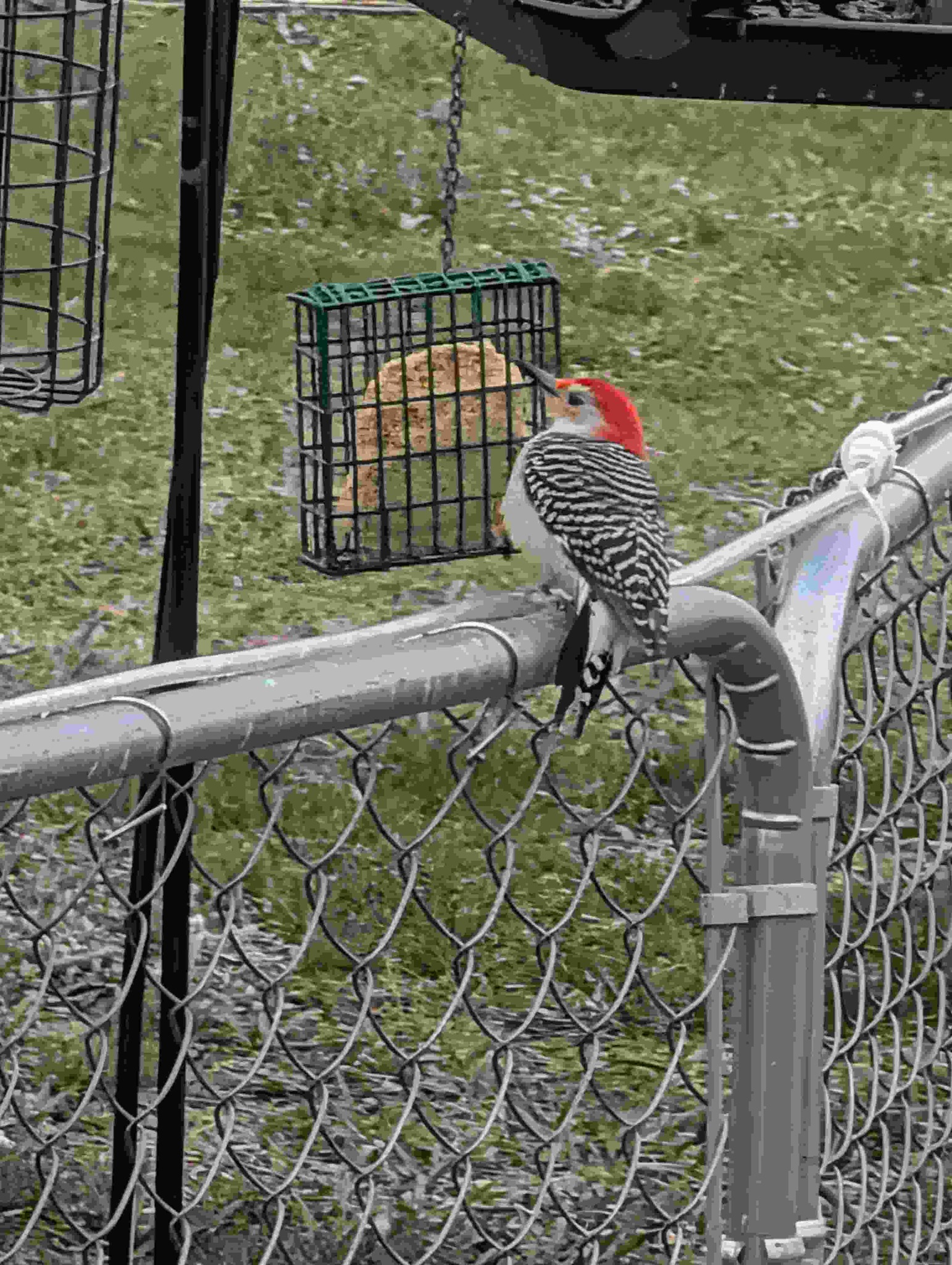
Features a zebra-patterned (black and white) back and wings. Adult males have a bright red cap extending from the bill to the nape. Females have red only on the nape and a small patch above the bill, with a gray crown in between. Both sexes have a pale, buffy-white underside with a faint reddish wash on the belly that can be difficult to see in the field.
Key field marks
Zebra-striped back, red nape and/or crown, pale face and underparts, and a long, chisel-like beak.
Size & weight
Length: 9.1-10.6 in (23-27 cm); Wingspan: 13.0-16.5 in (33-42 cm); Weight: 2.0-3.2 oz (56-91 g).
Voice — call & song
Most common call is a rolling, shrill 'kwirr' or 'churr'. They also make a rhythmic 'cuk-cuk-cuk' sound and drum on resonant surfaces.
Diet & foraging
Omnivorous; consumes insects (ants, beetles, caterpillars), spiders, fruits, seeds, nuts, and occasionally small vertebrates like lizards or tree frogs.
Habitat
Deciduous and mixed forests, wooded suburbia, parks, and wetlands with standing dead timber.
Migration & movement
Non-migratory resident; generally remains in the same territory year-round.
Nesting & breeding
Cavity nesters that excavate holes in dead trees (snags) or dead limbs of live trees. They lay 2-6 white eggs; both parents incubate and feed the young. Breeding occurs from April to June.
Similar species
Red-headed Woodpecker (has an entirely red head, neck, and throat); Northern Flicker (has spotted breast and black bib); Gila Woodpecker (similar pattern but restricted to the Southwest US).
Ecological significance
Acts as a primary cavity nester, creating holes in dead trees that are later used by dozens of other species of birds and mammals. They also help control insect populations and disperse seeds.
Conservation status
Least Concern (IUCN); population is stable and expanding northward.
Observation tips
Look for them at suet or sunflower seed feeders, or listen for their loud, rolling calls in deciduous forests. They frequently cache food in tree crevices to eat later.
Interesting facts
Despite its name, the red on its belly is very pale and often hidden from view when the bird is clinging to a tree. They have a barbed tongue that can extend nearly two inches past the tip of their beak to extract insects from deep crevices.
More like this