Order: Podicipediformes, Family: Podicipedidae
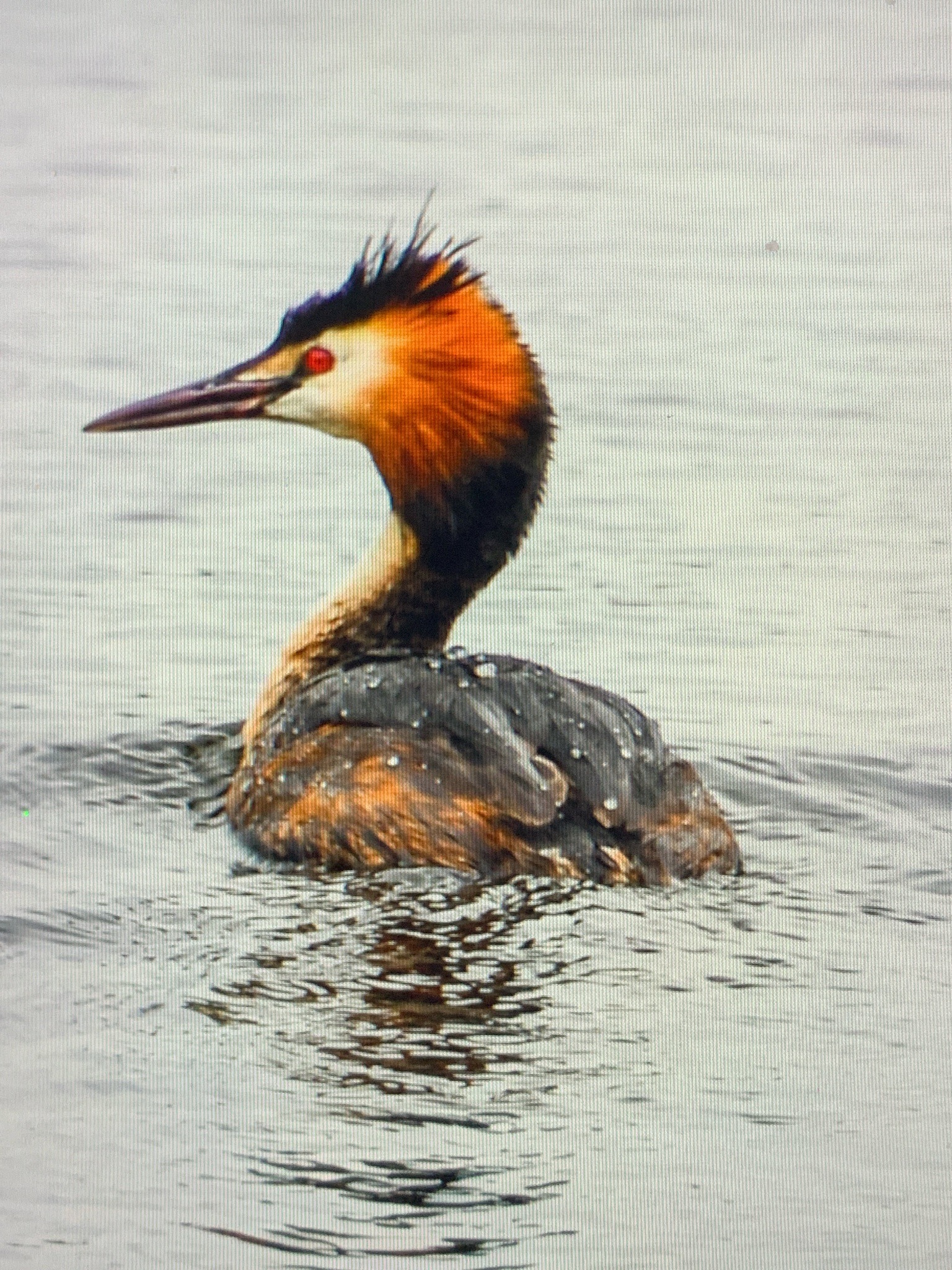
Great Crested Grebe
Podiceps cristatus
A sleek, elegant waterbird known for its elaborate courtship displays, distinctive head crest, and reddish-orange ruff. It is an exceptional diver, often plunging beneath the surface to catch fish.
Explore Great Crested Grebe in the encyclopedia →Identify your own birds.
Get a report just like this from any photo or call, free.
Plumage & appearance
Adults in breeding plumage feature a striking black and chestnut crest and ruff around the head, bright red eyes, a pinkish-white bill, and grey-brown upperparts with white underparts. Non-breeding adults have a duller head pattern lacking the prominent ruff. Juveniles have striped heads and necks.
Key field marks
Large size, long whitish neck, dark crest and rufous-black facial ruff, bright red eyes, and a straight pinkish-white bill.
Size & weight
Length: 46-51 cm (18-20 inches); Wingspan: 59-73 cm (23-29 inches); Weight: 600-1500 g (1.3-3.3 lbs)
Voice — call & song
Generally silent outside the breeding season. Gives harsh, grating barks and croaking calls ('orr-orr') during courtship and territorial disputes.
Diet & foraging
Primarily fish, supplemented by aquatic insects, crustaceans, frogs, and small mollusks. Forages mainly by diving.
Habitat
Large, open freshwater lakes, gravel pits, reservoirs, and occasionally sheltered coastal bays or estuaries with reed beds for nesting.
Migration & movement
Partial migrant. Birds in northern and eastern parts of its range migrate south or to ice-free coastal areas, while western and southern populations are largely resident.
Nesting & breeding
Builds a floating platform of rotting vegetation anchored to reeds in shallow water. Lays 3-5 eggs, and both parents share incubation duties and carry chicks on their backs.
Similar species
Red-necked Grebe and Horned Grebe. The Great Crested Grebe is distinguished by its larger size, longer pinkish bill, and unique black-and-chestnut ruff in breeding plumage.
Ecological significance
Acts as an apex aquatic predator of small fish and invertebrates in its wetland habitat, helping to regulate prey populations and indicating the health of freshwater ecosystems.
Conservation status
Least Concern (IUCN) with stable population trends globally.
Observation tips
Best observed with binoculars or a spotting scope near calm lakes, reservoirs, or slow-moving rivers during spring to witness their intricate courtship dances.
Interesting facts
Famous for their elaborate courtship ritual, which includes synchronized swimming, head-shaking, and rising vertically out of the water while holding aquatic weed offerings ('weed dance').
More like this