Order: Rheiformes, Family: Rheidae
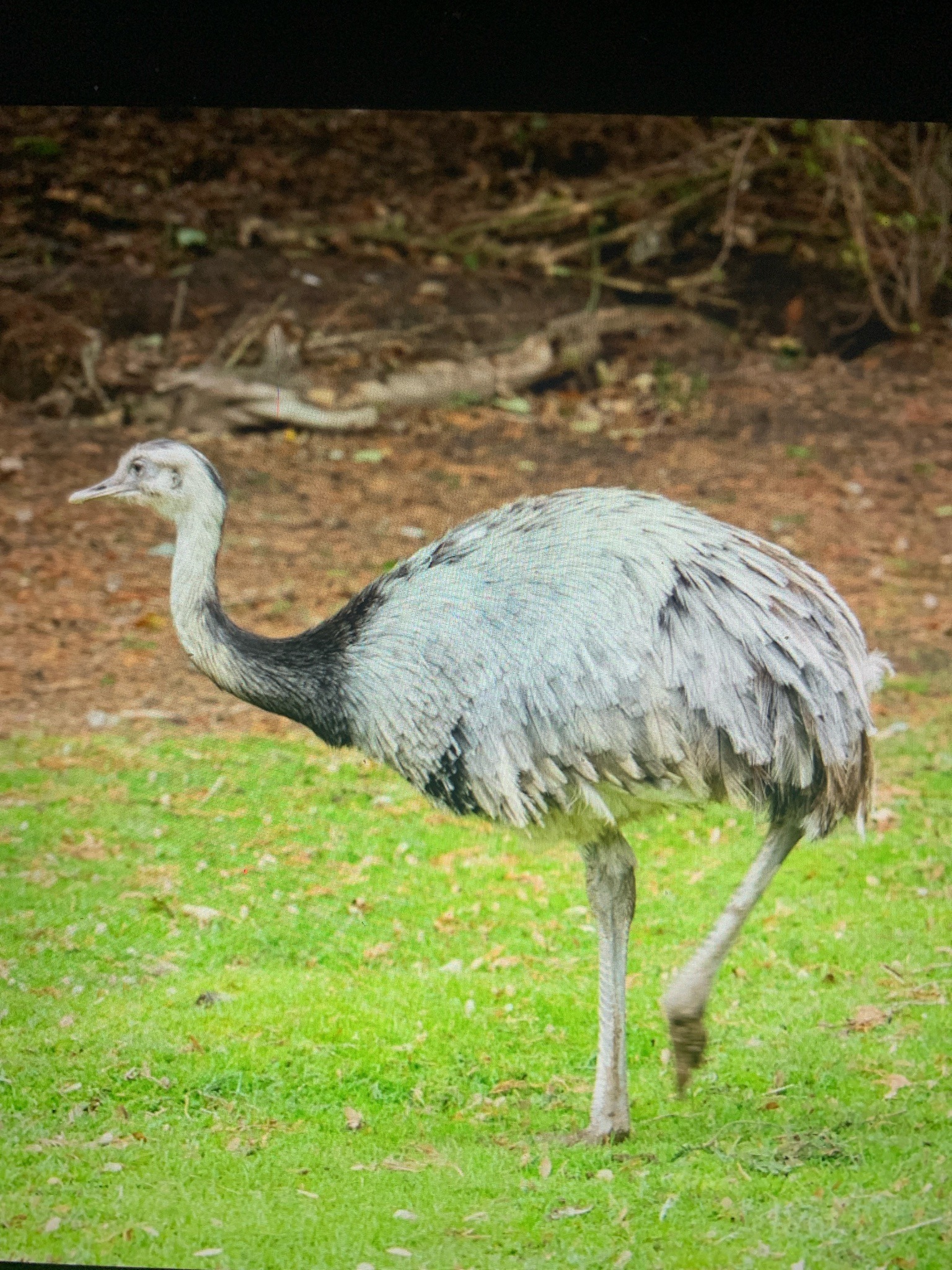
Greater Rhea
Rhea americana
A large, flightless bird with a long neck, long legs, and large wings which are used for balance when running. They are social outside of the breeding season and are known for their speed and agility.
Explore Greater Rhea in the encyclopedia →Identify your own birds.
Get a report just like this from any photo or call, free.
Plumage & appearance
Grey or brown plumage, with males typically having darker black markings on the lower neck and breast, especially during the breeding season. Females are generally lighter in color and slightly smaller.
Key field marks
Large size, completely feather-covered head and neck, greyish-brown body, and long powerful legs with three toes.
Size & weight
Length: 127-140 cm, Wingspan: Vestigial wings used for balance, Weight: 20-27 kg
Voice — call & song
Males produce a loud, deep, booming or booming-hissing call, particularly during the breeding season to attract females.
Diet & foraging
Omnivorous; feeds mainly on broad-leaved plants, seeds, fruits, insects, lizards, and small rodents.
Habitat
Open grasslands, savanna, scrub forest, and agricultural lands, usually near water.
Migration & movement
Resident; generally sedentary, though they may wander locally in search of food and water.
Nesting & breeding
Polygynous; males build a shallow scrape on the ground and multiple females lay eggs in the same nest. The male incubates the large clutch (ranging from 10 to 60 eggs) and raises the chicks alone.
Similar species
Lesser Rhea (Rhea pennata), which is smaller, has white spots on its brown plumage, and a shorter bill.
Ecological significance
Acts as a seed disperser and helps control insect and small vertebrate populations in its grassland ecosystem.
Conservation status
Near Threatened, with populations facing decline due to habitat loss, hunting, and egg collection.
Observation tips
Look for them in open grasslands, pampas, and agricultural fields. They can be wary, so use binoculars and keep a respectful distance, especially males with chicks.
Interesting facts
Greater rheas are excellent swimmers and can cross rivers easily when pursued. Despite being flightless, they can run at speeds up to 60 km/h (37 mph) in a zig-zag pattern to escape predators.
More like this