Order: Passeriformes, Family: Muscicapidae
Identified from audio
European Robin
Erithacus rubecula
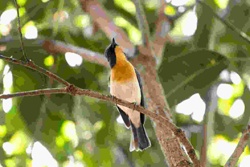
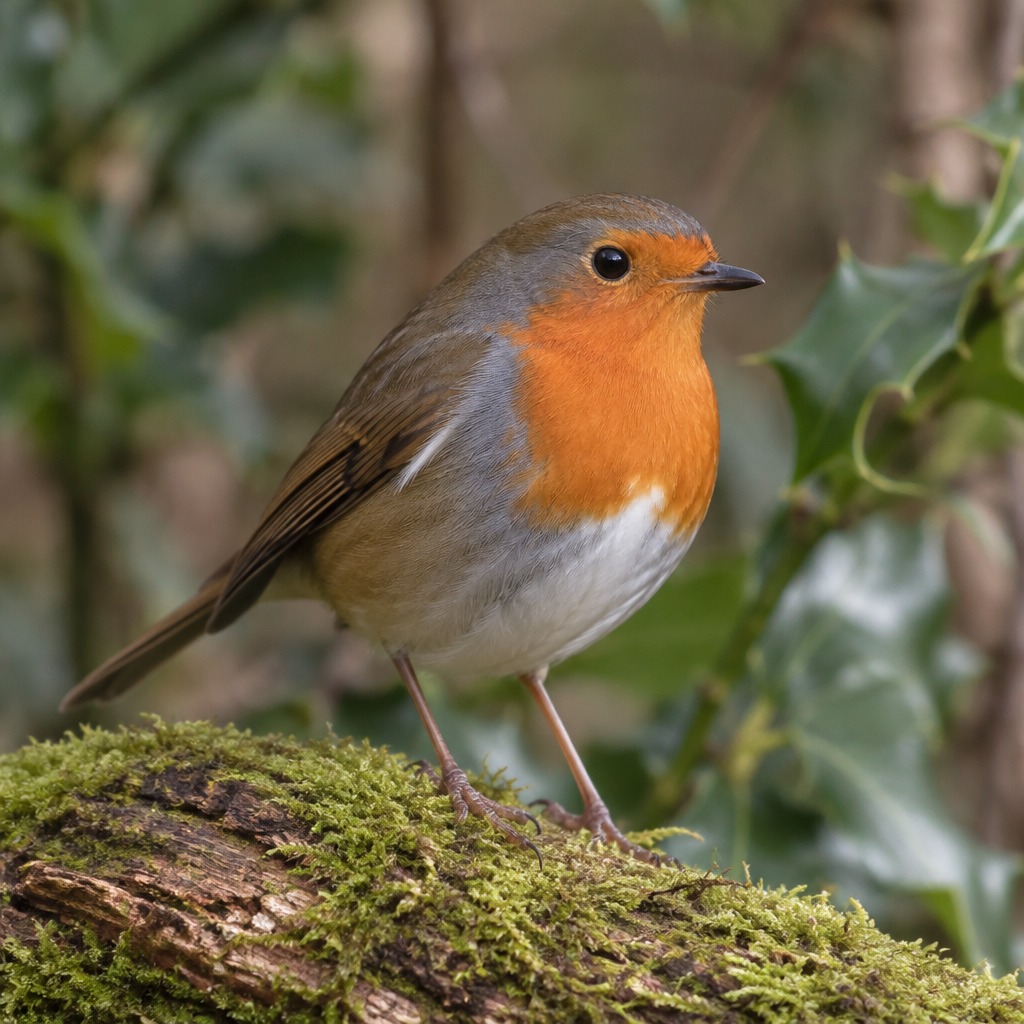
A small, plump insectivorous passerine bird with a bright orange-red face and breast. Known for being bold, inquisitive, and fiercely territorial.
Explore European Robin in the encyclopedia →Identify your own birds.
Get a report just like this from any photo or call, free.
Plumage & appearance
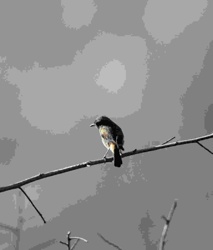
Brown upperparts, whitish belly, distinct orange-red breast and face bordered by a greyish fringe. Juveniles lack the red breast and are mottled with brown and buff spots.
Key field marks
Compact, round shape with a bright orange-red face and breast contrasting against a brown back and whitish underparts.
Size & weight
Length: 12-14 cm, Wingspan: 20-22 cm, Weight: 16-22 g
Voice — call & song
The recording features the characteristic melancholic, wardling song of the robin, often delivered from an exposed perch, alongside sharp ticking or clicking alarm calls.
Diet & foraging
Insects, spiders, worms, seeds, and fruits, especially berries in autumn and winter.
Habitat
Woodlands, gardens, parks, and hedgerows.
Migration & movement
Partial migrant; northern and eastern populations are migratory, while western and southern populations are largely sedentary.
Nesting & breeding
Builds cup-shaped nests hidden low down in ivy, banks, holes, or artificial containers like flowerpots, laying 4-6 pale pinkish eggs speckled with red-brown.
Similar species
Dunnock (Prunella modularis), which lacks the orange-red breast and has a slender, pointed bill.
Ecological significance
Acts as an important controller of invertebrate populations such as beetles, worms, and spiders, and serves as an indicator of woodland and garden ecosystem health.
Conservation status
Least Concern (IUCN)
Observation tips
Often found close to ground level in gardens, parks, and woodlands. They are notoriously bold and will frequently approach humans digging in soil to look for exposed worms.
Interesting facts
Robins are well known for fiercely defending their territories and have been voted Britain's national bird in multiple polls.
More like this