Order: Passeriformes, Family: Muscicapidae (Old World Flycatchers)
White-rumped Shama
A medium-sized songbird known for its long, deeply graduated tail and melodic, complex singing ability. They are shy, forest-dwelling birds.
Explore White-rumped Shama in the encyclopedia →Identify your own birds.
Get a report just like this from any photo or call, free.
Plumage & appearance
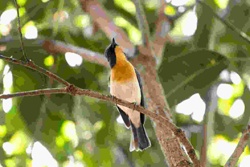
Males feature glossy black upperparts, a deep chestnut belly, and a distinctive white patch on the rump. Outermost tail feathers are also white.
Ecological significance
Acts as an insectivore, helping to regulate insect populations within its forest habitat. It also serves as food for larger tropical predators.
Conservation status
Least Concern (Global); however, local populations are often threatened by the cage-bird trade due to their singing prowess.
Observation tips
Listen for their rich, flute-like song early in the morning. They are most easily seen in the undergrowth of dense forests or secondary growth areas.
More like this