Order: Falconiformes, Family: Falconidae
American Kestrel
Falco sparverius
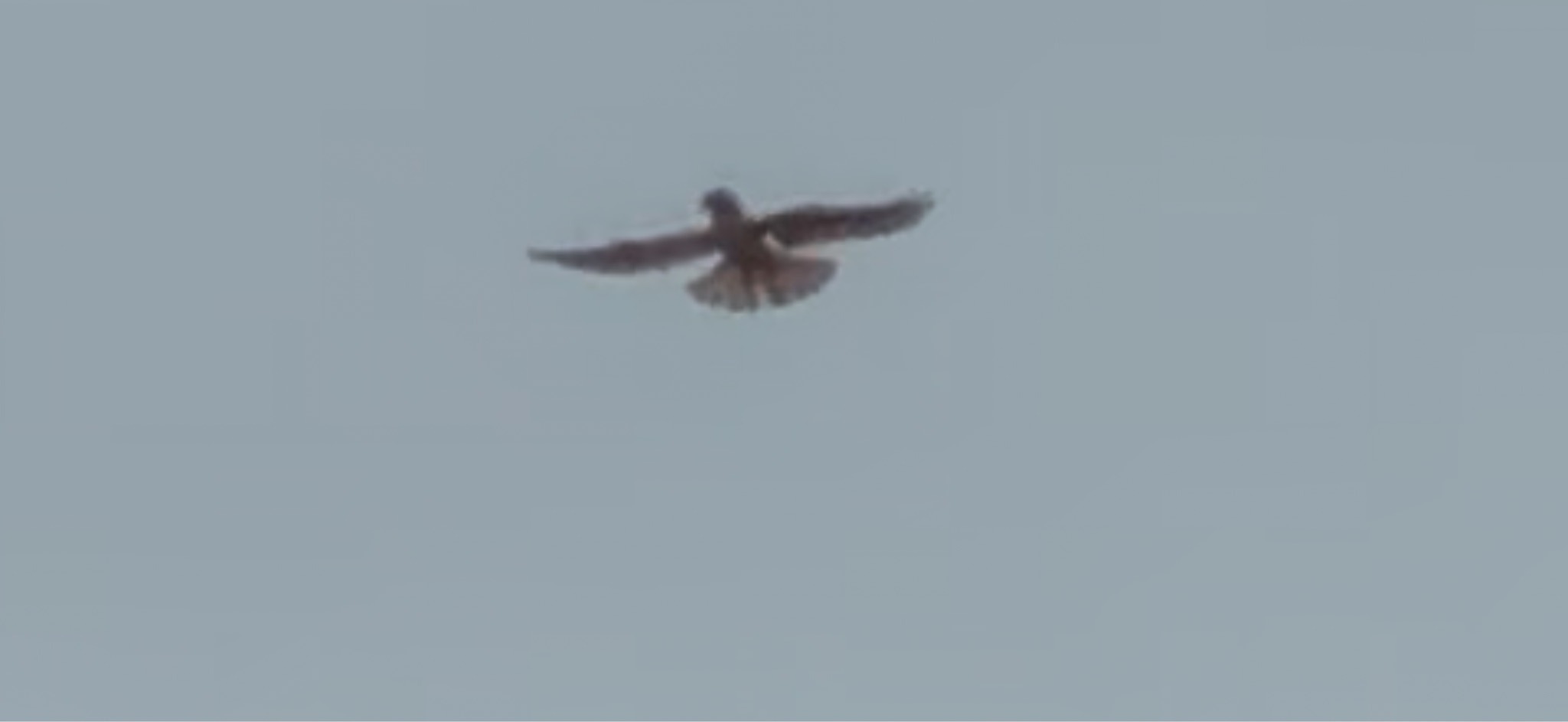
The American Kestrel is the smallest falcon in North America, known for its colorful plumage, reddish-brown back, and distinctive habit of hovering in place while hunting over open terrain.
Explore American Kestrel in the encyclopedia →Identify your own birds.
Get a report just like this from any photo or call, free.
Plumage & appearance
Males have blue-grey heads with black vertical face markings (malar and sub-malar stripes), rusty-brown backs with black spots, and blue-grey wings with black spots. Females have rusty-brown crowns, heavily barred rufous backs and wings, and barred tails. Both sexes have a white underside with dark spotting.
Key field marks
Small falcon silhouette, rusty-brown back and tail, dual black facial stripes (malar and post-orbital), blue-grey cap and wings (in males), and the characteristic hovering behavior.
Size & weight
Length: 22-31 cm (8.7-12.2 in), Wingspan: 51-61 cm (20-24 in), Weight: 80-165 g (2.8-5.8 oz).
Voice — call & song
A rapid, high-pitched 'klee-klee-klee' or 'killy-killy-killy' call, often repeated continuously when excited or defending territory.
Diet & foraging
Primarily large insects (grasshoppers, beetles), small rodents (mice, voles), small reptiles, and occasionally small birds. Forages by perching and dropping, or by active flight and hovering.
Habitat
Open country, including pastures, farmlands, desert scrub, meadows, and along coastal grasslands and dunes.
Migration & movement
Partial migrant. Northern populations migrate south for the winter, while southern populations are year-round residents.
Nesting & breeding
Secondary cavity nesters, utilizing natural tree hollows, woodpecker holes, cliffs, or nest boxes. Lays 3 to 7 white or pinkish eggs with brown markings. Incubation lasts about 29-31 days, performed mostly by the female.
Similar species
Merlin, which is stockier, darker, lacks the facial markings and rusty crown of the kestrel, and does not commonly hover; and the Eurasian Kestrel, which is slightly larger and lacks the two distinct face stripes.
Ecological significance
Acts as an important apex predator for small mammals, reptiles, and large insects, helping to control pest populations in agricultural and open ecosystems.
Conservation status
Least Concern, though some regional populations are experiencing long-term declines due to habitat loss and pesticide use.
Observation tips
Look for them perched on roadside utility wires, fence posts, or hovering dramatically against the wind in open fields, farmlands, and coastal grasslands.
Interesting facts
American kestrels are one of the few raptors that can see ultraviolet light, which allows them to track the urine trails of voles and mice left in the grass.
User notes
Hovering hunting on coastline
More like this